
Germany taz
Wasting money on rearmament: The national soups are particularly expensive
Arms procurement in Europe is anything but efficient, an Arte documentary shows. Germany spends a particularly large amount of “stupid German money”. more...
Deutsch (original) ·Auto-translated to English
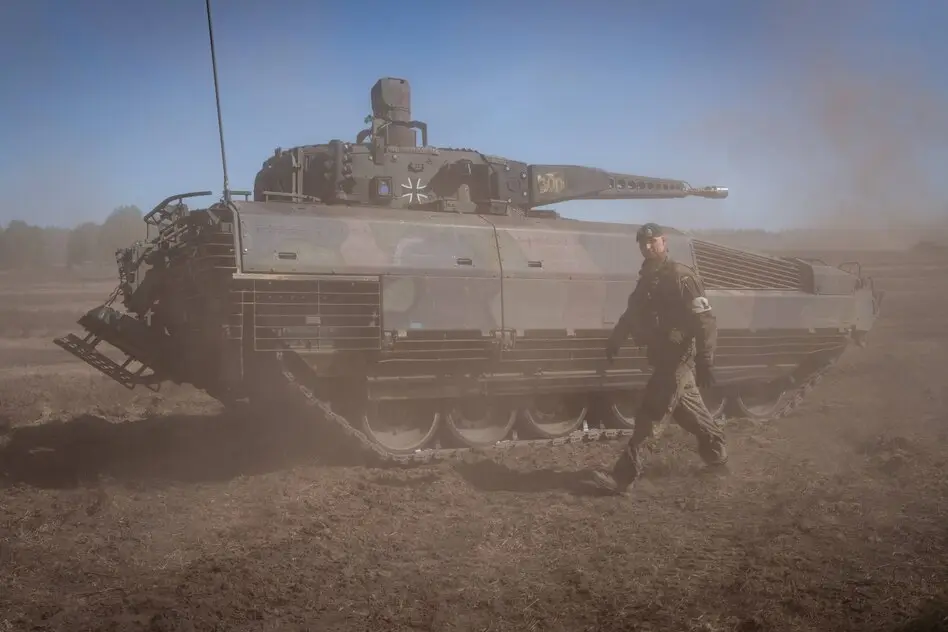
If nine European countries buy infantry fighting vehicles from BAE Systems for 10 million euros each - why does the Bundeswehr buy the Puma from Rheinmetall/KNDS for 21 million euros each?
Andreas Schwarz, SPD defense expert in the budget committee, says slightly pained: “This tank comes from a time when people thought differently and wanted the so-called German gold-rimmed solution.” And - who doesn't know it - then things go their way and "at some point you reach a point of no return. That's how it is explained to us," adds Schwarz. Then there's no going back.
This scene alone explains so much of what is going wrong with the European rearmament. But Harald Schumann and Árpád Bondy have compiled much more material for their Arte documentary "Lots of money, little security? Europe is arming." Schumann co-founded the European research network Investigate Europe in 2016 after a long career as a journalist at taz, Spiegel and Tagesspiegel. Together with this network, in the 90-minute “Lots of Money, Little Security” he interviews dozens of those responsible from politics, the military and industry about why Europe is unable to procure arms efficiently.
This text first appeared in wochentaz, our weekly newspaper from the left!
Every week, wochentaz is about the world as it is – and as it could be. A left-wing weekly newspaper with a voice, attitude and the special taz view of the world. New every Saturday at the kiosk and of course by subscription.
Until the Ukraine War, German tanks may have been intended more as demonstration toys: Above all, they were intended to prove what German engineers could do. But the film shows that even with new technologies, it is primarily national soups that are being cooked. Several European countries have each ordered their own laser weapons for shooting down drones - cleverly, all from the same MDBA company. So he can issue separate invoices and earn far more than if the countries ordered together. Rheinmetall is also there in Germany.
Schumann questions Andreas Schwer, head of an Australian provider of such laser weapons: “If a national company says we want to do this, will they get it?” Armaments manager Schwer was a former Rheinmetall board member. He answers: “It is indeed the case that the local defense companies have incredible market power and can exercise incredible lobbying power in Berlin, Paris, London.”
Now that's not entirely surprising. However, in view of the increasingly irritable electorate, the European states must slowly develop an interest in proving that the enormous arms funds are at least being used cost-consciously. However, according to the figures Harald Schumann works with, the EU loses 44 cents for every euro it spends on armaments because it does not coordinate. Please calculate for yourself what that means if the 20 European NATO states want to buy weapons for at least 1.15 trillion euros from 2025 to 2030.
The much-hyped European procurement initiatives apparently have a rather cute status. Germany, with the declared goal of having the “conventionally strongest army in Europe” (Friedrich Merz) by 2039, wastes by far the most. The word “stupid German money” comes to mind – a term from the USA about the German joy in unfavorable investments.
But the problem remains a pan-European one – and a Ukrainian one. In the film, masked Ukrainian soldiers stand at the edge of the forest somewhere near the front and kindly point out that wars may soon no longer be won with million-dollar tanks, but with drones. For 500 euros each.