
Germany taz
Fine for Heckler & Koch: Business continues
The weapons manufacturer Heckler & Koch now had to pay millions for the delivery of assault rifles with which Mexican students were shot. more...
Deutsch (original) ·Auto-translated to English
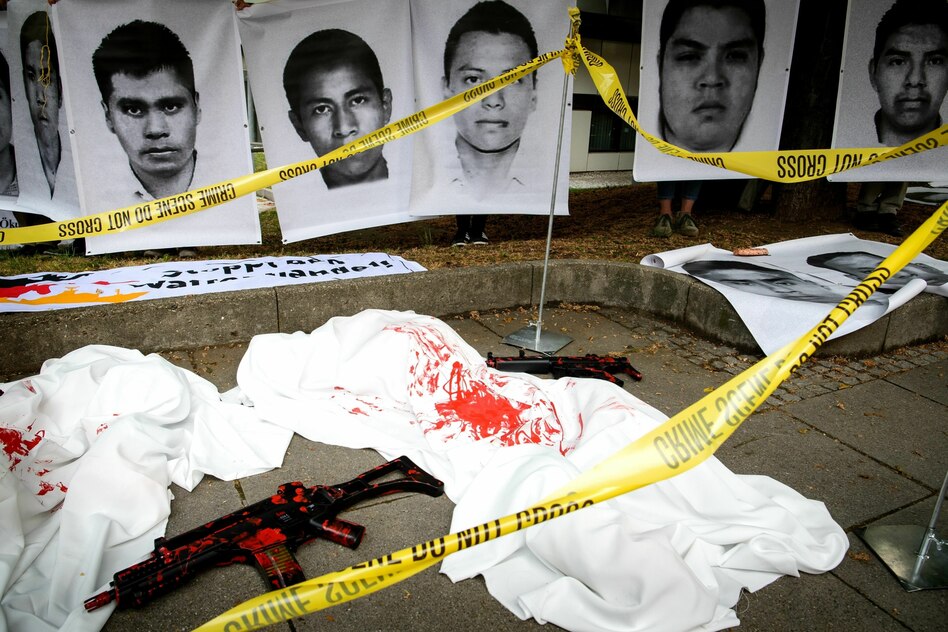
In the end, Heckler & Koch (HK) paid. It was hard to believe at first, after all the instances and objections. The Black Forest weapons manufacturer transferred 3.7 million euros to the state treasury in May of this year as punishment for the illegal export of G36 assault rifles to Mexico.
But why actually go to the state treasury? When those who fell victim to the guns live on the other side of the Atlantic. Or lived. Why not to her? For example, to the relatives of the 43 students who were kidnapped by criminals and police officers in the Mexican city of Iguala on the night of September 27, 2014 and have since disappeared.
This is exactly what German and Mexican human rights organizations have now called for on the occasion of the 12th anniversary of the crime. The fine should benefit those who suffer from the “enormous health and psychosocial burden” of the crime, explains Françoise Greve from the German Human Rights Coordination in Mexico.
In a letter to the Baden-Württemberg Prime Minister Cem Özdemir (Greens), the organizations demand “social reparation mechanisms” to make payments possible. Alternatively, the state government should look for other ways to support the victims. An obvious demand.
As a reminder: Around 20 years ago, HK illegally delivered over 4,200 G36 assault rifles to Mexico using forged export documents. In 2019, the Stuttgart regional court sentenced two ex-HK employees to suspended sentences for “gang-like export of goods”. In addition, the company should pay the proceeds of the deal, i.e. 3.7 million euros, as a penalty. The weapons manufacturers did not miss any legal maneuvers to prevent payment. Last May they had to transfer the money, seven years later.
Aldo Gutiérrez Solano spent these years motionless in his bed. And the three before too. That night in Iguala, the Ayotzinapa Teachers College student was shot into a coma, most likely with a G36. Due to a lack of crime scene security, this could no longer be proven with certainty later. But of the 99 Swabian assault rifles found in the Iguala police station, at least three were used against the students.
Of course, it is difficult to say how many people in total were killed with the weapons in Mexico. Dozens fall victim to the war between various criminal organizations and security forces every day. Most of them are small arms, i.e. pistols and rifles.
So what could be more obvious than to use the HK funds to compensate those affected or to support those without whom the relatives of the Ayotzinapa students would be left alone. Many human rights defenders work daily to ensure that survivors are cared for and that enforced disappearances and murders do not go unpunished. That costs a lot of pesos. Especially in times when development cooperation funds are being radically cut, those who make money from the bloody business could simply take over.
Of course, you could prevent many deaths by simply banning such deals. Since the HK scandal, German authorities have actually stopped approving such exports to Mexico. That sounds good at first. However, the manufacturers have since relocated their production to the USA and continue to export from there without any annoying requirements. Quite a few German weapons end up in US states near the border, such as Arizona or Texas, and are then smuggled into the neighboring country, directly into the hands of the mafia. Anyone who visits gun shows there will find tons of pistols and rifles from Sig Sauer and Heckler & Koch.
Punishment or not, business continues. Compared to that, the 3.7 million euros would be a ridiculous contribution. Strictly speaking, these companies should simply pay a kind of killing tax for the victims in advance for every weapon they export. Yes, that sounds cynical. But it would get to the heart of the matter in a market-like manner without any frills or complex legal procedures.