
Germany taz
Federal government's intelligence reform: license to access
Black-red significantly expands the rights of the Federal Intelligence Service and the Office for the Protection of the Constitution. Despite improvements, there is still criticism. more...
Deutsch (original) ·Auto-translated to English
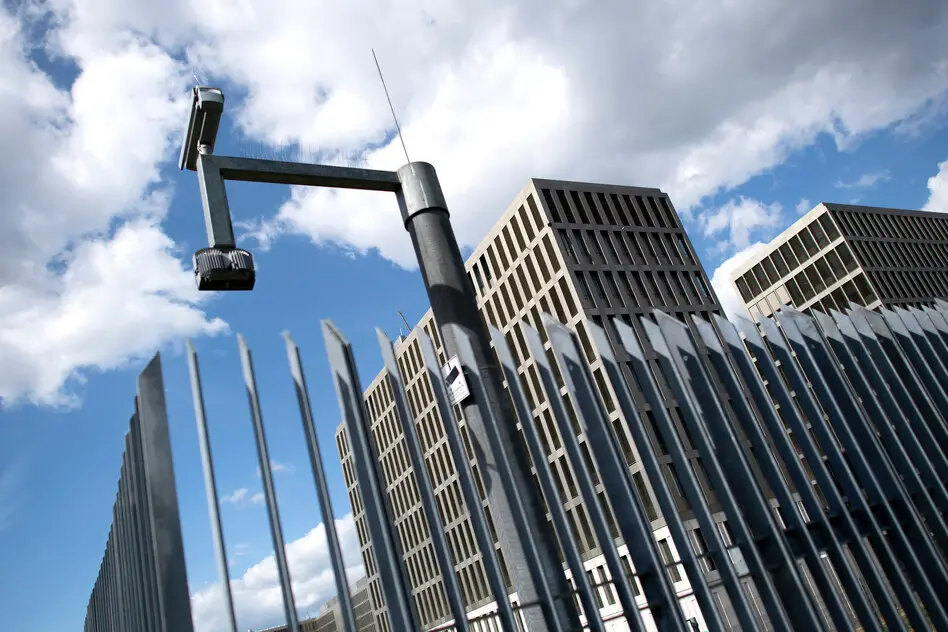
The foreign secret service BND and the domestic Office for the Protection of the Constitution should also be able to take active measures in the future. The black-red coalition in the Bundestag wants to decide this on Friday. With a view to the hybrid threat situation, the BND should in future be able to carry out sabotage abroad or so-called hackbacks in cyber attacks. The Office for the Protection of the Constitution (VS) should also be given new powers to intervene and more options for AI-supported analysis and digital surveillance.
Such powers of intervention for the Office for the Protection of the Constitution are a break with secret service practice in the Federal Republic. They should allow the service to secretly break into homes in individual cases in order to tap into computers or thwart attack plans. According to the separation requirement, only the police were previously allowed to do this. The separation grew historically because people in post-war Germany did not want a new Gestapo.
In the course of the parliamentary process, the Black-Reds made clearer distinctions here: The US should not be able to just rock in if it wants, but within narrow legal limits and only if the police are out of the question - for example because information came from a friendly intelligence service and cannot be passed on to the police.
There was also a reaction to the criticism that an expanded surveillance apparatus might be handed over to the extreme right-wing AfD on a turnkey basis: Now the Constitutional Protection Act also contains a “resilience clause” with which, for example, cooperation with state offices can be restricted if this would endanger “security interests”, such as the soon possible AfD state constitutional protection agency - desperate greetings to Saxony-Anhalt.
In the future, the Independent Control Council (UKRat) will be responsible for control in addition to the parliamentary control committee (PKgr) in the Bundestag. After criticism of a lack of capacity, the staff is to be increased again. The previously responsible Federal Data Protection Commissioner, Louisa Specht-Riemenschneider, had clearly criticized the fact that citizens were being left alone with an upgraded secret service - without transparent control by data protection officers. She had doubts about the constitutional conformity of the original draft, but at least further exchange with data protection authorities should now be anchored.
There is also general criticism of the fact that the Interior Ministry of Alexander Dobrindt (CSU) introduced a huge reform in record time shortly before the summer break and then rushed it through parliament - even though the draft bill alone comprised over 600 pages, the changes another 100 pages, so that journalists, experts and experts heard pointed out several times that an appropriate procedure would definitely have used more time. Experts had just 6 minutes in the hearing to speak on a 600-page draft.
Accordingly, criticism of the reform is still great. Franziska Görlitz from the Society for Freedom Rights (GFF) told the taz: "It is an extremely big reform with extremely little time. We have significant constitutional concerns, among other things, with new digital surveillance powers such as biometric data comparison, AI analysis and AI training."
Görlitz criticizes that the operational powers of the Office for the Protection of the Constitution are far too broad. In previous case law, the Federal Constitutional Court has granted the secret services more extensive surveillance powers because they have no operational powers. “The question now arises as to whether the existing surveillance powers remain constitutional if powers of intervention are added – not to mention expanded surveillance powers,” said Görlitz. The GFF is examining legal action.
The Greens had welcomed changes in the parliamentary procedure for the BND. With regard to the Office for the Protection of the Constitution, they continue to have clear criticism - for example, that those subject to professional secrecy such as doctors and journalists are inadequately protected and that the secret service is also allowed to recruit minors as informants. Accordingly, the Greens want to abstain from the vote. The Left clearly criticized the law and spoke of a new “German secret police” and an “uncontrollable apparatus that tramples on fundamental rights.”