
Germany · taz · · 1h
Gas supply in winter: Reiche is now ordering higher gas supplies
Deutsch (original) · Auto-translated to English
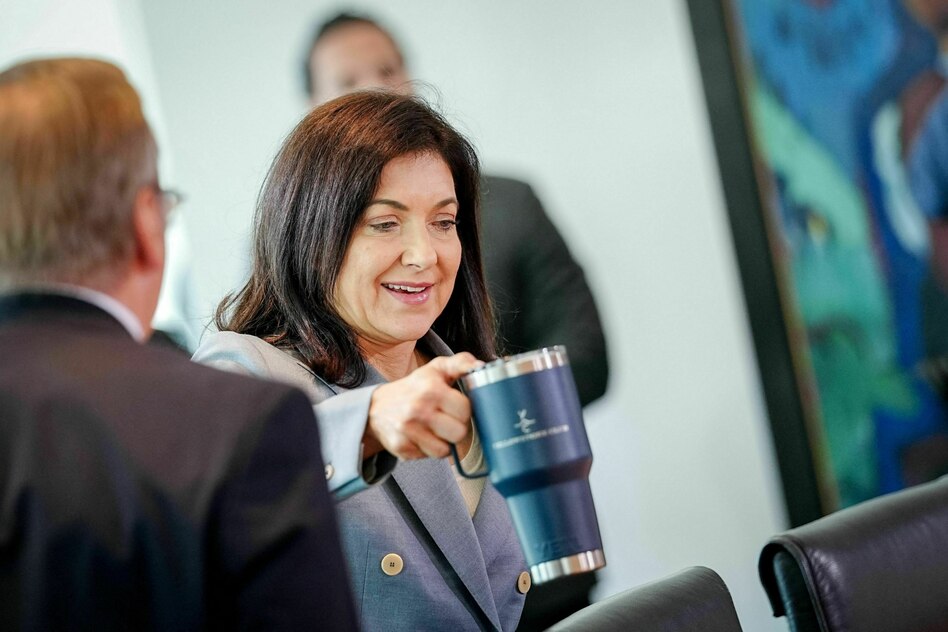
Federal Minister of Economics Katherina Reiche (CDU) has ordered the federally owned energy company Sefe to increase gas stocks. Sefe is expected to procure 8 terawatt hours of gas by December 15. The company decides itself when and in what quantities the gas will be purchased, said a spokeswoman for the Federal Ministry of Economics on Wednesday. This is intended to avoid market distortions.
The minister is thus making a U-turn on her previous policy of leaving the market to secure gas supplies for the winter. The instruction to Sefe was given “in consultation” with Chancellor Friedrich Merz, the spokeswoman said. Sefe was formerly owned by the Russian state-owned company Gazprom as Gazprom Germania. The company was nationalized by Germany in the wake of the gas crisis following Russia's attack on Ukraine and renamed Securing Energy for Europe (Sefe). Reiche had already spoken to the company about the gas situation in mid-September, but had not given any instructions.
The background: The stocks in German gas storage facilities are at an extremely low level immediately before the start of the heating season. The storage facilities are currently almost 58 percent full, which corresponds to around 143 terawatt hours.
The low level has been apparent for months. The gas market changed after Russia's attack on Ukraine. Added to this is the shortage of energy caused by the Iran war. Unlike before, gas prices did not fall in the summer. It was therefore not worth it for retailers to build up inventories. The situation was similar last year. That is why the gas storage facilities were also not well filled in the winter of 2025/26. If the winter had been very cold from the start, things would probably have been tight.
According to the Federal Association of the Energy and Water Industry (BDEW), the fact that industrial gas consumers have not fully secured their expected winter requirements using forward products, but have instead relied on additional procurement on the spot market, also contributed to the current situation. Short-term trading takes place on the spot market. “This is part of corporate risk management,” said BDEW boss Kerstin Andreae. This exposes companies to the risk of high prices and scarce quantities. This is a conscious business decision. “These quantities are not included in the storage because they were not procured in advance – in contrast to the quantities that are necessary to protect households,” she explained.
Despite the low stocks, the Minister of Economic Affairs has not yet seen any need for action. She kept repeating that the market would sort things out. The ministry canceled a press event at short notice at which Reiche wanted to comment on the recent U-turn on Wednesday.
The Green Bundestag member and former Secretary of State for Economic Affairs Michael Kellner believes it is right for Reiche to let the federally owned company Sefe procure gas. “But the minister is acting too late,” said Kellner, who has long been warning of a gas shortage in the winter. The result: prices rise higher than they would have been if Reiche hadn't waited so long.
Kellner calls for a clear request from the minister to save gas. Falling consumption would not only be good for the climate, but would also have a price-lowering effect. Above all, Reiche must ensure a long-term solution so that uncertainty about gas supplies does not arise every year, says Kellner. This not only included sufficient stocks. “We must systematically become less dependent on gas,” he demands. “But the minister is leading us deeper into dependence.” Critics accuse Reiche of wanting to significantly slow down the expansion of renewable energies and push the expansion of gas power plants.
The Left Party also believes that Reiche is too late. The minister has “finally realized that, in view of the turmoil on the international gas markets, blind trust in textbook wisdom about ‘the market’ is not enough to guarantee the energy security of the population and industry,” said Jörg Cezanne, the energy policy spokesman for the left-wing parliamentary group in the Bundestag. “It’s good that the re-privatization of Sefe, which the federal government has already planned, has not yet been carried out.”
He demands that the reprivatization process be stopped. “Affordable energy prices are part of public services,” emphasized Cezanne. “There should be no private returns at the expense of the general public.”
Read the full story at the source
Source: taz