
Germany · taz · · 1h
G8 summit in Genoa: “There is a common thread”
Deutsch (original) · Auto-translated to English
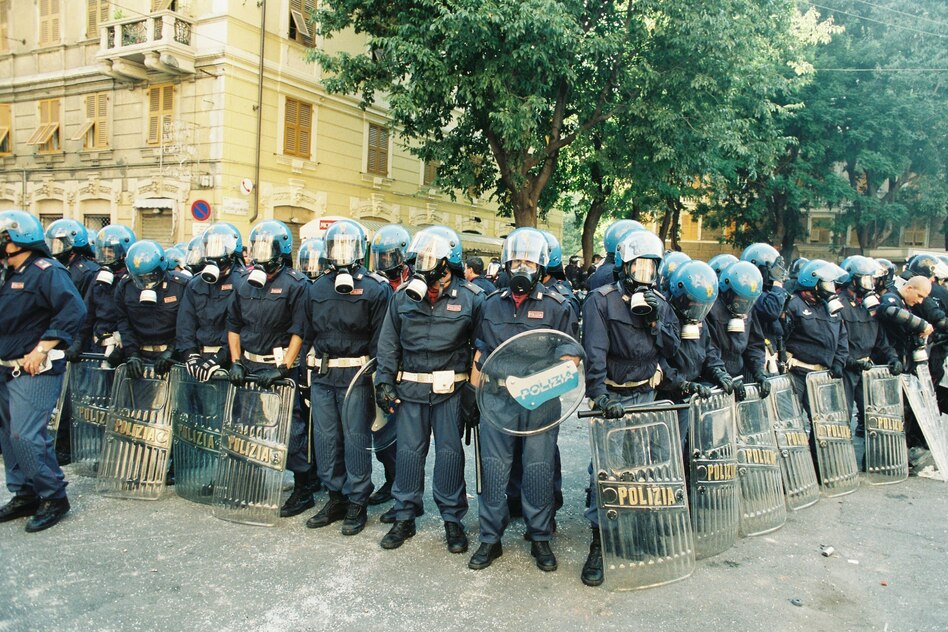
taz: Mr. Agnoletto, in the days from July 18th to 22nd, 2001, hundreds of thousands gathered in Genoa, northern Italy, to protest against the G8 summit there. At that time I reported from there for the taz. You were the spokesman for the Genoa Social Forum, in which organizations from all over the world came together to coordinate the protest. What do you remember particularly?
Vittorio Agnoletto: My most important memory is the opening meeting. This was a truly global gathering of movements from all over the world that shared common goals. There was the Filipino fisherman, the sociologist from Thailand, the farmers from Latin America, the movements from Europe. It was clear to all of them that decisions in a global world affect everyone. That the movements in the financial market in the City of London, as well as the free trade agreements of the World Trade Organization, have a profound impact on the lives of hundreds of millions of people. We counter this with our vision: “Another world is possible.”
taz: However, other images of Genoa have been burned into the collective memory: images of the police's brutal use of batons and tear gas against the demonstrations on July 20th, for example, which culminated in the fatal shooting of 23-year-old Carlo Giuliani. When did you find out about Giuliani's death?
Agnoletto: I was still at one of the demos on Friday afternoon when I received the news. I was very impressed by how the large gathering reacted in the evening. The story could have gotten completely out of hand, but despite the shock, it didn't.
68, doctor, was spokesman for the Social Forum in Genoa in 2001. From 2004 to 2009 he was a member of the European Parliament. He sat for the left-wing faction on the Foreign Affairs Committee and the Human Rights Subcommittee.
taz: Why did there still be more violence against the demonstrators as a result?
Agnoletto: I think the new anti-globalization movement that first emerged in Seattle in 1999 frightened those in power. Not only was it global, it also broke down old ideological barriers. Between people, for example, who came from the communist or socialist tradition and others whose commitment was rooted in Catholicism. Those in power wanted to react to this in order to stop this movement. In Italy the conditions were good: the right wing under Silvio Berlusconi had just taken over the government there.
taz: At the end of the G8 summit, the police stormed the Diaz school in Genoa, where demonstrators were staying overnight. I met you at the moment when dozens of seriously injured people were being brought out of the Scuola Diaz on stretchers. They told me back then that this was the state's revenge.
Agnoletto: Above all, it showed that the state itself had no problem breaking the laws and the constitution. It was also about clarifying the question of guilt for the riots in Genoa, with one dead, with police attacks on approved demonstrations, with hospital emergency rooms overcrowded with injured demonstrators.
taz: The reason for the storming of the school was that there were supposedly members of the Black Bloc there...
Agnoletto: ��� The police also presented fabricated evidence for this. For example, two Molotov cocktails that were allegedly found at school. This was intended to criminalize the entire movement. At all of the previous days' demonstrations, the police had always let the violent members of the Black Bloc have their way and then beat the vast majority of the peaceful demonstrators. The completely unprovoked attack on the demonstration of the “disobedient” from the occupied autonomous centers of Italy also took place according to this pattern, which resulted in the fatal shooting of Carlo Giuliani.
taz: Just a few years after Genoa, there was hardly any sign of the powerful anti-globalization movement. So, in your opinion, has the strategy of state repression worked?
Agnoletto: We should not underestimate the fact that many of the grassroots initiatives that were present in Genoa were taking part in street demonstrations there for the first time. They often found it difficult to accept the accusation that they, too, belonged to extremist forces. And they often feared for their freedom of movement in their local work, to which many then retreated.
This text first appeared in wochentaz, our weekly newspaper from the left!
Every week, wochentaz is about the world as it is – and as it could be. A left-wing weekly newspaper with a voice, attitude and the special taz view of the world. New every Saturday at the kiosk and of course by subscription.
taz: In November 2002 there was the European Social Forum in Florence, at which tens of thousands of people came together, and in February 2003 there were demonstrations against the impending war in Iraq, in which millions took part - including in Italy. Doesn't that contradict your findings?
Agnoletto: I'm a doctor, and I compare it to an injury, where the neurovegetative reaction also ensures that you don't feel the pain immediately. Later, however, he comes to terms with the awareness that he cannot simply carry on. And then for many people they retreated to their own original activities in the respective social initiatives. Also, let’s not forget September 11th – just 50 days after Genoa. Before, our line of conflict was between neoliberalism and social movements. After September 11th, however, a completely different line of conflict is presented, namely that between the West and Islamist terrorism. And everyone was confronted with the question: Are you on the side of the West or on the side of terrorism?
taz: Your latest book is called “Il G8 di Genova: Ieri, oggi, domani” and wants to look at the summit from the perspectives of yesterday, today and tomorrow. What are the prospects for today and tomorrow? You were at the World Social Forum in Benin in August. However, this forum was simply not talked about in Europe.
Agnoletto: That's right. 25 years ago, European and Latin American forces dominated the anti-globalization movement. In Benin, on the other hand, the participants came predominantly from Africa and Asia. There is a lot going on in Africa in particular, while European voices were hardly heard.
taz: So nothing is moving here in Europe?
Agnoletto: I see a widespread awareness, especially among the younger generations, that their future will not be positive. And then there is the time factor – the risk that humanity is threatened with the end. This awareness turns into protest when young people have the feeling that their commitment counts.
taz: Can you give an example of this?
Agnoletto: In March, everyone in Italy was astonished at the high level of participation among younger people in the constitutional referendum on the judicial reform that the right wing around Prime Minister Giorgia Meloni wanted to implement. Normally, young people tend to stay at home during general elections. And what also strikes me again and again is the ethical drive that guides the commitment.
taz: Like back then, 25 years ago, during the protests in Genoa?
Agnoletto: There is a common thread that connects Fridays for Future, the Italian constitutional referendum campaign and the very broad Gaza protests here in Italy. Everywhere, beyond the specific question, it is also about the future of the planet.
Read the full story at the source →
Source: taz