
Germany taz
Football fan on Lost Grounds: “You can’t get something like that recreated artificially”
Michael Höller is a ground hopper. He enjoys traveling to crumbling stadiums. A conversation about football, nostalgia and travel in times of climate crisis. more...
Deutsch (original) ·Auto-translated to English
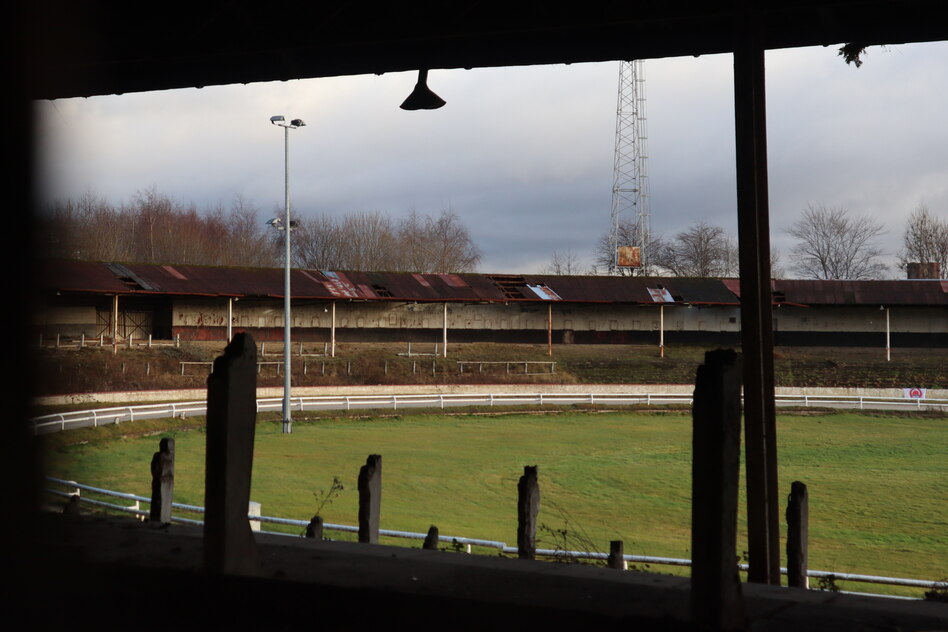
taz: Mr. Höller, you have traveled to hundreds of Lost Grounds throughout Europe, i.e. football stadiums that are abandoned and, for example, only exist as ruins or have been demolished. What fascinates you about it?
Michael Höller: I'm the kind of person who always associates a place with an event. This is what happened to me, for example, during the German national team's first international match against Switzerland in 1908. Then I found out that the Landhof Stadium in Basel still existed and went there. I drive to a place and never know exactly what to expect. Whether I can get into the ruins, whether anything is still there. Sometimes I arrive and the stadium has just been demolished. But most of the time you can still find something.
The Groundhopper has been visiting Lost Grounds since the 1990s. His book “A Stadium Goes – The Legend Remains” was published in 2025.
taz: How can you imagine such a lost ground when you still find something?
Höller: One of my favorite grounds is the Shawfield Stadium in Glasgow. Clyde FC played there until 1986, they were in the first division at one point, and the hut was full. And now there is no one left. The stadium has a pointed, tapered roof, classic British style, but many parts of the roof have already fallen off. You can still see the relatively flat ranks. It's totally out of time. Such a beautiful stadium that nature is currently taking back.
taz: Stadiums like this create memories for many generations, then they are suddenly abandoned by the club. How does society deal with a place like this?
Höller: In 2023, the fans and a few players were in the stadium again to say goodbye because the dog racing track, the last operation, had closed before Corona. They played the club song on tape. And at a spot where there was once a deadly stampede, they hung a memorial flag. For people it was a part of life. You can't recreate a place like this artificially. Once it is torn down, it is lost forever.
taz: How should we deal with these places instead of tearing them down or letting them rot?
Höller: I'm enough of a realist to know that we football nostalgics are in the minority. And especially with the city's tight budget, things like daycare centers and swimming pools are of course a priority. But still, when it comes to historically significant sites like the Weidenpescher Park stadium in Cologne, where one of the oldest surviving football stands in Germany stands and where the championship final was played in 1905 and 1910, I ask myself: Why does the city let it go to waste? The grandstand should be renovated, a small museum there or at least a memorial plaque.
taz: Do you know of a positive example in Germany?
Höller: The Bökelberg, Borussia Mönchengladbach's old stadium, is set up as a memorial site. You can still see the stands and there are houses on the former playing field. There is a memorial in the old north curve. You could certainly do more in Germany. Many stadiums lie fallow.
taz: Residential buildings like those on Bökelberg are being built in several old stadiums in Europe, for example in Arsenal's listed Highbury Stadium. Most of them are luxury apartments for the extremely wealthy. Is this a solution or a new problem?
Höller: I'm skeptical about something like that. The new buildings cost a lot of money. The Art Deco façade on Arsenal's old stadium, which the concept allows to be preserved, is beautiful. But the people who used to sit there in the stands are not the ones who live there today.
taz: How could you design a place of remembrance so that it is also made for society at large?
Höller: A nice example is Bootham Crescent in York, England. The fans and the monument protection authority were involved in the planning. In 2023 the stadium was demolished and apartments were built there. But in such a way that you recognize the place as such. A piece of the playing field with the center circle and part of the fan stand will remain. There will also be a memorial garden where the urns of fans who were buried under the pitch will be reburied. Back then there was a flagpole in the stadium where the flag was always hoisted five minutes before the start of the game for people who didn't have a watch. The flag will also stand again. They really thought about it.
taz: Sounds very exciting. How did you get into this unusual hobby?
Höller: Around 2012, I noticed that more and more stadiums that I had visited myself were disappearing. I was impressed by what happens when a place like this is abandoned. In England, for example, after the Hillsborough disaster in 1989 (one of the biggest accidents in football history with 97 deaths, editor's note), many stadiums were no longer used due to a lack of safety standards. I suspect that's why Lost Grounds are a much bigger issue among groundhoppers in England.
taz: When ground hopping, fans go to as many games and stadiums as possible in different countries. This used to be a hobby of nerds. Through social media and sporting event tourism, the search for stadiums has changed dramatically.
Höller: I've been groundhopping since it came to Germany around 1990. I always travel alone. But I also notice that the hobby has spread significantly. Everyone used to do it just for fun. Today you wonder whether someone is just doing this for clicks.
taz: In modern tourism everyone is looking for authenticity. Ground hopping is also a lot about supposedly authentic football in lower leagues. Is something transfigured there too?
Höller: First of all, I think it's positive that this brings the lower leagues more to the fore. When someone has discovered a pearl, many people go there. But of course it always has to do with commerce. Even the first ever official football match in England had sponsorship and sports betting. Nevertheless, I believe that people with real money in their pockets don't do ground hopping. It's more about getting somewhere as cheaply as possible. I find that admirable. Some people sleep in the car all night so they can afford it.
taz: Groundhopper Matt Barnes surveyed like-minded people in various forums and found that 75 percent of trips are flights and almost 30 percent of the community travels abroad every three months. Does the hobby have to change in the climate crisis?
Höller: Groundhopping got a real boost in the 2000s thanks to low-cost airlines. In the past, you could travel 24 hours to Lisbon with an Interrail ticket. Hardcore fans can tell wonderful stories about train journeys through Yugoslavia to isolated Albania. There is nothing like that anymore today. It's no longer anything special to fly to Portugal on the weekend for 20 euros.
taz: Is that still communicable given the climate collapse?
Höller: That’s a legitimate question. But it is our freedom to be able to do whatever we want. I think you can only control it by increasing prices. I can't imagine groundhoppers voluntarily staying at home because of their climate footprint. There is already an outcry when prices rise: Oh, I can no longer fly 30 times a year, but only 20 times. I know someone who flies to Australia twice a quarter. He is admired by everyone for this.
taz: Those are crazy numbers. The frequent flying of groundhoppers and ultras is a blind spot in football, where it is mostly about the travel of players.
Höller: Without regulation it will continue like this. But football has helped create a travel culture from the very beginning. Thousands of fans came by train to the first FA Cup games in England at the end of the 19th century. As a result, a real football tourism industry has developed, including hotels.
taz: Has anything about groundhopping been lost because people no longer spend days on the train to Albania?
Höller: Yes, I think so. When you get there so quickly on the plane, everything comes closer. I don't have a driver's license and often have to find my way somewhere using public transport. I was once traveling in the car with a friend as a passenger, and we were super efficient and visited ten Lost Grounds at once. But it wasn't exciting because I didn't fight for it. Everything used to be so damn far away. Today the charm has been lost a bit.