
Germany · taz · · 1h
Football, refueling, voting in Germany: When the national coach doesn't understand journalism
Deutsch (original) · Auto-translated to English
t az: Mr. Küppersbusch, what was bad last week?
Friedrich Küppersbusch: CDU chairmanship controversial.
taz: There is a lot of talk these days about the future of the Chancellor. How future-proof is he approaching the issue of rising gasoline prices?
Küppersbusch: If politicians, with a fixed eye on the next election date, are committed to any nonsense that promises relief, as measures and action everywhere, then they would rather say “So that the weather becomes German again – CDU”. Okay, weather, a bad topic, many see it as the Green Party and others see it as the right-wing climate deniers. In any case, politicians don't have to be surprised that they're to blame for all the shit when they keep trumpeting that they can do something about it. The price of fuel is made up of the raw materials, the war, the supply chain, the greed of traders on the road and in the long term there are also its environmental costs. Politics can do extremely little, and often do the wrong thing, and if it does, it promotes political frustration and relieves the burden: on the war, on the traders, on the profiteers.
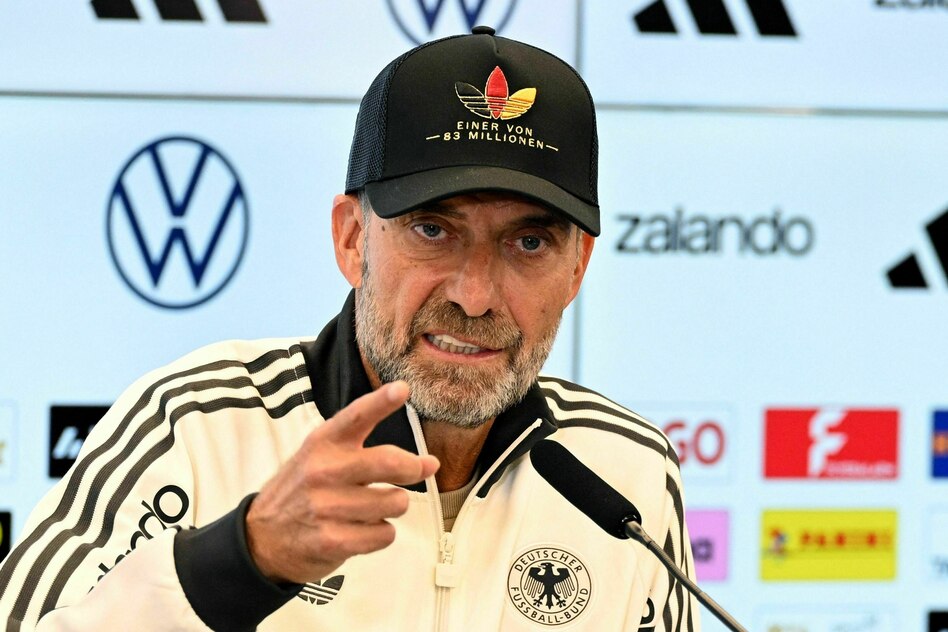
taz: Jürgen Klopp has presented the squad for the German men's national soccer team. Is there still a way around him also taking over the office of Federal President?
Küppersbusch: Klopp thinks “it’s poor to make a living by putting things out there earlier,” and warns the journalists who have been so maligned that “it’s now also up to you how you deal with it.” Federal President Horst Köhler already failed because of this pre-democratic idea of free media. And Klopp's notorious presumption that the media should serve his purposes shows that he is in good hands in the authoritarian football business. His goal of “taking back the flag”, “not leaving national pride to the wrong people” or preferring to speak of “positive patriotism” sounds honorable. And obviously the good times when patriotic enthusiasm could be kept safe in the stadium are over. Football once helped people like this country. Vice versa is poisonous. The referee runs to the review zone and checks whether nationalists are offside between great sport and success.
taz: RTL cuts 500 jobs. Are the private media “with their backs against the wall” in the duopoly between Big Tech and public broadcasters, as Wolfram Weimer said in an internal conference last week in the Konrad Adenauer House?
Küppersbusch: Media is a state matter, and if someone has no idea about a topic that doesn't concern them, Weimer will reliably snap his fingers. RTL cut 600 jobs last year, the Berlusconi group Pro7/Sat1 cut 430, and apart from Wolfram Weimer, I don't know anyone who believes that young people, streaming users, digital natives - would suddenly watch "Summer House of the Stars" with their grandma if he simply got rid of the other programs. Linear television as a whole is end-of-life care in pixels. By tomorrow at the latest, only public news, regional news, and a few expensive campfire productions will be able to show, because this has never been commercially profitable and never will again. Streamers and content distributed on all channels are relevant today, and RTL and Pro7 are a touch further away from that than ARD and ZDF already are. If Weimer wanted to say something clever that would really annoy the ÖRR, he called for a common media library of public and commercial providers. Don't worry, he won't do that, he would be responsible for that.
taz: The “Month of Democracy” is slowly coming to an end. And democracies also slowly?
Küppersbusch: Depending on the rigor of the investigation, sometimes 80 or sometimes only a good 20 states are classified as “full democracies”. With the end of the “Eastern Bloc” in the 90s, a “spring of democratization” began, and “autocratization tendencies” have been increasing since the 2010s. By the way, the studies find more “free market economies” than “full democracies”. Vulgo: All democracies are market economies, and not all market economies are democratic. I have no idea whether democracy would work without a market economy. Or who financed the studies. That's just a market economy.
taz: Canadian Prime Minister Carney is said to have said that “middle powers” who stayed away from the negotiating table ended up on the menu. Did his stay in Brussels make this saying more concrete?
Küppersbusch: The EU currently has 19 association agreements, some of which are very different, from Ukraine to, new proposal, Canada. Chile, North Macedonia and Egypt are also there. I think Canada is one of the nicest places. If it doesn't matter who else takes part anyway.
Küppersbusch: In order to be able to answer this question competently, I will now send the column to the taz and then watch the game.
Friedrich Küppersbusch is a journalist, producer and works in Cologne. Sounds paradoxical.
Read the full story at the source
Source: taz