
Germany taz
Promoting the energy transition: The federal government must raise more money for EEG
The network operators' forecast of the need for subsidies to promote renewable energies is increasing the pressure on the federal budget. more...
Deutsch (original) ·Auto-translated to English
17.5 billion euros of tax money will be necessary in 2027 to finance the feed-in tariffs according to the Renewable Energy Sources Act (EEG). This is what the transmission system operators are predicting, which is around one billion more than the federal government's estimate in the draft budget.
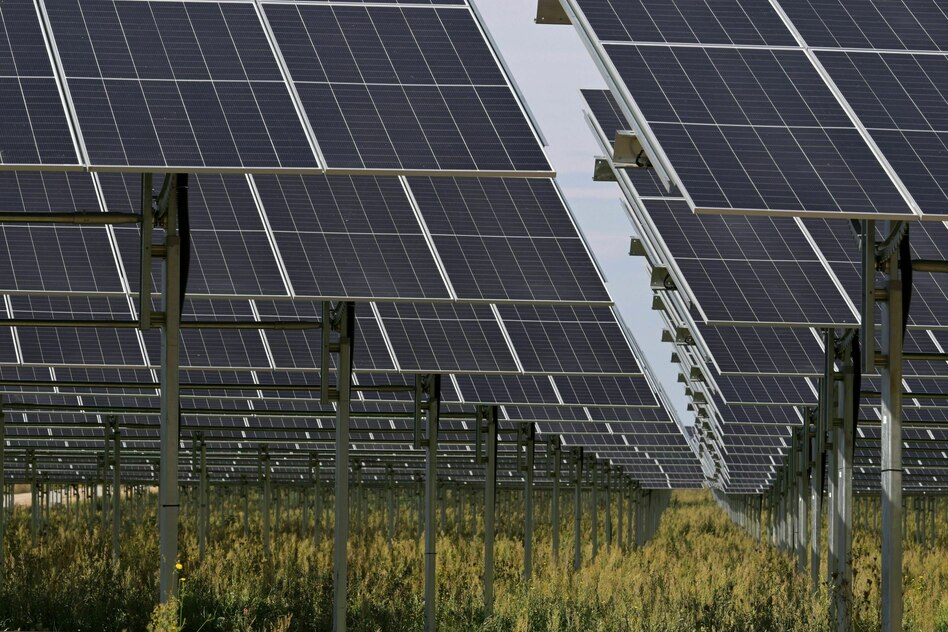
The EEG guarantees the operators of wind and solar systems a certain amount of revenue for the electricity they feed in. If prices on the electricity exchange are lower, the state has to make up the difference with subsidies. The majority of the funding amount, namely 9.6 billion euros, will once again go to photovoltaics in 2027.
The news that state funding is becoming so expensive comes in the middle of the dispute over its future structure. Economics Minister Katherina Reiche (CDU) wants to limit subsidies and link them more closely to grid expansion; the industry is warning that the energy transition will be stalled.
In its medium-term forecast, the Research Center for the Energy Industry (FfE) assumes that the need for financing will continue to increase: for 2029 it expects a funding amount of 22.3 billion euros, before this will then decrease slightly.
The financial requirements are influenced by various factors: How many systems are being added, what is the weather like, what is the general level of electricity prices? The FfE has even set the latter as relatively high on average for 2027, at an average of 10.6 cents per kilowatt hour.
The cost driver is the expansion of the systems, especially with photovoltaics: every additional kilowatt hour of solar power is hardly worth anything because there is already a lot of electricity in the network at the relevant times. For 2027, the electricity industry therefore estimates the so-called market value factor for photovoltaics to be only 41 percent. This means that for one kilowatt hour of solar power you can no longer even get half the average price of electricity on the electricity exchange.
For 2031, the FfE only assumes a factor of 25 percent. The Federal Association of Renewable Energy criticized that this calculation was missing “a crucial factor”, namely the addition of storage, which could stabilize the market values of renewables.