
Germany taz
Women's rights activist in Afghanistan: “We stupidly relied on Germany”
Women's rights activist Sarah is hiding from the Taliban in Afghanistan. Instead of taking them in as promised, Germany is courting those in power. more...
Deutsch (original) ·Auto-translated to English
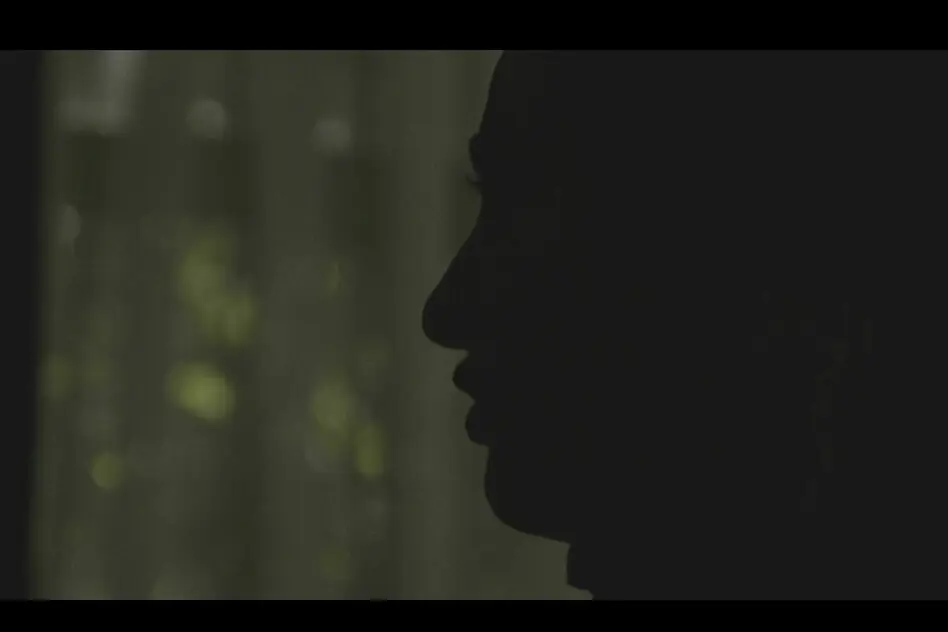
When Sarah enters the room, she first looks at the window to make sure that neighbors cannot see her through the curtain. Then she takes off her black face mask, which has become an integral part of Afghan women's veiling in recent years. “I’m sorry for the complications,” she says a little shyly, even before she sits down.
It is a late summer morning in Kabul. It took days to organize the meeting in this apartment. I spoke to Sarah on the phone several times, initially just to establish a basis of trust. We spoke in Farsi, she with her Herati, I with my Kabul accent. The times and addresses for a meeting changed several times.
Sarah and her husband finally get together in a taxi, taking a detour, past the Taliban checkpoints. Sarah, whose real name is different, is 31 years old. She is wearing a simple jacket, her hands are folded in her lap, and as she speaks, her gaze keeps wandering around the large rooms of the house.
Federal admission program: Nationwide program for particularly vulnerable people from Afghanistan (e.g. women's rights activists, journalists, members of the judiciary). The aim was to issue a confirmation of admission in accordance with Section 23 Paragraph 2 of the Residence Act. After the change of government in 2025/2026, procedures were largely suspended or reassessed.
Human rights list: Specific shortlist from the federal government for the evacuation and admission of acutely threatened human rights defenders, activists and cultural workers. The recording and testing criteria were coordinated via civil society suggestion lists, but were ultimately subject to strict formal hurdles.
Local staff procedure: Procedure for accepting former local employees of German agencies (Bundeswehr, AA, GIZ) in Afghanistan as well as their nuclear families (Section 22 Residence Act). The key question is the individual risk notification based on previous cooperation with Germany
If you want to meet Sarah, you have to understand that there are hardly any safe places in Kabul today. Not because there are armed people on every corner, but because no one knows who is listening. The neighbor, the shopkeeper on the corner, the guard who sits in front of the mosque at night: each of them could be an informant for the Taliban. “In Kabul you used to give your neighbors the key when you went on a trip,” says Sarah. “Today you don’t even give them your name anymore.”
Her husband, let's call him Farid, sits next to her on the Turkish-style sofa and is silent most of the time. He is 33 years old and used to work as a customs worker. In the past - that was before the return of the militant Islamist Taliban in August 2021. When Farid says something, it is usually to add a year or a place name. It's Sarah's story, he makes that clear. But it has also become his. “We stupidly relied on Germany,” he says sadly.
Sarah comes from Herat, the ancient cultural city near the Iranian border. Before the fall of the Western-backed Afghan republic, women studied at the university there, worked in authorities and founded clubs.
After studying law, Sarah began working for various non-governmental organizations. She organized workshops on Islamic inheritance law and domestic violence, accompanied women to court appearances and helped victims of forced marriages. "I stood up for other women. I fought for their rights, which Islam also gave them, and stood up for them," she says.
This work made her famous, in Herat and beyond. That's exactly what was her downfall in August 2021. Herat fell on August 12, three days before Kabul. It was clear to Sarah and her family: their lives would change dramatically from now on. "The Taliban had lists. We didn't know who was on them, but we knew it could be us," she says.
In the months that followed, the activist became the hunted. Friends told Sarah about the Taliban who had asked about her, and she changed her place of residence several times. Many women, Sarah says, were arrested and only resurfaced after weeks. To this day, many of them do not talk about what happened to them in prison.
In October 2022, the then traffic light coalition launched the federal admission program for Afghanistan. It was aimed at people who were particularly at risk because of their commitment to human rights, democracy or women's rights. Up to 1,000 people per month should come to Germany. Afghans could not apply themselves, but had to be nominated by organizations authorized to register. The selection process was carried out in which the Foreign Office, the Federal Ministry of the Interior and the Society for International Cooperation (GIZ) were involved.
Sarah was suggested by GIZ. In 2024 the news came: acceptance for her and her husband. “I read the email several times, then I cried,” she says, laughing briefly about it. Because Germany no longer has an embassy in Kabul, all those admitted had to travel to Pakistan for the next steps: security interviews, health checks, and visa applications at the German embassy in Islamabad. The program envisaged that GIZ would accommodate and care for the people there in guesthouses until they could fly to Germany.
In the spring of 2024, Sarah and Farid crossed the Afghan-Pakistani border near Torkham. They expected to be in Islamabad for a few weeks. It was 18 months.
Sarah describes her time in Pakistan as a situation for which she has no words. They lived in a guest house with numerous other families, all with German support, all in waiting mode. The interview at the embassy took place, but after that: nothing. Inquiries via email were answered with text modules. It was said again and again that the case was being processed. “This situation has worn us down,” comments her husband Farid.
At the same time, Pakistan became more and more dangerous for Afghans. Since autumn 2023, the government in Islamabad has been pushing forward the expulsion of Afghan refugees. First it affected people without papers, then the residence cards of many registered refugees were declared invalid. The police searched residential areas, took people from apartments and buses. Afghans with German support were also arrested and some were deported.
According to Pakistani government figures, around 2.4 million Afghans have returned or been deported since September 2023. The United Nations says there are more than six million for Pakistan and Iran combined. “Every time there was a knock on the door, we thought it was the police,” says Farid.
Then came the change of government in Berlin. The CDU had promised during the election campaign to end the voluntary admission programs. In May 2025, the new black-red coalition under Friedrich Merz actually stopped departures as one of its first official acts. Thousands of Afghans were stuck in Pakistan, including Sarah and Farid.
Interior Minister Alexander Dobrindt (CSU) checked whether the commitments were binding at all. The government argued that these were not legally binding administrative acts that could be relied upon. Then the day of the couple's deportation came: on the anniversary of the Taliban's return, on August 15, 2025, they reached Kabul full of fear and worry.
At the end of 2025, Sarah received another message from Germany. It came on behalf of the Federal Ministry of the Interior. She was offered the opportunity to voluntarily leave the admissions process. In return, she should receive money, as well as transport and accommodation, food and medical care for three months in Afghanistan or a third country.
According to the Kabul Airlift Initiative, a German aid organization, single people were offered around 6,500 euros. Sarah had two weeks to make the decision. The offer was justified by a deadline set by the Pakistani authorities at the end of the year. “Unfortunately, there is no guarantee that all procedures can be completed on time,” the letter said.
This article was made possible through the financial support of the Forschungsfonds Ausland e. V. You can support the research fund through a donation or membership.
Sarah and Farid should also receive several thousand euros. They refused. “They wanted me to sign that I would voluntarily go back to the Taliban,” says Sarah. "For money. Like buying someone a ticket to your own execution." According to the Interior Ministry, 167 of the around 660 people contacted accepted the offer by the end of the year. 358 refused, Sarah was one of them.
A few weeks later the second message came. The acceptance letter has been revoked. There was no justification in the individual case, says Sarah. According to a response from the Interior Ministry to a request from the Greens in spring 2026, 783 of 928 people who were still waiting to leave the country at that time had their permission finally revoked. The most common reason: the “loss of political interest”. Single women and queer people were also among those affected.
The promise also ended the protection that the federal government had granted to those waiting in Pakistan. According to the Foreign Office, an agreement with Islamabad not to deport people in the German procedure no longer applied from the turn of the year 2025/2026. Last spring, Pakistani police officers stood in front of the guesthouse. Sarah and Farid were taken to a deportation camp and handed over to the Taliban at the border near Torkham.
“At the border they took our fingerprints, took photos and asked for our phones,” says Sarah. “I knew: now they have everything.” The Taliban systematically register returnees at the border crossings, including biometric data. For people who have previously hidden for years, this is like marking them.
The United Nations also knows how dangerous the return is. The UN Mission in Afghanistan (UNAMA) has been documenting cases in which returnees are arrested, tortured or kidnapped for years, especially former employees of the republic, journalists and activists. Between July and September 2026 alone, UNAMA counted 443 arbitrary arrests by the Taliban moral police, including more than 50 cases in which women were detained or warned solely for dress code violations, most in Herat and then in Kabul.
Only recently, says Sarah, the Taliban arrested around 20 women in Kabul because they didn't like their veiling. She says she regularly hears worse things from Herat. There, the Taliban recently picked up and mistreated a doctor who wanted to do her work. "The reason was again the veiling. They even ask the women why they would dare to show their eyes," she says.
Back in Afghanistan, Sarah couldn't get to Herat. She is known there, the former women's rights activist. With the support of Kabul Airlift, she and Farid were accommodated in the capital, in a small hotel that served as a safe house. Several families who had been deported from Pakistan were waiting there for a miracle from Berlin.
This is now hardly conceivable, as the Taliban authorities seem to miss little or nothing. Anyone who wants to go into hiding today needs private living quarters and a reliable network of contacts, which NGOs still have at their disposal.
Then the Taliban stormed the hotel. “They came at night, with guns,” says Sarah. "They photographed every passport, searched every cell phone, wrote down our names, our fathers' names, where we come from. They asked why we were in Pakistan and who was paying us."
They were not arrested that night. But since then the Taliban have known who they are and where they were last. The next day they left the hotel. Since then they have changed locations every few weeks.
Sarah describes what it's like to live like that with a scene from her everyday life. She rarely leaves her accommodation, is always afraid and doesn't trust anyone. "I don't know anyone here. Kabul is not my city and the Taliban secret service is very present. We are totally isolated and are still waiting to leave," she says.
For Sarah, the fact that foreign journalists can meet her is not a contradiction. On the contrary. “They are friendly with you,” she says. "Foreign journalists are allowed to ask questions, foreign women are allowed to walk through the city without a mahram. The Taliban show you their most beautiful face because they want recognition. For us, they have a different one."
In fact, the Taliban have been trying to smoothen their image to the outside world for years and have been successful. Russia became the first state to officially recognize the regime in July 2025. Other states have accepted ambassadors or upgraded representations.
And Germany has also been talking to the Islamists for a long time. The Federal Ministry of the Interior confirmed discussions with the Taliban about deportations, and officials traveled to Kabul for this purpose. Since last year, Taliban representatives have been working at the Afghan embassy in Berlin and at the consulate general in Bonn, officially to facilitate deportations. Since August 2024, Germany has carried out several collective deportations to Kabul, most recently just a few days ago.
This is a scandal for Sarah. “The same government that promised me admission is now sitting at the same table with the people I am hiding from,” she says. “What should I think?”
After a little more than an hour, Sarah gets up. Farid has already looked at the clock twice. She puts the chador back on and checks in the mirror in the hallway to make sure no hair is visible. Then the couple leaves.
A few hours later, in the late afternoon, the Taliban are standing in front of the same house. They search the rooms, ask the residents about visitors, about strangers, about women who are not part of the family. It is impossible to say whether it was a coincidence or whether someone reported something. The hosts later say that they claimed there had been no visitors.
Still, Sarah didn’t give up. Together with the Kabul Airlift and her lawyer Matthias Lehnert, she is suing the Federal Republic of Germany so that she and Farid can still enter the country. They're not the only ones. According to the federal government, almost 500 proceedings were pending before administrative courts in spring 2026. Courts have ruled in favor of the plaintiffs several times. In July 2026, the Federal Constitutional Court found that blanket rejections are incompatible with the prohibition of arbitrariness. Each case must be examined individually.
The federal government reacted in its own way. In September, the Foreign Office sent new rejections to those affected, according to the Kabul Airlift in standardized emails. The declarations of admission, it said, “should continue to be considered invalid and expired.” The government was playing for time, said the lawyers of those affected. For people like Sarah, time is what they have least.
The fact that Germany is not alone in withdrawing from the admission program doesn't make things any better for Sarah. The USA, which evacuated more than 120,000 Afghans from Kabul in 2021, also wants to get rid of many of them. At the beginning of November 2026, it became known that Donald Trump's government wanted to deport at least 150 Afghans from detention centers in Louisiana to Afghanistan via Pakistan. 66 members of the US Congress protested in a letter. Deportation to Afghanistan, they wrote, would be “a death sentence.” In Qatar, more than 1,000 other Afghans have been waiting in a US camp for years for their onward journey, which may never come.
The pattern is similar whether in Germany or the USA. First protection is promised, then we wait, then the promise is postponed until circumstances take care of it: deadlines, deportations, new governments. Pakistan, once a stopover, has become a trap. And in the end, the Taliban, who almost everyone now talks to, benefit.
When asked whether Sarah still believes in Germany, she has to think for a long time. “I believe in justice,” she finally says. "I don't believe in politicians anymore. But I have a paper that says Germany wanted to protect me. Germany didn't just promise me something. It promised something to itself."