
Germany · taz · · 2h
Women in the Ravensbrück concentration camp: resistance at all levels
Deutsch (original) · Auto-translated to English
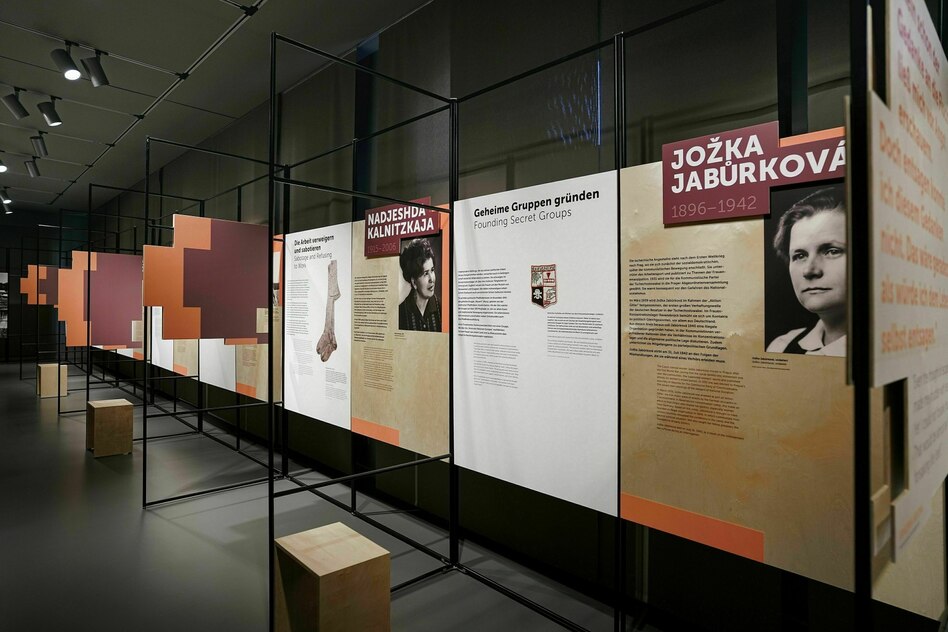
It's not that often that a member of the government presents a cake recipe. But that's exactly what Robin Mishra, head of the culture of remembrance department at State Minister Wolfram Weimer, did last week. The occasion was not a children's birthday, but an exhibition opening. It's about the resistance of women in the Ravensbrück concentration camp. The recipe is for a banana cake and was written in French and in verse by the Frenchwoman Germaine Tillion, who was born in 1907 and was imprisoned in Ravensbrück. In German it goes like this:
“Mash the bananas, peel and incorporate into 150 g butter, ground nuts, lemon peel, sugar as desired”
Now in the Ravensbrück concentration camp there were neither bananas nor nuts, hardly any sugar and certainly no butter for the prisoners. The banana cake recipe isn't a recipe at all. But an act of resistance. If you put the first letters of the lines next to each other in the French original, you get the word “Binz”. That was the last name of Dorothea Binz, the deputy head warden in the concentration camp. Another recipe by Germaine Tillion contains an “English-style sauce” and, read in the same way, gives the name of Fritz Suhren, the camp commandant from 1942 to 1945. The disguised information was intended to ensure that the perpetrators did not get away after the Allied victory.
“…we resisted as best we could.” Resistance in the Ravensbrück women's concentration camp. German Resistance Memorial, Stauffenbergsraße, until April 4th. Admission is free, the catalog costs 10 euros.
A British court sentenced Dorothea Binz to death in 1947. The sentence was carried out in Hamelin on May 2, 1947. Suhren was sentenced to death and executed by a French military court in 1950.
Germaine Tillion managed to smuggle a film with photos of medical experiments out of the concentration camp in 1945. A year later she published the first scientific book about Ravensbrück. The ethnologist later became active against torture in Algeria and Iraq. She died in 2008 at the age of one hundred.
The resistance of women in concentration camps was downplayed for a long time after the liberation. In the GDR, the women imprisoned in Ravensbrück were credited with “dedication to the next generation,” but not with fighting against their oppressors, according to Andrea Genest, head of the memorial in the former concentration camp. Reduction to the role of mother does not do justice to the commitment of those being persecuted. “We resisted wherever we could,” is the title of the show, which will be shown at the German Resistance Memorial Center until April 4, 2027, and which corrects the outdated image.
Resistance within a concentration camp had to take different forms than protests outside the camp walls. Often, seemingly small actions are hidden behind the big word resistance. But they weren't. Under the brutal prison conditions, every act, no matter how small, was associated with extreme risks. The fact that they were carried out anyway clearly shows that these women did not allow themselves to be conquered by their tormentors.
The exhibition, curated by Stefanie Steinbach, follows the biographies of 16 women who were imprisoned in Ravensbrück and presents their actions. Another 60 will be presented at a media station.
There is Ilse Hunger, born in 1910 and active in the circle of the illegal KPD. After a prison sentence, she was not released, but was transferred to Ravensbrück by the Gestapo. There she manipulated deployment and transport lists and concealed punishment orders. In 1945 she was able to escape from the prisoners' death march. Erna Ludolph, born in 1908, refused to give the Hitler salute. As a Jehovah's Witness, she was supposed to renounce her faith, which she refused. In Ravensbrück she refused to make sewing bags for soldiers and was therefore imprisoned in the dark.
Elisabeth Krug, born in 1900, worked as a prostitute in Cologne. In 1938, she was sent to the first Lichtenburg women's concentration camp in Prettin an der Elbe as an “anti-social” person, which is housed in a castle in the middle of the town. A year later, the Lichtenburg concentration camp was closed in favor of the newly built Ravensbrück camp. In Ravensbrück she stole food which she distributed to her fellow prisoners. Elisabeth Krug was one of the prisoners who were murdered in the Bernburg “euthanasia” institution at the beginning of 1942.
Prisoners intentionally damaged tools and machines used to produce precision engineering equipment for armaments. The idea of women who had to make stockings for the SS was downright brilliant. They knitted the goods too tightly at the heels and with irregular stitches - the result was blisters on the feet of Wehrmacht soldiers.
The women imprisoned in Ravensbrück came from all over Europe. They brought with them not only their political beliefs, but also special skills. Dutch art teacher Aat Breur made drawings depicting scenes from the camp and portraits of the prisoners. In one of her pictures you can see a handcart with deceased prisoners on it that were being taken to the crematorium. “Drawing is to me what storytelling is to others,” she explained. The Jew Olga Benario was a convinced communist and held literary and political adult education courses in Ravensbrück. Like Krug, she was murdered in Bernburg.
Around 28,000 prisoners did not survive the Ravensbrück concentration camp. Only very few women managed to escape. Eugenia Kocwa was one of them. The Polish woman put on self-sewn civilian clothes and escaped to Berlin, was arrested again, fled for the second time and hid until she was liberated.
Remembering these women is a task that remains, even after this exhibition.
Read the full story at the source
Source: taz