
Germany taz
Photo work about women in the Arctic: life in the ice
Catherine Lemblé photographed women in Svalbard. With her pictures she wants to counter common ideas about the Arctic. more...
Deutsch (original) ·Auto-translated to English
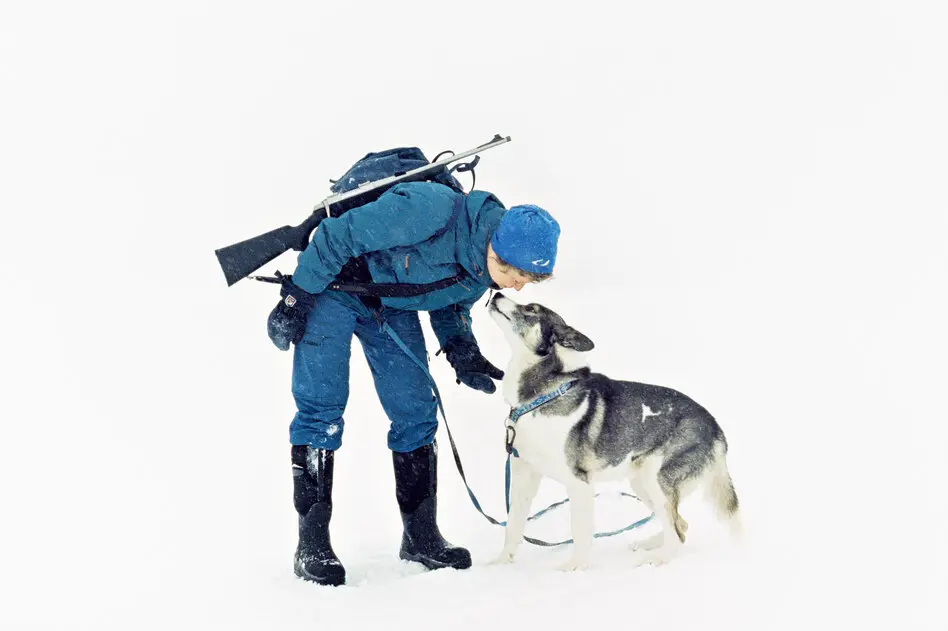
taz: Ms. Lemblé, you live in Brussels, but have traveled to Spitsbergen many times. What fascinates you so much about this Norwegian archipelago in the Arctic?
Catherine Lemblé: I've been there every year since 2017, mostly in winter. The landscape is then covered in snow and there are no trees. Everything is quiet and peaceful. I have never seen anything similar anywhere else. In autumn and spring the colors of the sky change, there are long, deep blue hours. This light is beautiful.
Catherine Lemblé, born in 1990, lives as a photographer in Brussels. Her photo book “Only Barely Still – On Women and Wilderness” (164 pages, 35 euros) was published by The Eriskay Connection in 2025.
taz: Living there is definitely not easy.
Lemblé: Most people live in the capital Longyearbyen. The place is very modern and life is comfortable, there are restaurants and shops. But the nature around it is extreme. You have to be careful not to get frostbite. When leaving the city, you must always have a rifle or flare gun with you in case a polar bear attacks. I can't shoot and didn't want to learn. That's why I initially booked tours with guides. Later I was out with friends.
taz: In your pictures you don't focus on the particular landscape, but on women. Why?
Lemblé: There are these ideas about the Arctic: snow, polar bears, bearded men. I had the impression that certain images were missing. As a young woman, I read many books about life in nature, including those in the Arctic, all of which were written by men. I asked myself: Where are the women in these stories? The Arctic has long been viewed as a place reserved for men; the region was considered too harsh and dangerous for women.
taz: The women there get along very well?
Lemblé: Absolutely. There is no indigenous population on Svalbard. But in other parts of the Arctic, in Canada, Greenland and Alaska, women have lived for thousands of years. Nature, in turn, is often feminized in stories about the Arctic. You can even find this in current texts. She is described as an “ice-cold queen” and there is talk of “virgin land” that needs to be preserved – or, as it used to be said, that needs to be conquered. On the one hand, nature is compared to a woman or a female body, but on the other hand, women have long been denied access to these areas.
taz: Which of the women you show particularly impressed you?
Lemblé: Sarah is my sister's sister-in-law and it was because of her that I traveled to Spitsbergen in the first place. She used to work as a polar bear guard and now leads expeditions on ships. She loves that. Sarah goes into the wilderness very often and became an important person in my life - and in my project.
taz: Was it difficult to take photos in the cold?
Lemblé: I used an analog Pentax camera. I wore thin gloves in the mittens so I could change the film. When you open the camera there is always a risk that it will freeze. This has happened a few times. Then all you can do is go in and wait a few hours.
taz: In the Arctic, temperatures are rising particularly sharply due to climate change. What does this mean for the people of Svalbard?
Lemblé: You can see the changes from year to year. The weather is becoming more unpredictable with climate change. There are also more avalanches. At first I thought: If people were feeling the effects of climate change so strongly, they would have to do everything they could to slow it down. But that's not the case. People fly a lot. I also often experienced the heating being turned up and the windows left open to ventilate. It's a paradox. If you live in Svalbard, you experience climate change particularly strongly. At the same time, your own ecological footprint is also particularly large.