
Germany taz
Research prize against animal testing: there is a risk of euthanasia
Hamburg's prize for research into alternatives to animal testing will not be awarded this year. The left faction fears that he will be hired. more...
Deutsch (original) ·Auto-translated to English
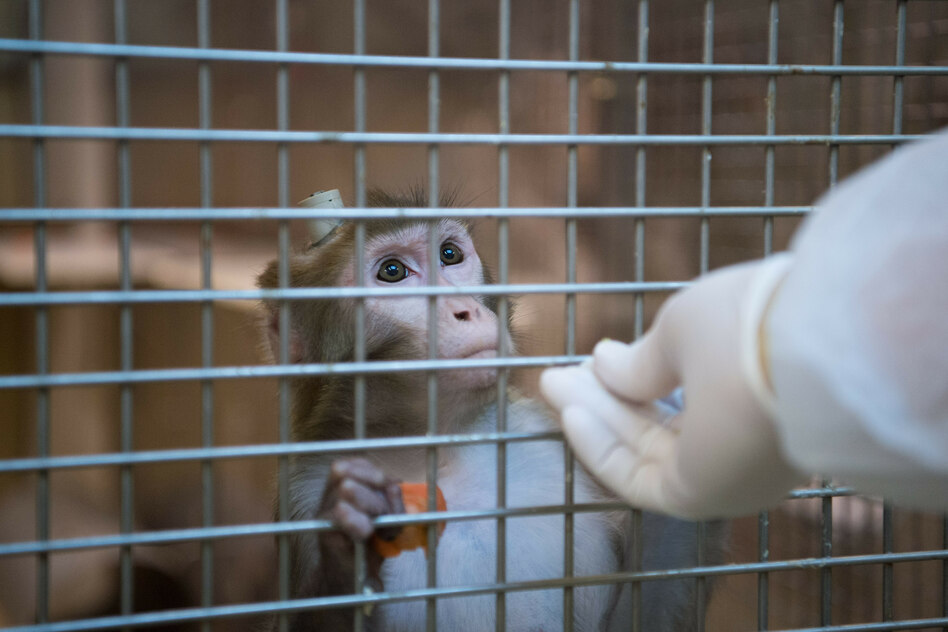
It was started as an ambitious political project by the SPD and the Greens, but now the Hamburg research prize for alternatives to animal testing is threatened with a gradual end. As can be seen from a response from the Senate to a parliamentary question from the Left Party, the award ceremony that was actually scheduled for this year has been completely canceled.
It remains unclear whether any funding will be made available for the prize for the coming year. This means that an important instrument for promoting research without animal testing could be on the verge of extinction.
The red-green coalition launched the “Prize to Promote the Development of Replacement and Complementary Methods for Animal Experiments” in 2016. At that time, the citizens decided to award the award every two years in order to honor outstanding scientific work that helps to replace or reduce animal testing.
In fact, the two-year cycle was only observed in the early years, 2016 and 2018, as the Senate admits in its answer. The prize was only awarded for the third time in 2021, and again in 2024.
The awards included projects such as a reporter skin model that can be used to examine chemical substances for toxic effects, or a digital “map” for kidney organoids that records existing artificial organ models so that researchers worldwide can more easily find the right animal-free model for their kidney research.
The most recently awarded projects “have the potential to revolutionize research and make a significant contribution to greater animal protection,” said Green Consumer Protection Senator Anna Gallina (Greens) at the 2024 award ceremony. With the award, the Senate wants to “actively support the development towards a future without animal testing,” emphasized Katharina Fegebank, also Green Senator for Science.
But now the schedule for awarding the prize has apparently completely collapsed: According to the Senate, work on the fifth edition only began on September 1st of this year “for organizational reasons”. An inter-agency coordination will therefore only take place this quarter. Specific dates for a call for proposals or a possible award are open.
The financing is also unclear. The prize is traditionally endowed with a sum of 50,000 euros. But according to the Senate, it is uncertain whether this money can flow in the coming year: “Whether and in what form funds can be made available in 2027 needs to be examined,” it says simply in the answer to the Left’s question.
In addition, the Senate is apparently also saying goodbye to the previous obligation. In the future, the award should only be awarded “regularly” – depending on the “available resources”.
In a citizen's motion, the left-wing faction demands that the government factions return to their own decision. The Senate must again reliably advertise the prize every two years and guarantee the prize money.
"At every award ceremony, senators were happy to have their photos taken with this prize. Now that it costs work and money, it is being quietly buried," criticizes their animal protection spokesman Stephan Jersch. "If you want to motivate researchers to use animal-free methods, you have to be reliable. A prize that no one knows if and when it will come does not provide any incentive - it is quite obvious that the Senate is no longer behind this prize and its objectives."
Despite decades of criticism from animal protection associations and parts of science, animal testing is still standard practice in basic biomedical research and in pharmaceutical and toxicological testing.
Critics not only criticize the ethical acceptability and the massive suffering of the laboratory animals, but also the scientific validity. Because of biological and genetic differences between humans and animals, the results of animal experiments can often only be transferred to humans to a limited extent. A fundamental phase-out of animal testing has therefore been demanded for years.
Research into replacement methods shows that there have long been promising options. From three-dimensional cell cultures and organ-like mini-tissues, so-called organoids, to computer-aided simulations including artificial intelligence, to so-called “organs-on-a-chip”, there are increasingly sophisticated instruments for depicting human physiology and diseases in the laboratory.
Organs-on-a-chip are artificial cell culture systems the size of a USB stick that replicate the structure and function of human organs. The chips contain tiny channels populated with living human organ and blood vessel cells.
But the transition from traditional practice to innovative technologies costs a lot and requires specialized laboratories. This is precisely why start-up funding such as the Hamburg Research Prize is an important signal for researchers.
The authorities for consumer protection and research emphasize that the Hamburg universities are continuing to work “on a reduction in animal testing in teaching within the framework of the funds made available to them through the Hamburg Future Contracts”. The University of Hamburg organized animal protection days last year and this year. A professorship for 3R methods has also been set up at the University Hospital Hamburg-Eppendorf (UKE) and the Hamburg Center of 3R Research has been established as a networking platform.
3R stands for Replace, Reduce, Refinement. The framework concept is intended to help limit animal testing to the necessary minimum and to keep animal suffering as low as possible. The 3R Center is currently funding three projects, such as 3D-printed training models or placenta models as alternatives, over two years with a total of around 250,000 euros.