
Migration taz
Refugee deportations from Europe: Dobrindt and his colleagues rely on Rwanda
Several European countries want to deport rejected asylum seekers to Rwanda. They would be accepted into internationally funded institutions. more...
Deutsch (original) ·Auto-translated to English
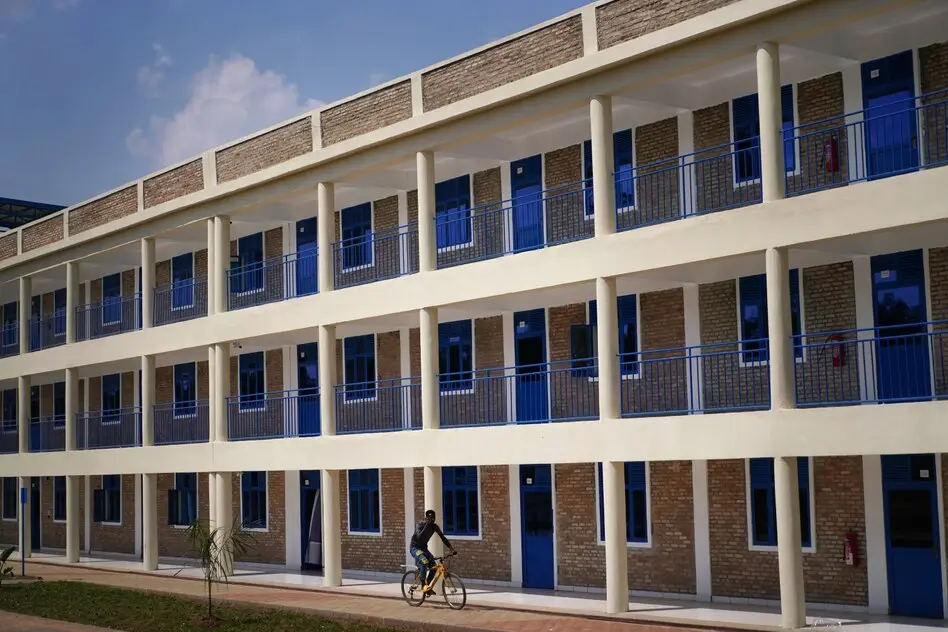
The Gashora transit center is located around 50 kilometers south of Rwanda's capital Kigali, high on a hill between two large lakes. The buildings, built in 2015 with funds from the UN refugee agency UNHCR, house refugees from all over Africa, which UNHCR regularly evacuates from the civil war-torn Libya and brings them to Rwanda. In Gashora they are waiting for their asylum applications, which they submit from there for European countries, the USA or Canada, to be processed.
There are around 700 beds, football and volleyball pitches, pool tables, sewing rooms and driving schools in Gashora to help refugees pass the time. Over 3,000 refugees, mostly young people, have passed through the center since 2019. Around 2,600 of them were flown to safe receiving countries in six years after their asylum application was approved.
The facility, which was created as part of an agreement between the UNHCR, the AU (African Union) and the Rwandan government, could soon accommodate deported migrants from Europe. According to information from Kigali, Rwanda's Interior Minister Vincent Biruta is in Vienna this Monday to sign the migration deal with several European countries - including Germany. The 2027 federal budget earmarks 20 million euros for the model project, of which, according to Spiegel, around 40 places will possibly be financed in Rwanda.
In August and September, delegations from Germany, Austria, the Netherlands, Denmark and Greece visited Kigali several times to arrange such a deal, Rwanda government spokeswoman Yolande Makolo confirmed at the time.
Makolo emphasized in an interview with local media that Rwanda itself has a long history of flight and migration. The genocide against the Tutsi in Rwanda in 1994 led to a refugee crisis throughout the region, with millions of young Rwandans growing up in exile. The small country in the heart of Africa is currently home to around 100,000 refugees, most of them from the neighboring countries of Congo and Burundi.
From Rwanda's perspective, Gashora is a successful model for dealing with refugees. "We took in thousands," emphasized Makolo: "And many of them left again - they were resettled in third countries. That worked very well." The refugees have the choice of either applying for a residence permit in Rwanda, applying for asylum or resettlement in third countries or returning to their home country.
Only very few people want to stay in Rwanda, many refugees in Gashora admit to local journalists. The small country with around 15 million inhabitants is struggling with a high unemployment rate. According to the Rwandan statistics office, it is around 19 percent among young people between the ages of 16 and 30. Around 35 percent of the population works in agriculture, and the average income is less than 2 euros per day. It is economically difficult for migrants to gain a foothold in Rwanda.
Britain was the first country to conclude its own migration deal with Rwanda. The “Rwanda deal” from 2022 ended up being worth the equivalent of around 840 million euros.
But only four migrants were voluntarily flown to Rwanda because lawyers and human rights organizations took action against it in court. In November 2023, the British Supreme Court declared the Rwanda deal unlawful because Rwanda was not a safe third country. The government in London then passed a law in 2024 declaring Rwanda a safe third country, and the two governments concluded a new migration agreement in April 2024 that was intended to address the concerns of the Supreme Court.
However, in July 2024, a few days after taking office, the newly elected Labor government in London unilaterally canceled the deal without formally terminating it. Rwanda went to an international arbitration tribunal in the Hague to claim outstanding payments. This decided at the beginning of this year that London did not have to pay the requested sum.
The “Hope Hostel” in Kigali was renovated in 2022 to accommodate migrants from Great Britain. Originally built to house orphans of the 1994 genocide, the state facility was expanded with British funds into a chic hostel for 50 to 200 people as part of the Rwanda deal. It remains empty to this day - and would therefore theoretically be available now.
European countries are also trying to negotiate such a deal with neighboring Uganda. The Netherlands is in charge. They signed a memorandum of understanding with Uganda's government in September 2025. Due to irregularities in the elections in Uganda in January 2026, the project was initially “put on ice,” Dutch sources tell the taz.
Sources from Uganda's refugee ministry now confirm that the negotiations are now being pushed forward extremely hard again. During the most recent visit by European delegations in September, led by the Netherlands, there was talk of up to 10,000 migrants that Uganda would receive in the next few years. In return, the Netherlands would build schools and hospitals in Uganda - especially in the country's numerous refugee camps.
Uganda hosts two million refugees, more than any other country in Africa. Most come from surrounding crisis regions, from Congo to Sudan. The country is known for its liberal refugee policy. In Uganda they can easily obtain unlimited refugee status and a work permit and can settle permanently. Unlike in Rwanda, in Uganda's large refugee communities there are numerous opportunities for Eritreans, Sudanese or refugees from other nations to get a job and thus an income.
The problem: Uganda's government does not have a transit or reception center like Rwanda where migrants from Europe can be temporarily accommodated. This would have to be built first. The taz has learned from government circles that a possible deal would first have to be decided by the cabinet and then approved by President Yoweri Museveni. “We are not yet as far along as in Rwanda,” it says to the taz.