
World · taz · · 3h
Festival management on austerity measures: “Weimer’s austerity measures would destroy everything”
Deutsch (original) · Auto-translated to English
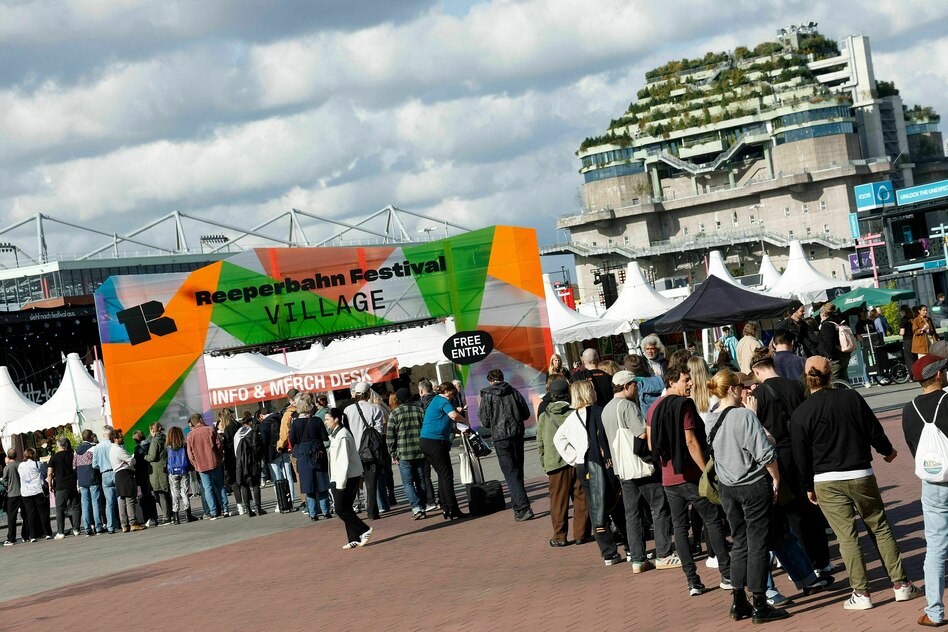
taz: Mr. Schulz, in 2025 your Hamburg Reeperbahn Festival was funded by the federal government with around 6.2 million euros, in 2026 you received 4.5 million euros, and the draft for the 2027 federal budget only provides for 3 million euros. Can you still plan with this?
Alexander Schulz: Originally, around 6.2 million euros in funding was planned for 2026 – for 15 months. For us, the funding period begins in September of the previous year. In January, Minister of State for Culture Wolfram Weimer suddenly informed us that he wanted to reduce our subsidy in the current funding year. Because we couldn't just put this aside, I met with the Minister of State for Culture and the Hamburg Senator for Culture Carsten Brosda in February. The Hanseatic City of Hamburg then increased its subsidy from 800,000 to 1.6 million euros, thereby compensating for around half of the short-term reduction.
taz: Weimer wants to continue to make the city of Hamburg more responsible for financing the Reeperbahn Festival in the future because, in his opinion, it will benefit the most from your event.
Schulz: Gradually bringing the Reeperbahn Festival to a level of international significance was a decision made by Wolfgang Weimer's predecessors. Bernd Neumann and Monika Grütters made this development possible with federal funding. The federal government cannot simply withdraw and shift financial responsibility to the municipality just because we have the most suitable infrastructural conditions in Germany for this format. Especially since the Minister of State for Culture is in no need; at around 2.5 billion euros, his budget for 2027 is about the same as for 2026.
born in 1966, studied applied cultural studies in Lüneburg, founded the Reeperbahn Festival in 2006. Since 2025 he has been a member of the Committee for Communications, Media and Creative Industries of the German Chamber of Commerce and Industry.
taz: What would happen if Weimer gave you 3 million euros in 2027?
Schulz: I believe that this budget draft will be corrected in parliament. Our job is to make it clear to parliamentarians what this cut would achieve. The Reeperbahn Festival would be demoted from an international to a national music industry marketplace quite quickly. If 3 million euros in funding were lost, there would be significantly fewer venues and fewer concerts by talented people. Companies from other continents would soon withdraw due to the lack of cost-benefit effect. Without the international talent, sponsorship and ticket sales would shrink. Within a very short time, everything that was built over two decades in a public-private partnership with taxpayers' money would be destroyed.
taz: Many international musicians are coming to Hamburg this year. Why is Ukraine recognized as the first “Honorary Guest Country”?
Schulz: Despite the war of aggression and almost no budget, Ukraine is continuing to push forward its music exports. We want to support this by giving the country the opportunity to present itself internationally. Three Ukrainian musicians are on stage at the Reeperbahn Festival. Kazhanna makes a more dark pop sound. Ganna, one of the six nominees for the Anchor Award for young talent, combines Ukrainian folklore with jazz. Maryna Krut plays the bandura plucked instrument.
The Reeperbahn Festival will take place from September 16th to 19th, 2026 in clubs and open-air stages in the St. Pauli district of Hamburg.
taz: Maryna Krut performs for Ukrainian troops at the front and generates money for her homeland at benefit concerts in Europe. Is she an isolated case?
Schulz: We learned from Alona Dmukhovska, Head of Music Export Ukraine, that practically all Ukrainian artists do something for the army. This is a kind of social agreement: the military protects the population, the people support the armed forces.
taz: Apart from the performances at the front: Is the concert business in Ukraine actually lying idle?
Schulz: Concerts continue to take place despite the fighting. In 2026, the Atlas Festival was held in Kyiv for the third time since the start of the war with tens of thousands of visitors. In the parking lot of a shopping center, whose underground car park is partly used as an air raid shelter. Despite constant Russian drone and missile attacks, music remains alive and gives hope.
taz: The German artist Christopher von Deylen, alias Schiller, frequently makes guest appearances in the Ukraine. Is that why you invited him to the opening concert?
Schulz: Christopher von Deylen is considered a proven Ukraine expert. At our opening event he will not only describe his personal impressions of the country and its people, but will also perform together with Julija Sanina, singer of the Ukrainian hard rock band The Hardkiss.
Read the full story at the source
Source: taz