
Germany taz
Expert commission set up: Fewer trains, but more punctuality?
The train is more unpunctual than ever. A commission of experts should now look for solutions. This could also involve a reduction in supply. more...
Deutsch (original) ·Auto-translated to English
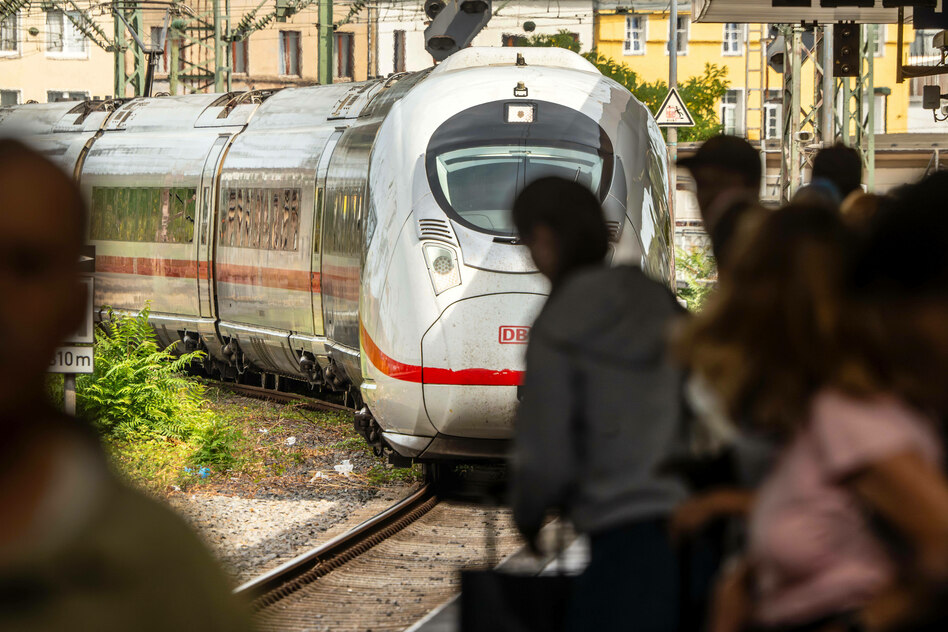
dpa | A commission of experts convened by the railway is supposed to investigate how trains can quickly become more punctual again despite the aging and overloaded rail network. A possible building block for this could also be less traffic on the rails, as the federal government's former railway commissioner, Enak Ferlemann, told the Tagesspiegel: "An example could be that a long-distance train only runs once an hour between Berlin and Hamburg instead of every 30 minutes, but the trains are reliable."
Ferlemann is a member of the supervisory board of the railway subsidiary DB InfraGo, which is responsible for the infrastructure and which convened the expert commission. He should also be a member of the commission. This emerges from information from InfraGo for the Transport Committee in the Bundestag, which is available to the German Press Agency. The Tagesspiegel had previously reported on it.
The committee called “Robust Timetable” is scheduled to start work in Berlin on November 3rd. "The experts will discuss at several meetings with a lot of experience and from many perspectives in an open-ended manner. Suggestions for more reliability on rail should be available in the new year," said a railway spokesman. “The results will be evaluated together with politicians, countries and the industry.”
The high level of unpunctuality on the railway is mainly due to the poor infrastructure. In addition, there is congestion, especially in the transport hubs. And: “In 2025, more than 10 percent of trains ran on routes with a capacity utilization of over 115 percent,” says the information for the transport committee. "As a result, traffic jams on German rails continue to grow. In the past ten years, traffic jam delays have increased by 150 percent."
The railway is currently renovating and building at a record level in order to make the rail network fit again in the long term. Passengers have so far noticed little of this. In the current year, almost every second long-distance train was unpunctual in most months. If things continue like this, there will probably be a negative record for punctuality at the end of the year. Last year, only 60 percent of all long-distance trains reached their destination without major delays.
The expert commission should now look for solutions “to enable more stable and reliable rail operations during the upcoming years of intensive construction activity,” as the information continues. According to the information, the committee receives support from the Swiss company SMA und Partner, which specializes in timetables.
There was criticism of the move from the industry, particularly with a view to a possible reduction in supply. “Having fewer trains running means fuller trains and not automatically more punctual trains,” said Dirk Flege, managing director of the lobby association Pro-Rail Alliance. “In the worst case, the few trains will be even more unpunctual because they cannot leave due to overcrowding.” The right solution is to create more capacity on the rails.
The managing director of the competitor association Die Güterbahnen, Peter Westenberger, made a similar statement. “The entire industry rejected the simple approach of generally driving less instead of more in the ‘Reliable Rail Task Force’,” he said.