
Germany taz
European Central Bank: Markus Brunnermeier is to become the new ECB chief economist
The federal government is recommending the Germans for the office. To do this, she will probably have to accommodate France for the top position at the central bank. more...
Deutsch (original) ·Auto-translated to English
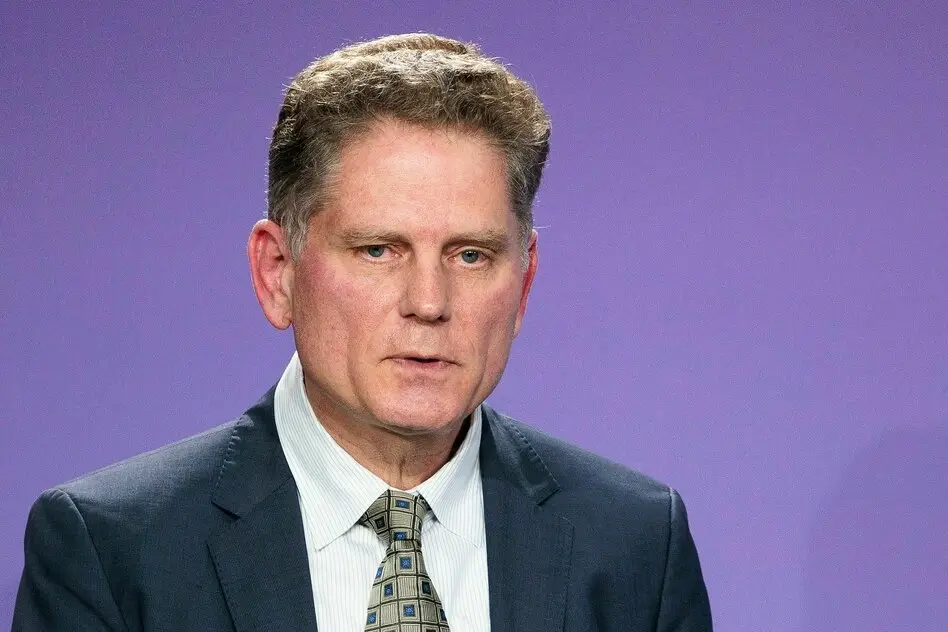
An important preliminary decision has been made in the race to succeed Christine Lagarde at the head of the European Central Bank (ECB) in Frankfurt. The federal government has proposed German economist Markus Brunnermeier for the position of ECB chief economist. Berlin has thus opened a major personnel castling, which could result in the nomination of the Spaniard Pablo Hernández de Cos as Lagarde's successor.
Brunnermeier researches international financial markets and macroeconomics at the US elite Princeton University. He advises the Bundesbank and was a member of scientific committees of the International Monetary Fund (IMF) and the US Federal Reserve. “Germany can shine with a candidate like this,” said Commerzbank chief economist Jörg Krämer.
If everything goes well, Brunnermeier would be the third German to take on the strategically important position of chief economist: he prepares the ECB's interest rate decisions and is therefore of central importance for monetary policy. Jürgen Stark (2006 to 2011) and Otmar Issing (1998 to 2006) previously held this job.
Federal Finance Minister Lars Klingbeil (SPD) and Chancellor Friedrich Merz (CDU) prepared the proposal together. He is part of a larger personnel package that also includes the German economist Isabel Schnabel. She has been a member of the ECB Executive Board since 2020 and wants to move to the International Monetary Fund at the beginning of January.
We are still looking for a suitable replacement for Schnabel. If possible, it should be a woman again in order to balance out the male dominance a little. If only men move into the Frankfurt Euro Tower after Lagarde's departure, it would not make a good impression, it was said at the last meeting of the Eurogroup in Brussels.
France has already expressed interest. Possible French candidates include the deputy head of the French central bank, Agnes Benassy-Quere, the former OECD chief economist Laurence Boone and the economist Helene Rey. Paris was also eyeing the position of chief economist, but that has now apparently been taken.
The question remains whether and how Germany and France will come to an agreement on the delicate question of Lagarde's successor. Paris has signaled a preference for the Spaniard de Cos. However, the Dutchman Klaas Knot is also still in the running. Knot is a supporter of a tight monetary policy, which Germany also prefers. In contrast, de Cos is considered somewhat laxer.
In order to assert Brunnermeier as chief economist, Berlin could now be forced to stand behind de Cos in order to put together a personnel package together with Paris. Germany and France are the two heavyweights of the euro zone. If they united behind the Spaniard, Knot would no longer have a chance. According to Dutch media, he is already planning his withdrawal.
Whatever the outcome of the race, Lagarde's successor at the top of the ECB will face difficult times. Inflation in the euro zone will remain high next year, according to the new economic forecast presented by the EU Commission in Brussels on Tuesday. According to the Brussels estimate, in 2026 and 2027 the inflation rate could be 3.2 and 3.1 percent, well above the ECB's target of 2 percent.
Brussels is also concerned about the growing mountains of debt in the euro area. The EU Commission is forecasting a debt ratio of 89.6 percent in relation to gross domestic product this year - after 88.6 percent in 2025. According to the EU debt rules, the permissible limit is 60 percent. At least there was some good news: growth is expected to pick up slightly next year to 1.2 percent.