
Politics taz
EU sign against Trump: International Criminal Court receives Sakharov Prize
The European Parliament recognizes the work of the International Criminal Court with the Sakharov Prize - and in doing so takes a clear stance against the US government. more...
Deutsch (original) ·Auto-translated to English
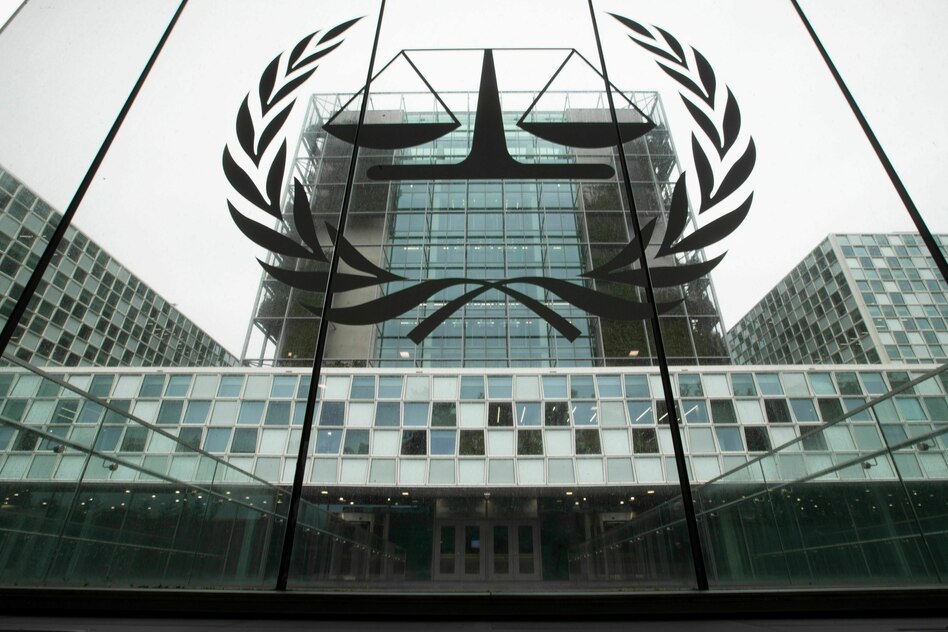
dpa | The European Parliament awards the Sakharov Prize to the International Criminal Court, which is currently under strong pressure from the USA, and its representatives. EU Parliament President Roberta Metsola announced the decision in Strasbourg. “The European Union is founded on respect for multilateralism and international institutions, and this award recognizes the important work of the Court in upholding international law and justice.”
The prize will be awarded in December at the plenary session of Parliament in Strasbourg. The ICC, based in The Hague (Netherlands), has been prosecuting the most serious crimes such as genocide, war crimes and crimes against humanity since 2002. The Court has 125 contracting states.
The Court thanked Parliament for the award. This is important support for the court and everyone who advocates for international law. Court President Tamako Akane pointed out that the court is currently under great pressure from US sanctions.
The Sakharov Prize reaffirms the “importance of independent judicial authorities,” said a statement distributed in The Hague. “It underlines the importance of continued international cooperation and support so that the Court can carry out its mandate independently and impartially in the service of justice and the victims of the most serious crimes.”
The court is under pressure from the US government, especially because of the arrest warrant against Israel's Prime Minister Benjamin Netanyahu, which has been in place since 2024. The USA accuses the Court, among other things, of acting with political motivation. Netanyahu is accused of war crimes in the Gaza Strip. He rejects the allegations. In addition to the USA and Israel, Russia, China and Turkey, among others, do not recognize the ICC.
The US government has been taking action against the court for a long time, including because of preliminary investigations against US citizens for possible war crimes in Afghanistan. As early as February 2025, Trump ordered sanctions against employees who, for example, could no longer receive emails or use credit cards. Sanctions were also imposed on court president Tomoko Akane. In September, US President Donald Trump called on states to withdraw from the ICC.
Shortly afterwards, at the beginning of October, the US government imposed sanctions on the court itself. This could result in the court being completely disconnected from digital and financial transactions, including banking transactions and emails. However, the measures should only come into force after 180 days.
The announcement came hours after the Nobel Peace Prize was awarded to South African lawyer Navanethem Pillay, who was a judge at the court from 2003 to 2008.
After the sanctions were imposed, Federal Justice Minister Stefanie Hubig spoke of a dark day for international law and the idea of a rules-based world order. The SPD politician said it was a “bitter punch line” that this happened on the same day that a former court judge was awarded the Nobel Peace Prize. She emphasized: “Germany has stood up for the International Criminal Court from the very beginning – and we must continue to do so.”
Nine contracting states, including Germany, rejected the sanctions and assured the court of their support.
The court itself condemned the punitive measures taken by the USA. “It is an attack on the rule of law and on the foundations of the international legal order that undermines the simple principle that no one is above the law,” the court said in a statement. It spoke of an “unprecedented step”. The US government had previously imposed sanctions on 13 judges and prosecutors. The US attempted to “obstruct the course of justice,” the court said.
The Sakharov Prize has been awarded by the European Parliament since 1988 to individuals or organizations committed to the defense of human rights and freedom of expression. It is endowed with 50,000 euros. In 2024 it went to the opposition in Venezuela, and in 2025 to two imprisoned journalists, Andrzej Poczobut from Belarus and Msia Amaghlobeli from Georgia. Poczobut was released in April this year after five years in prison as part of a prisoner exchange.
Metsola also recognized the other nominees. Tundu Lissu campaigned for free and fair elections in Tanzania and is currently in prison. The two sisters Taraneh and Romina Rahimi were nominated for the Sakharov Prize “on behalf of all those who are persecuted by the Islamic regime in Iran”. “Taraneh and Romina should actually have their whole lives ahead of them, but one faces the death penalty because of her protest, the other faces decades in prison,” said Metsola. “They all now belong to our Sakharov family.”