
Politics taz
Findings from the AfD leak: enemy lists and swastika flags
The published AfD emails provide a deep insight into the party - into problematic members and ex-members, internal disputes and lists of alleged Antifa activists. more...
Deutsch (original) ·Auto-translated to English
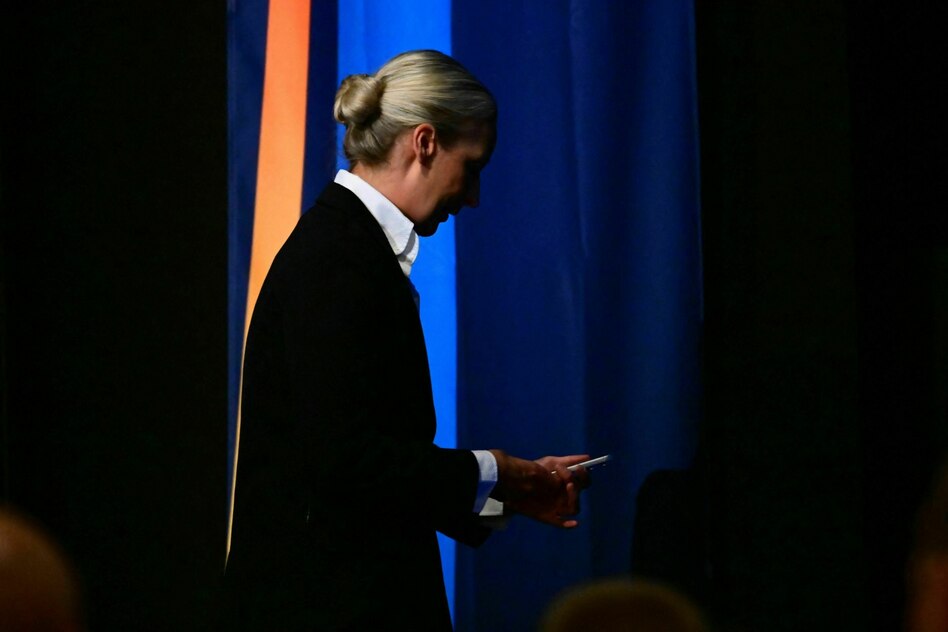
An anonymous hacker group published over 400,000 emails including thousands of images and documents this week. 11 mailboxes are affected, including those of federal spokesman Alexander Gauland and the co-state executive spokesman for Mecklenburg-Western Pomerania, Leif-Erik Holm.
The very large data set of over 280 gigabytes also includes the party's internal communications from March 2013 to September 2026. For a few days now, several media outlets have been busy evaluating and verifying the data set, which is difficult due to its size. However, there is much to suggest that the leaked data is credible. Press inquiries from the taz, which correspond to real events, are also part of the data set. The IT specialist Lilith Wittmann initially believes the data is real and Spiegel has already reported that parts of the leak could be confirmed.
However, some insights are now emerging: the details of the sometimes heated conflicts within the party, which sometimes led to expulsions from the party. It was not uncommon for individual (former) members to be concerned with Nazi-glorifying and conspiracy-ideological positions.
Roland Oschlies, who is listed as a spokesman on the AfD Aachen homepage, was also apparently considered problematic internally. At the time of going to press, it could not be confirmed whether Oschlies still has a position within the extreme right-wing party. Various Facebook posts from Oschlies are documented in an email with numerous attachments; he writes, among other things, that a “satanic Rothschild gang is in covert collaboration with the Jesuits, ‘Illuminati’, etc.” I “arranged” both world wars. In other posts he also suggests that the Wehrmacht's attack on Poland in World War II did not take place. He assumes that the “Black Lives Matter” movement and unspecified “anti-fascist movements” want “us to die and be replaced by dark-skinned people.”
The leak also contains a document that confirms the exclusion of Benjamin Schrempp, a former AfD member in the Bottrop district association, from the party. Schrempp is said to have sold a “flag with swastika symbolism” at an AfD stand in Bottrop’s pedestrian zone. Another application for party exclusion concerns a member of the AfD Rostock district association, Frank Lemp. According to the letter, he is said to have posted in his Whatsapp status “a photograph that shows a standard with the forbidden SA lettering ‘Germany Awake’” along with a swastika. Lemp is also said to have taken part in an NPD event.
In addition, various emails and documents indicate that several active AfD members maintained connections to right-wing extremist groups that they viewed as unproblematic. For example, in an email history there is a justification from the AfD-EU politician Hans Neuhoff, who justifies his participation in events organized by the right-wing extremist “Institute for State Politics” (IfS) run by publisher Götz Kubitschek, which no longer exists.
After the Federal Office for the Protection of the Constitution classified the IfS as “certainly right-wing extremist,” Neuhoff stopped appearing there, “also to protect the party.” He also writes: “It does NOT mean that I consider the BfV’s classification of the IfS […] to be objectively justified.” Neuhoff also suggests suspending “formal cooperation” with “GK” – which probably means Götz Kubitschek – “until normal conditions prevail again in Germany”.
The proximity to the Identitarian Movement (IB) and other right-wing radical groups is particularly relevant for the debate about a possible ban on the AfD. Also interesting in this context is an email from 2018 from Georg Pazderski to Alice Weidel, who was co-chair of the AfD parliamentary group at the time.
The then state chairman of the AfD Berlin Pazderski referred to four employees of AfD MPs who had “close relationships with the IB”. This could still “fall on the AfD’s feet”. The “submarines” – as Pazderski describes them – tried to build a network within the parliamentary group in order to then have the “best starting positions” for the 2021 federal election.
Pazderski is now no longer a member of the AfD; he left in 2024. But according to taz research, at least two of the IB “submarines” are still part of the AfD: One is Joel Bußmann, who is now part of the AfD city council group in Wanzleben-Börde. When asked by taz, he denied that he was or is active at the IB. The other person mentioned advises an AfD MP in the Brussels EU Parliament. He doesn't answer a taz query, but posts it on X.
Many emails also provide an insight into how the AfD thinks about alleged or actual political opponents. In 2017, AfD officials are considering how to deal with an alleged Antifa photographer at the federal party conference in Hanover. He posed as an image photographer and received accreditation for the event. But the photographer never worked for Bild, he tells the taz in an interview - and the AfD officials also know that.
Before the federal party conference, the question arises as to whether the party will cancel the photographer or not. Otherwise, they say, you can take it “on site”. In any case, he was under closer observation because his name alone was marked in red on a list of media professionals. But in the end he isn't accepted. The photographer is not the only one to whom the AfD attributes left-wing political views. Journalists from SWR, the Italian newspaper Milano Finanza and the DuMont publishing house are also marked as left-wing activists on a list.
Another list appears in the leaked emails. This time she is collecting alleged members of Antifa. While Jürgen Antoni, spokesman for the AfD in North Rhine-Westphalia, speaks of 2,000 names in his email, the Excel document contains 24,521 names. The list is meticulously maintained: it contains first and last names, addresses, telephone numbers and email addresses. It is currently not possible to verify whether the people were actually part of Antifa. According to Antoni, the list is intended to help “keep an alert eye on the people”.
The emails provide a particularly great deal of insight into the party expulsion process of AfD member of the Bundestag Matthias Helferich. The file with evidence that the state arbitration tribunal of the AfD North Rhine-Westphalia based its decision to exclude Helferich last year can be found below.
The harsh tone between AfD officials is particularly evident in these emails - which is particularly evident in the direct communication with Matthias Helferich. The AfD parliamentary group leader in Monheim, Heinz Burghaus, ends his email to Helferich with: “Just do it instead of spewing your cornflower-blue poison!” The lawyer Helferich is notorious for his love of the Nazi symbol of the cornflower. In 2021, chats became public, which can also be found in the emails in which he mentions Nazi references more than once.
However, the extent that the files reveal does not seem to have impressed the AfD's Federal Arbitration Court. It lifted Helferich's exclusion from the party in the summer. Helferich is allowed to remain in the AfD. There he is currently at the center of an ever-escalating power struggle with the current NRW AfD state leader Martin Vincentz. The state elections are coming up there next year.