
Germany taz
Eritrea in the conflict with Ethiopia: “The Eritrean opposition is deeply divided”
Eritrea and Ethiopia are once again facing each other as war opponents. Exiled journalist Zekarias Kebraeb on the consequences for Eritrean society. more...
Deutsch (original) ·Auto-translated to English
taz: Mr. Kebraeb, in October Eritrean troops moved into neighboring Ethiopia to support the rebels in the Tigray province there against the Ethiopian central government. You are watching this conflict from Germany. What do you know about it?
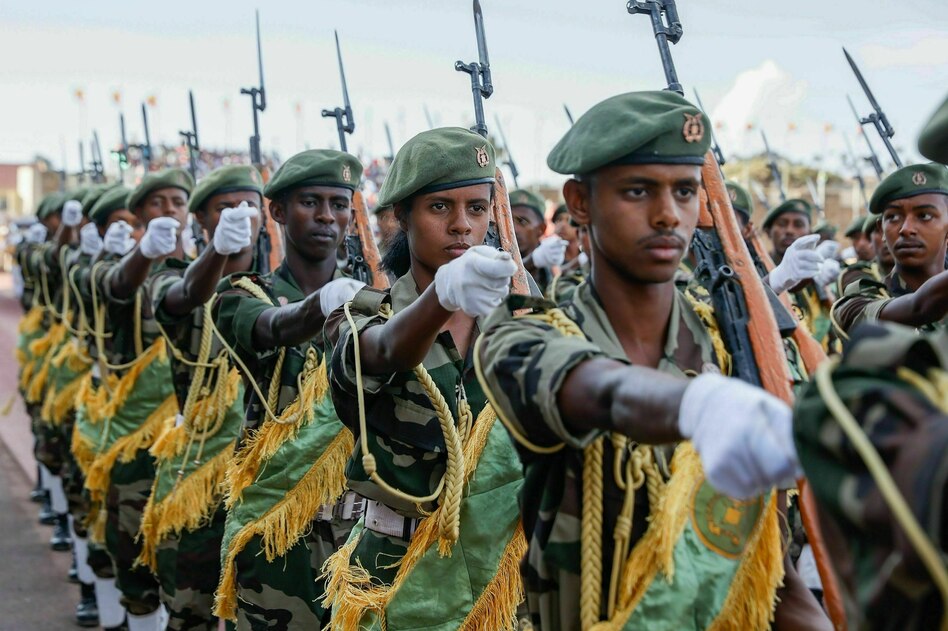
Zekarias Kebraeb: The conflict began in September as a new Ethiopian civil war. The Tigray militias fled from the military superiority of the central government close to and across the Eritrean border. Ethiopia then closed the Eritrean embassy on October 1 and expelled diplomats. Eritrea responded with the same step. International media images showed Eritrean troops on personnel carriers in the Ethiopian province of Tigray. Ethiopia fought them with drones. Since the Eritrean military is only trained for ground combat, it quickly retreated behind the country's border.
Zekarias Kebraeb has lived in Nuremberg as a political refugee from Eritrea since 2005. The 41-year-old author and journalist runs the Eritrean exile medium Mestyat Betna (Mirror of Eritrea) from Germany.
taz: What do you know about deaths and injuries among Eritrean soldiers who were forced into the war like slaves?
Kebraeb: Unfortunately nothing. Since Eritrea officially denies having been militarily active in Ethiopia, the government of course doesn't talk about it.
taz: In the war from 2020 to 2022, Eritrea supported Ethiopia's central government against the insurgent TPLF in Tigray. How come Eritrea has now switched sides?
Kebraeb: Eritrea wanted to defeat the Tigray militias militarily, but Ethiopia made peace with them in 2022. Eritrea was angry about this and relations between the two countries deteriorated. In 2023, the Ethiopian prime minister called for his country's access to the sea in parliament, thereby calling into question the independence of Eritrea, which lies between Ethiopia and the Red Sea. This led to Eritrea allying with the opponents of the Ethiopian government.
taz: The government in Eritrea claims that the Ethiopian military invaded Eritrea. Do you have any information as to whether this is true?
Kebraeb: Ethiopia captured some small border towns in October, such as the long-contested town of Badme. The big worry is that Ethiopia will invade the entire country. The US Secretary of State has so far urged Ethiopia not to do this.
taz: If Ethiopia conquered Eritrea, Eritrea would be rid of the brutal dictatorship - wouldn't that be welcome?
Kebraeb: The Eritrean opposition is deeply divided about this. When I speak of opposition, I mean that in the diaspora, because opposition would be unthinkable in the military dictatorship of Eritrea itself. Indeed, some opposition figures see Ethiopia as an ally in overthrowing the brutal dictatorship in Eritrea. Others see this as a surrender of Eritrean sovereignty, which they reject.
taz: Is there a mobilization in Eritrea for a new war?
Kebraeb: Yes. Some of Eritrea's population is forced to do national service for life. This can mean military service or forced labor in the civilian sector. My sources say that a number of civilian forced laborers are currently being transferred to the military. But the regime is also mobilizing in the diaspora.
Kebraeb: Internationally, organizations close to the regime organize meetings or Eritrea festivals. There they collect money for the war. In Germany there has been such a meeting in Wuppertal, and one has been announced for Mannheim. The diaspora Eritreans are the internationally isolated regime's most important source of finance. Some opposition members are also taking part; they see these meetings as necessary to defend Eritrean sovereignty because the regime appeals to their national feelings in the face of the threat of war.
taz: Due to the Tigray conflict and the war in Sudan, Eritrean refugees' escape routes from the country are blocked. Where else can you escape from forced service and a possible war?
Kebraeb: That's difficult. There are still ways to get to Ethiopia, but life there is no longer safe for Eritreans. Many flee to Uganda. The capital Kampala, where I have already been, seems like a big Eritrean city with many Eritrean shops. The population there shows a unique solidarity towards refugees, but many Eritreans are still desperate and even commit suicide. Then the escape route via Belarus and Poland plays a role. Unfortunately there are many deaths there. I had to identify a relative in a mortuary in Poland who had frozen to death while crossing the border. Civil society in Europe should take a look.