
World taz
Remembering the “Polish Action” in 1938: The dress rehearsal
In October 1938, the Nazis deported a Jewish family from the Rhineland. A photo from back then shows the enthusiasm of her fellow citizens. more...
Deutsch (original) ·Auto-translated to English
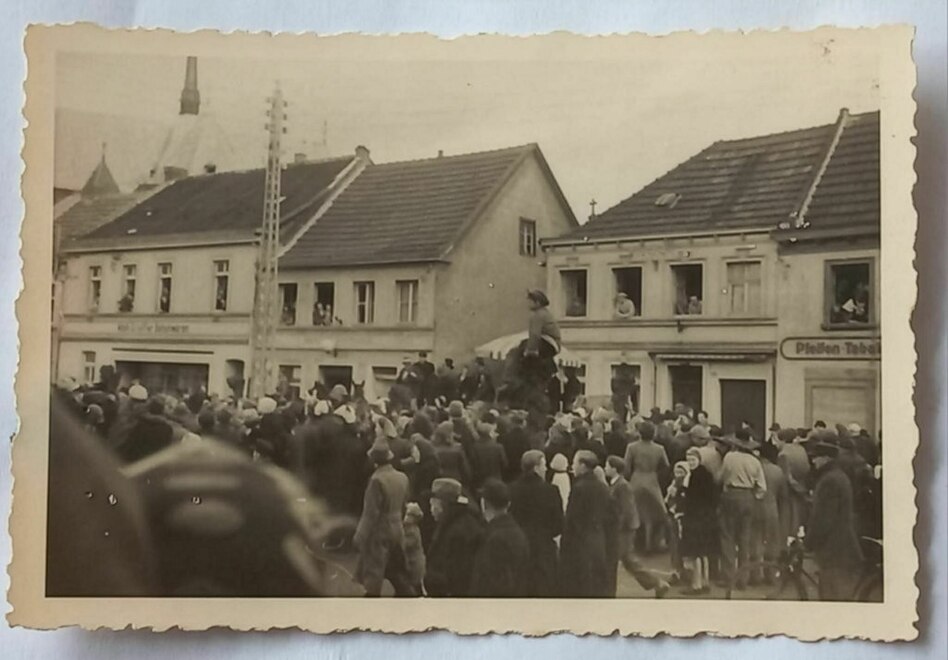
A photo showing a well-filled German marketplace. The curiosity seems enormous, the mood is good. People not only populate the square, they also look out of many of the windows of the surrounding houses. None of them look sad. But on October 28, 1938, in the small Rhenish town of Bedburg an der Erft, it wasn't about fruit and vegetables, there was no livestock market either, and there was still a long way to go until the next carnival session.
The back of the photo explains which event occurred. It says: “1938 My arrest”. Abraham Gartenberg probably wrote it. His crime was that he was a Jew with Polish papers. He and his wife Erna were taken into custody the day before. Now it was a matter of the owner of the Bedburger ready-to-wear store at Friedrich-Wilhelm-Straße 5 and his family being driven out of the country.
There was a horse-drawn cart in the market square with the Gartenbergs on it. With this car and accompanied by the police officer Franz Spakowski we went to the small town's train station, then on to Cologne-Deutz, where the Polish Jews from the Rhineland were rounded up in order to get them out of the country.
On these days around October 28, 1938, around 17,000 Jews from all over Germany were forcibly deported to Poland. The neighboring country planned to revoke the citizenship of Polish Jews living abroad. That was reason enough for the Nazis to deport these people to their supposed homeland - without their belongings, without warning and without mercy. Many had not been to Poland in their entire lives, including Gartenberg's eight-year-old daughter Inge.
A train with the family from Bedburg and hundreds of other deportees went to Neu-Bentschen (today Zbąszynek), then located on the eastern border of the German Empire. Then the people were driven to Poland, where they were anything but welcome. Some wandered around the border area for days.
The action can be seen as a dress rehearsal for the deportations of German Jews that began in 1941 for their murder in the East. The Reichsbahn, police and SS already worked hand in hand here.
The photo documents the approval of large sections of the population for the anti-Semitic action. They turned the brutal deportation of a Jewish family living among them into a joyous spectacle.
We owe the picture to the Gartenberg family, who own it, and the “LastSeen” initiative, which researches evidence of deportations of Jews. Project manager Alina Bothe classifies the significance of the photo: "The deportation in October 1938 was a turning point. For the first time, thousands of people were deported from Germany, out of their homes. The Bedburg photo, which has now been carefully researched, shows what we know from sources from various places: A lot of people watched with enthusiasm and thought the deportation was right."
The Gartenberg family was very lucky. It first reached Lwów (now Lviv) in southeastern Poland via Posen and from there reached the rescue of Palestine after the start of the war.