
Germany taz
Search for a final storage facility: Stop separating nuclear waste!
The search for a final repository for radioactive waste is making progress. However, the majority of nuclear waste is ignored. That's not a good idea. more...
Deutsch (original) ·Auto-translated to English
T he search for a final repository for German nuclear waste is making progress step by step. In an interim report, the Federal Agency for Final Storage further narrowed down the areas in question - to just 5 percent of the federal territory. Next year she wants to name specific regions that are suitable for further above-ground exploration. However, it will still take decades until a location is named and a final storage facility is built and filled.
One flaw: The process only focuses on the approximately 27,000 cubic meters of highly radioactive nuclear waste. It is being examined whether additional disposal of low- and medium-level radioactive waste is possible. But this is not an explicit requirement.
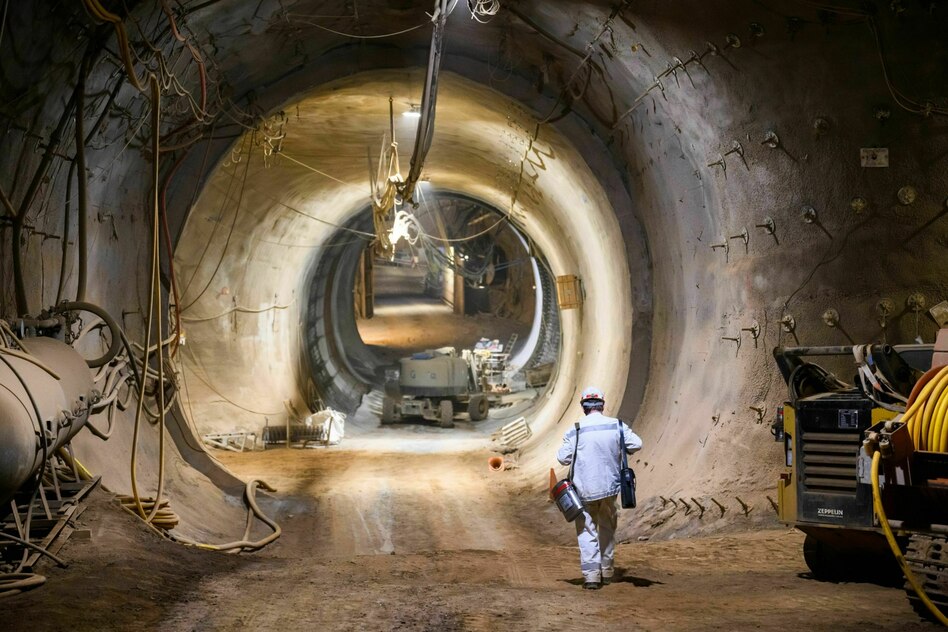
This shoe also puts a lot of pressure on you. The former iron ore mine Schacht Konrad in Salzgitter has so far been designated for the less radiant and heat-generating nuclear scrap - which makes up around 95 percent. But the location is in jeopardy. Environmental groups consider it unsafe and are suing against the building permit. Water enters the shaft and the waste cannot be stored there in a way that can be retrieved - a no-go from the perspective of current research.
The taz is an independent, left-wing and opinionated daily newspaper. We have been arguing in our comments, essays and debate texts since the taz was founded in 1979. We often cannot and do not want to agree on an opinion. That's why you'll find some completely opposing positions here - all part of the very broad left-wing spectrum of opinions.
But above all: the Konrad shaft is much too small. A maximum of around 300,000 cubic meters of nuclear waste that was generated during the operation of nuclear power plants as well as in research and medicine may be stored there. However, there would definitely be no space in Salzgitter for the barrels to be recovered from the damaged Asse salt mine and for the residues from the Gronau uranium enrichment plant - roughly estimated at around 150,000 cubic meters each.
The ongoing search process would therefore have to focus on a location that can safely accommodate all types of nuclear waste that has been generated and is still being generated. An alternative would be to restart the search process for all low- and intermediate-level radioactive waste that was launched in 2017. In any case, ignoring the problem or putting it off for the long haul is not a good idea.
Perhaps a look beyond the borders will help: In Switzerland, a location near the German border for all categories of waste is being discussed, while France is planning its final storage facility for high- and medium-level radioactive waste in Bure. Both projects are encountering resistance from environmental and citizen groups. This will be no different in Germany. Ultimately, no one can give a reliable guarantee of safety over hundreds of thousands of years.