
Politics taz
El Salvador: Poor justice, overreaching government
El Salvador's President Nayib Bukele has announced that he will release tens of thousands of gang prisoners. Human rights organizations are alarmed. more...
Deutsch (original) ·Auto-translated to English
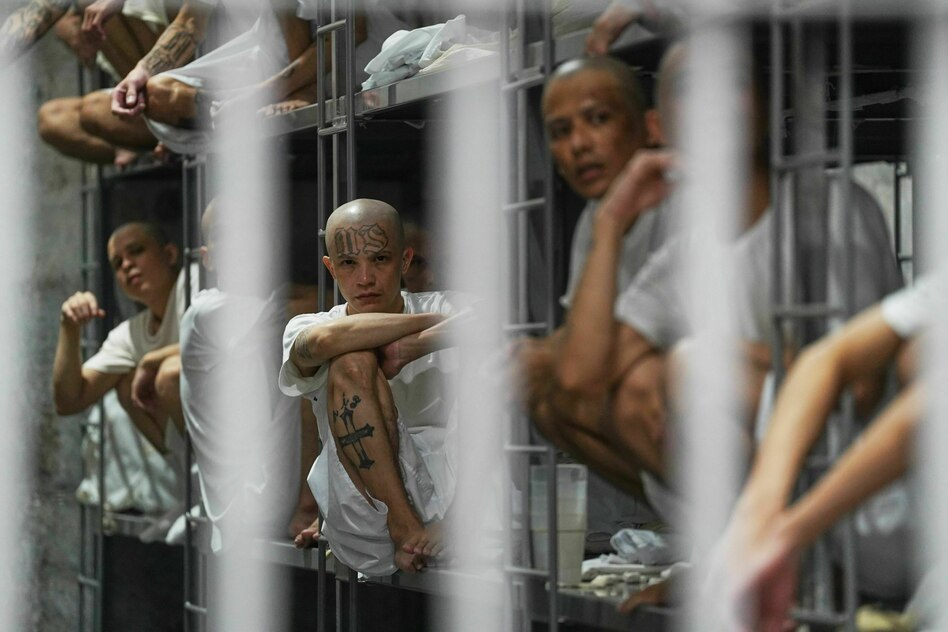
The first Mareros, members of the two large gangs Mara Salvatrucha and Barrio 18, are said to be up to mischief again in their respective home communities in El Salvador. This emerges from statements and warnings on social networks. The reappearance of well-known protagonists of these two widespread gangs, which had long since mutated into criminal networks, could be an indication that the government of Salvadoran President Nayib Bukele has actually already released the first gang members.
This is exactly what Nayib Bukele announced at a press conference in San Salvador on October 13th: the release of thousands of “collaborators of the two gangs” by a legal commission. They should examine each case to ensure that only gang aides without any connection to capital crimes are released.
But this is anything but easy, because according to official figures, 93,000 people have been arrested since March 2022, when the state of emergency was declared. The majority of them are behind bars, waiting for their cases to be investigated and the courts to take action. “This takes time because the judiciary in El Salvador is hopelessly overwhelmed and has neither been increased nor provided with additional resources,” criticizes Abraham Ábrego. He is director of the human rights organization Cristosal, which fled El Salvador to Guatemala in July 2025 because it was no longer safe.
Ábrego finds it significant that it is not the judiciary that makes such an announcement, but the authoritarian ruling president. For Ingrid Escobar from the legal aid organization Socorro Jurídico Humanitario, this is further evidence that the judiciary is controlled by the executive and has lost its independence.
In addition, the announced review of the cases by a commission requires additional staff and expertise. "Nayib Bukele did not comment on this. At the press conference he spoke of collaborators, of people who are guilty of working with the gangs. However, human rights organizations have documented hundreds of cases of unjustly imprisoned people. What happens to them, what to the numerous cases where detainees died in custody without evidence," asks Ábrego.
A state of emergency has been in effect in El Salvador since March 2022, which is extended once a month by Parliament. “Why when, according to the government, El Salvador is one of the safest countries in the Western Hemisphere,” asks lawyer Ingrid Escobar. She has been living abroad since June 2025 - first in the USA, now in Mexico, where she received political asylum and from where she and her team are trying to coordinate legal assistance in El Salvador.
This is anything but easy, as many human rights lawyers have left the country, while others, like Ruth López, have been in prison for almost 17 months. López, a lawyer with a lot of expertise in detecting corruption, is popular in El Salvador, worked for Cristosal and has repeatedly drawn attention to corruption in the environment of the president and his family. She is an inconvenient, was arrested on charges of embezzlement of state funds.
But despite international protests, the case against the lawyer, who was visited in her cell by SPD MP Frank Schwabe a few weeks ago, has still not been opened. For Abraham Ábrego it is clear that there is nothing conclusive that López was imprisoned because she did not stop at the presidential family. Ingrid Escobar shares this assessment, and Amnesty International has declared López a prisoner of conscience.
There is also increasing evidence and evidence that the Bukele family is becoming increasingly wealthy. The investigative media El Faro, which works from exile, has calculated and presented evidence that the Bukele family owns twelve times what it did when Nayib Bukele took office. “Why does the family now own large coffee plantations, stretches of beach and historic buildings in the core of several cities?” asks lawyer Escobar.
Together with the Inter-American Commission on Human Rights and other human rights organizations, she prepared an event on perversion of justice in El Salvador before the elections. It will take place at the end of October and a central topic is the presidential elections in February 2027.
“We are drawing attention to the fact that Nayib Bukele is running for re-election for the second time, which the constitution prohibits and that fundamental rights are being permanently curtailed,” said Escobar. The permanent extension of the state of emergency is responsible for this. This also means that the government has to deal with public money much less transparently - a gateway for corruption, according to human rights organizations.