
Germany taz
Another woman is being trafficked: Who will be the new Federal President?
The discussion about Steinmeier's successor is gaining momentum. A new name has emerged. This prompted the Chancellor to clarify. more...
Deutsch (original) ·Auto-translated to English
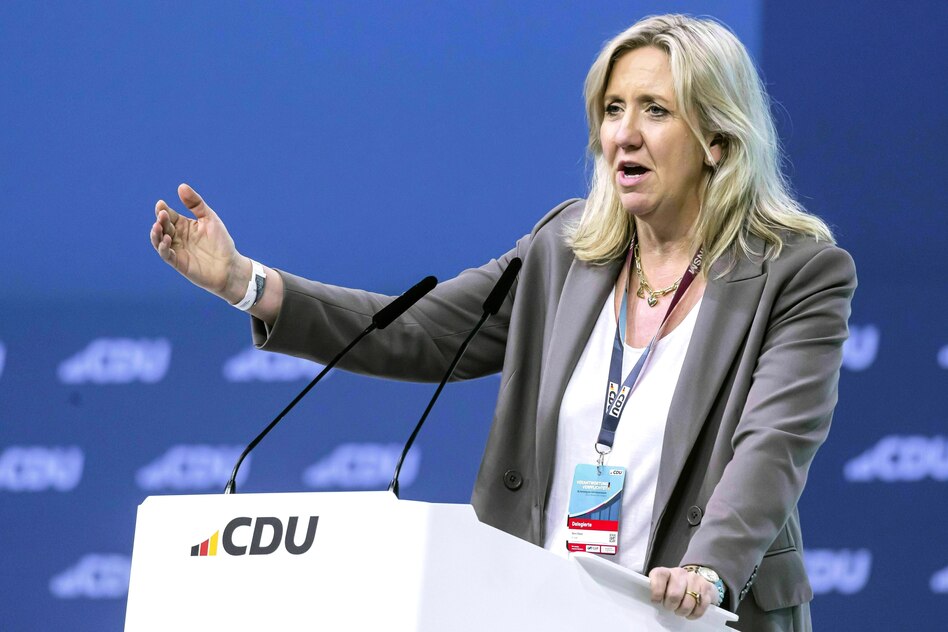
dpa | Chancellor Friedrich Merz continues to see several possible candidates to succeed Federal President Frank-Walter Steinmeier and at the same time reaffirms the CDU's claim to the right to make proposals. This was made clear to those around him on the sidelines of his trip to Asia after the media reported that he favored the Hessian parliamentary group leader Ines Claus.
So far, Merz has “neither made a decision nor made a proposal,” it was emphasized by those close to the Chancellor and CDU chairman. It still applies that the CDU, as the strongest force in the Federal Assembly, “has the right to nominate a candidate”. There are “a number of suitable” options.
The CDU leadership's claim had already been communicated shortly before the CSU party conference in Munich last weekend. CSU boss Markus Söder nevertheless spoke out in favor of the Bavarian state parliament president Ilse Aigner on the open stage and to thunderous applause from the delegates. SPD parliamentary group leader Matthias Miersch has now backed this proposal.
Foreign Minister Johann Wadephul has urgently called for people to refrain from making statements about the successor to Federal President Frank-Walter Steinmeier. “There is no reason to rush, and it is of no use to the office or the potential candidates if there are public statements about this now,” said the CDU politician to the German Press Agency in Berlin after a conference of district chairmen from his home CDU association in Schleswig-Holstein, which he chaired.
The urgent and understandable request of his colleagues is “that we in Berlin demonstrate and organize government work calmly and reliably.” In the Federal Presidential debate, this means “that the decision-making processes can and must now take place professionally in the background and that unnecessary requests to speak are avoided.” One of the most difficult tasks in the political process is to create consensus for the office of Federal President. “But it is possible and we should take the necessary time to do it now.”
Wadephul expressed his irritation at comments from abroad. “So far it has been good practice that such processes are not commented on from abroad, but that we have a domestic political debate with each other here.” Wadephul did not specifically say who he meant. However, top Green Party politician Omid Nouripour and former Federal Labor Minister Hubertus Heil (SPD) commented on the topic on the sidelines of Steinmeier's ongoing trip to China.
It is crucial for the Union that the highest state office is not damaged, but rather filled with a personality who can develop the necessary integrative power, said Wadephul. "We are experiencing in many European societies that they are falling apart. And we also know that there are forces in Germany that rely on division," he warned, without naming the AfD. “That’s why it will now be important to find a person who can bring things together.”
The party leaders of the CDU and CSU, Chancellor Friedrich Merz and Markus Söder, could only achieve this “if everyone gives them the necessary space to do so.” He is sure that Merz will make a proposal that could find very broad support in the Federal Assembly.
From the CDU, Bundestag President Julia Klöckner, Education Minister Karin Prien and former party leader and Defense Minister Annegret Kramp-Karrenbauer are mentioned as possible candidates. The Hessian Prime Minister Boris Rhein is also in discussion. On Tuesday, a new name was added via a report in the Rheinische Post with the Hessian parliamentary group leader Ines Claus.
The Federal Assembly will vote on Steinmeier's successor on January 30th, in which the coalition of the Union and the SPD has a majority of around 50 votes. The decision on the candidacy should be made in the next few weeks.
“The Federal Chancellor and CDU chairman is interested in an orderly process,” says the further schedule from those around Merz. The “first target point” is the meetings of the CDU presidium and board on November 9th. Until then, talks will be held with the state chairmen of the CDU, but also with the CSU.
After the party committee meetings, the talks would be expanded to include the coalition partner SPD. “They know that the right to make proposals lies with the CDU.” And “of course” there will also be discussions with the Greens, “since the federal presidential election should be broadly cushioned in the democratic spectrum”.
It is possible that “the excitement that is currently prevailing is part of the normal procedure,” it is said in the Chancellor’s circle. “But the overarching objective in this normal procedure is that the process is appointment-oriented and conversation-oriented.”