
Germany taz
Challenging your own beliefs: Moral certainties at dusk
Faraz Shariat's film “State Protection” is entirely without ambivalence. Why do we have so little confidence to question ourselves? more...
Deutsch (original) ·Auto-translated to English
For a while now the question has been bothering me: how much do we actually expect from ourselves? Socially, politically, in art? What gets us out of our complacency? And why, according to my increasing impression, the zeitgeist is moving in the following direction: just don't let yourself be irritated, just don't let yourself be challenged.
Admittedly, big questions. But I'll explain to you straight away how I came up with it, because it has to do with two things: Firstly, I wrote a novel, which is of course a big deal for me personally. And I hope that I have not just reproduced a zeitgeist. On the other hand, I can't stop going to the cinema in the summer.
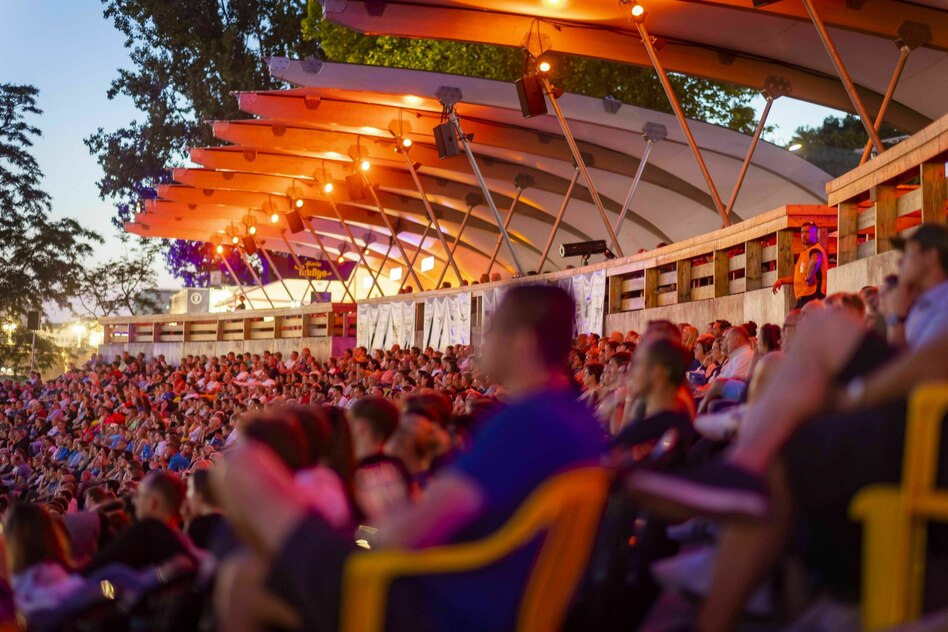
I went to the outdoor cinema quite often this summer. There's hardly anything nicer than watching films at dusk (apart from the mosquitoes). And the film has to be right. I wasn’t convinced by Faraz Shariat’s “State Protection.” To be more precise: I had to control myself not to leave the screening early.
The film tells the story of a public prosecutor who, after a right-wing extremist attack on herself, experiences how slow her own authorities are in investigating and who finally begins to take action herself. It's about racism, right-wing structures in the justice system, institutional failure. Important topics that offer enough points of reference in reality. But I sat there and groaned to myself: You can't make it that easy.
A single critical film review formulated my objection in a similar way: the film is free of ambivalence. A morally impeccable attitude alone does not make a convincing film. That's exactly what annoyed me. I felt manipulated. The good guys were good, the bad guys were bad. There were answers, no questions, nothing to decipher, not a moment of surprise.
That's exactly what makes a film interesting: when it trusts us to do more than just understand simple messages. If he risks that we don't find our way straight away, get upset and go home later without having understood everything.
In any case, the audience gave huge applause. Did this confirm my suspicion that the masses are happy to accept their moral convictions as long as art reflects them back to them clearly enough?
In terms of world politics, there is no shortage of things to shake your head about. Not in this country either. Anyone who follows political debates and conversations on the Internet might get the impression that it is often less about thinking than about being confirmed. For a productive political analysis, for a practice, for art that wants to be more than just the pure repetition of already held beliefs, we must be prepared to challenge ourselves, to question ourselves. Or maybe most people don’t want that at all?
A chance acquaintance from an artistic environment in the broadest sense gave me this idea. People, she said, don't want to be disturbed most of the time. They like to be entertained. But as soon as something forces you to think, calls your order into question, things become difficult. Then resistance and indignation reign.
Of course this is very culturally pessimistic and perhaps a bit unfair. I, too, want to be entertained every now and then and not constantly be plunged into an existential crisis. But when even art doesn't demand anything from me, when nothing can remain a mystery anymore, at some point even thinking becomes trivial.
Then I get stuck in a boring soliloquy. And I've finally had enough of this self-talk in my columns.