
Germany taz
Search of the “Zeit” office: Hamburg regional court backtracks a bit
Chamber partially revokes its own search warrant in the block process. It's about audio recordings from “Zeit” with one of the kidnapped children. more...
Deutsch (original) ·Auto-translated to English
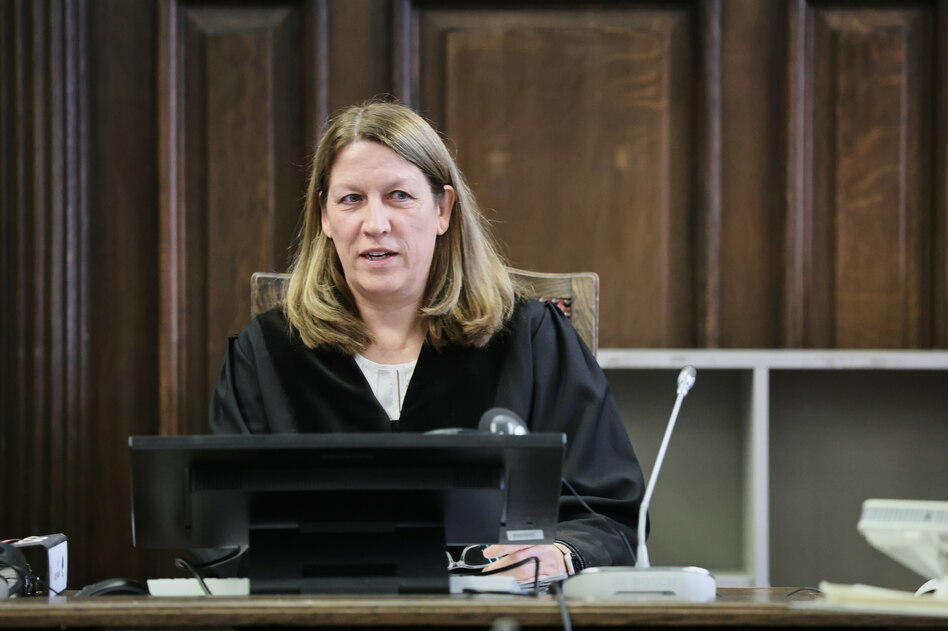
In the trial surrounding the kidnapping of the Block children, the Hamburg district court partially revoked its own search warrant against the weekly newspaper Die Zeit. The Grand Criminal Chamber 32 justified this by saying that one of the reasons for confiscating the audio documents had proven to be unfounded. She also refrains from taking photos of the older daughter, who was not kidnapped.
The trial is based on a bitter custody dispute between the Hamburg entrepreneur Christina Block, daughter of the steakhouse king Eugen Block, and her former husband Stephan Hensel. The two youngest of her four children did not return to their mother in Hamburg after a weekend visit to their father, who lived in Denmark.
Block's attempt to legally force the children's return failed. On New Year's Eve 2023, the then 10 and 13-year-old children were kidnapped in Denmark - with their father being knocked out - and driven to their mother in Germany. On January 4, 2024, the Hanseatic Higher Regional Court granted custody to the father in an emergency decision. The children were brought back to Denmark.
A few days later, on January 15th and 16th, Zeit journalist Anne Kunze interviewed the father, his new wife Astrid Have, the 13-year-old daughter who had been kidnapped, and a 15-year-old daughter. Kunze published her recordings from the end of September 2026 as part of her podcast “House of Block”.
On October 12th, the Grand Criminal Chamber of the Regional Court sent prosecutors and police officers to the editorial office of Die Zeit. They demanded Kunze's audio recordings, otherwise the editorial offices would be searched. Die Zeit editor-in-chief Giovanni di Lorenzo told the dpa: "We were put under a lot of pressure. With the handover we were able to avert a search and avoid many more documents and material being confiscated."
Die Zeit criticized the seizure as an “attack on freedom of the press” and lodged a complaint. “Freedom of the press particularly includes the protection of sources, which is crucial for independently reporting media,” said di Lorenzo. Hamburg's Senator for Culture Carsten Brosda (SPD) made similar comments. The procedure raises “serious questions about the protection of journalistic work,” commented Mika Beuster from the German Association of Journalists (DJV).
With its decision on Tuesday, the district court changed part of the justification for its search warrant. After Kunze's assurances, the court no longer assumes that Zeit paid money for the interview and that written contracts exist between the family and the publisher. In other words: According to the court's recent conviction, there is nothing to be found in this regard.
However, the court is still interested in what the 13-year-old kidnapped daughter told the journalist. The court justifies the confiscation of these recordings by saying that the informants named in the podcast “were specifically interested in bringing their story to the public.” In addition, the interest in clarification is particularly great because of the serious accusation of a crime against children.
The then 13-year-old did not want to appear in court, but gave a statement to the police - but only after she had been interviewed by Kunze. The court fears that the questioning of the child very shortly after the crime in the presence of authority figures could have been distorted by “external suggestive influences”. It is therefore necessary to listen to the entire conversation - including the journalist's questions.
The court argues that a ban on seizure would also limit the defendant Christina Block's ability to counter the suspicions against her. Confidential conversation content, background conversations and anything that has nothing to do with the kidnapping should of course not be evaluated.
The journalists' union DJV welcomed the regional court's decision. “The court has pulled the emergency brake,” said federal chairman Mika Beuster. “Editorial offices are not branches of the judiciary.” The DJV demands that the protection of journalistic sources is fully maintained even in the final decision.
This actual decision on Zeit's complaint against the confiscation is made one instance higher by the Hanseatic Higher Regional Court. The recordings will not be evaluated until the verdict is made.