
World · taz · · 52m
Three years after October 7th: A new beginning for Be’eri
Deutsch (original) · Auto-translated to English
Behind the gate, an idyllic road winds through Kibbutz Be’eri. Eucalyptus trees, pines and lush shrubs decorate the gardens surrounding the semi-detached houses and cottages. At that time, fighters from the terrorist organization Hamas walked along this street through the countryside, machine guns in their hands, a light green ribbon with the Islamic creed around their foreheads.
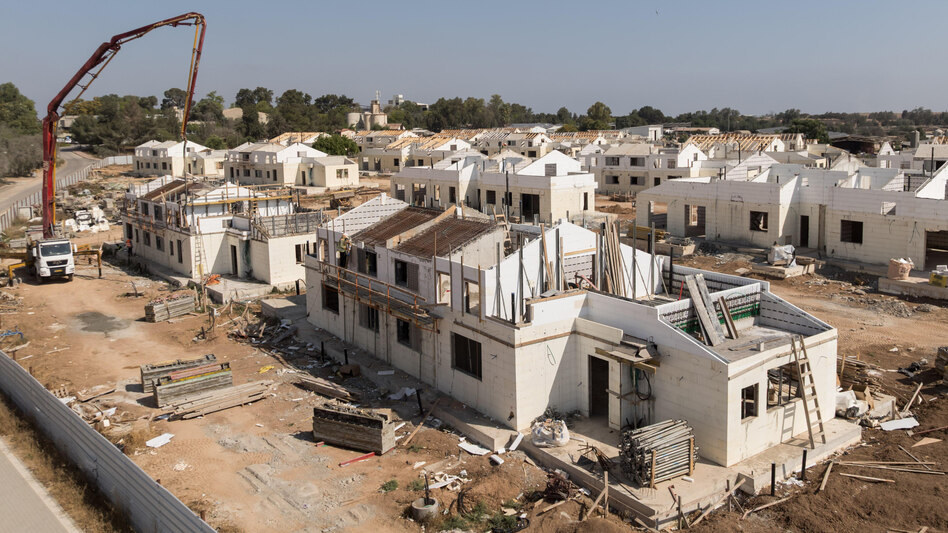
Today, exactly three years later, it is quiet in Kibbutz Be'eri, almost eerily quiet. Only the birds are chirping, a cat is resting comfortably on the sidewalk. Occasionally a golf cart drives by, the most common means of transportation to the kibbutzim, and a few construction workers can be glimpsed behind the skeletons of the scaffolding of future facades. A soldier quickly disappears into a house.
On October 7, 2023, the calm here in southern Israel was shattered. At 6:30 a.m. the tranquil streets of the town were filled with volleys of gunfire and screams. Gal Cohen, general secretary of Kibbutz Be'eri, had recently set out for a morning walk with his dog, then she abruptly ran away. Funny, Cohen thought.
The village was still asleep. The day before there was a celebration in the main square under the big tree, 77 years of Kibbutz Be'eri, stories from childhood, told in the open air.
Now, in the morning, the calm was interrupted, as it had been countless times before, by the explosions of rockets from Gaza. Be'eri is almost 5 kilometers away from the coastal strip as the crow flies. This time there were a lot of very loud bangs, much more than usual. "That's why she ran away," thought Gal Cohen.
His dog was just returning when the 61-year-old's cell phone rang: his daughter, who also lived on the kibbutz, was afraid. “I’ll come and get you,” her father said. But as he stood in front of the door, fighters in uniform and with machine guns rode past the kibbutz's iron fence on a motorcycle. One eyed Cohen, who has Yemeni roots. "He looked at me and I looked at him. And I saw this uniform, the rifle and a green bandana."
This text first appeared in wochentaz, our weekly newspaper from the left!
Every week, wochentaz is about the world as it is – and as it could be. A left-wing weekly newspaper with a voice, attitude and the special taz view of the world. New every Saturday at the kiosk and of course by subscription.
For a moment the two stood face to face, the Arab-looking Israeli and the soldier of an army that wears God's name on its forehead but has actually lost it.
The fighters drove on. Gal Cohen went back into the house and called kibbutz security, who initially believed it was a joke. Cohen then walked 200 meters to his daughter's house and brought her to him.
Dozens of fighters had now broken through the fence around the kibbutz, crawled through the grass and bushes, and shot two residents at the yellow main gate. Others entered the rural community on motorcycles and pickup trucks. The terrorists were able to roam the streets with almost no resistance; people in the kibbutz trusted each other and the doors were often not even locked.
Gal Cohen, his wife and daughter fled to their shelter - only to be horrified to discover there was no lock on the door. The shelter was supposed to ward off rockets, not burglars. The first volleys pierced the air, the first Whatsapp messages lit up on the screens. The Cohen family began to understand the magnitude of this attack.
Outside the shelter, the terrorists went from house to house; anyone who fled outside was shot or kidnapped. In many cases, those who hid inside suffocated from the smoke from the fire that the militants set on the buildings.
Cohen's mother's young Filipino carer called to say that the woman, who was suffering from dementia, was refusing to go into the shelter of her home. "I told her, 'Protect yourself. It's okay.'" Gal Cohen's mother was 88 at the time.
The Cohens spent about 15 hours locked in their shelter, their hands on the doorknob, trying to figure out every noise. They had a knife with them. In the immediate vicinity there was a massacre of children, men and women, executed in cold blood. Families, neighbors who sent non-stop messages - and then suddenly fell silent. Cohen knew what that meant.
Above all, Cohen felt frustration because he could do absolutely nothing to stop the murder; only once was he in fear of death, with a dry mouth and an increased pulse when bullets hit the metal window of the room.
Hours passed, they felt like an eternity. It wasn't until around 10:30 p.m. that two volunteer reservists called the Cohens, who were driving through the streets in their armored jeep. While the terrorists were still attacking, they took the family and their dog out of the house and raced away.
Why did his family survive while his neighbor is dead? Cohen asked himself that. He hasn't found a rational explanation, he says today in an office on the kibbutz. Maybe it was luck, the village is big, the terrorists had a lot to do. Coincidence perhaps, fate. Definitely something that defies all human logic.
The community of Be'eri had 1,200 inhabitants before the massacre. 102 of them died and 32 were kidnapped to the Gaza Strip. Almost everyone now lives in another kibbutz, Hatzerim, around 40 kilometers inland. Only around 100 kibbutzniks came back to Be’eri. Among them Gal Cohen and his family.
Cohen, a lanky man with a gray beard and simple glasses, returned immediately in December 2023. He explains why in a matter-of-fact tone. “This is where I walked barefoot as a child, my first kiss was there, my first fight was over there,” he says as he steers his golf cart into the streets around the kibbutz office and points to the meadows and trees. Belonging. roots. A home. This is Be’eri for Cohen.
About a fifth of all buildings were destroyed or burned down after the attack. They have now leveled an entire neighborhood here and new ones are being built. The old ones renovated.
One house still shows bullet holes, another has almost completely burned down, the ruins should be preserved as a monument. Others, with their columns, rise into the air like building blocks, white and still completely unused. Over 1,000 residents are expected to bring the kibbutz back to life in July 2027, says Cohen, 20 of whom were born in the last three years, and around 30 people want to move in. The machines in the print shop at Kibbutz Be’eri are already running again.
But how do you manage to return to the place of your own trauma, to live where so many have died?
“We gave people goals,” Cohen says. "First: return. For those who founded Be'eri back then and for all our deceased friends. Second: We take care of everyone, even those who don't want to return." Third, Cohen says, the printing plant should be reopened. “We have to restore normality.”
Kibbutzim are rural collective settlements that have a long tradition in Israel. As a rule, small communities live together in these villages without private property or individual salaries. Be’eri is famous for its printing press – and for its secular and liberal attitudes.
Residents of the kibbutz were part of peace initiatives that brought sick children from the Gaza Strip to Israel for treatment. Gazans also worked in the fields around the kibbutz.
The October 7 attack by Hamas militants and other terrorist groups on Israeli soil that left nearly 1,200 people dead was an abrupt and violent turning point. People who stood up for the people of Gaza were killed. For many, the window glass shattered the vision of Palestinians and Israelis living together in peace.
But Gal Cohen says he still believes in coexistence. “I believe that in the end there will be an agreement between us and the Palestinians.” It will take decades, “but… no agreement in history has ever been achieved through war.”
There is a viewpoint on a dusty hill about 14 kilometers from Be’eri. With the telescope you can see the Gaza Strip from there, such as the city of Beit Hanun, just behind the barrier.
In the evening, a blood-red sun sets behind piles of rubble, charred cars and a gray silhouette of the skeletons that remain from Beit Hanun's homes. A thick fog covers the damaged hills, no one is in sight, no light, except for a few - probably military - searchlights. Beit Hanun in the north of the Gaza Strip is no longer actually a city, but a cemetery of lifeless ruins.
The war in the Gaza Strip that followed the massacre on October 7th has so far resulted in more than 70,000 deaths. It is unclear how many of these were fighters, but at least half of the dead were women and children. According to studies, over 10 percent of the coastal strip's population is either injured or dead. And more than 470 Israeli soldiers lost their lives in the fighting.
The Israel-Palestine conflict is discussed controversially, especially in left-wing circles. There are also some fundamentally different positions on this in the taz. In this section you will find all comments and debate contributions on the topic of the Middle East.
Even before the war, the Gaza Strip resembled a miserable prison due to the Israeli blockade, with over 1.5 million Palestinian refugees, some living in overcrowded refugee camps. The Islamist Hamas, which ruled the coastal strip for 20 years, is now officially no longer in power, but it still has influence and military capacity in some areas. Despite the fragile ceasefire, there is still no real end to the Gaza war in sight.
How the terrorists in Israel were able to kill so many people, why the army largely failed on October 7th, why a coordinated military response came so late - the families of the deceased and hostages want to see all of this investigated by an independent commission. But Israeli Prime Minister Benjamin Netanyahu is reluctant to do so. Instead, a politically elected committee should deal with what happened.
Benjamin Netanyahu is currently the focus of criticism again, shortly before the new parliamentary elections on October 27th. According to media reports, he was warned days before October 7 that Hamas was planning a serious attack - and did nothing. The Prime Minister denies this.
However, a recent investigation by the Israeli Defense Forces shows how the attack took place around Kibbutz Be'eri and how killing so many people was even possible. The nearby army border post called Paga is said to have been unable to repel the first wave of attacks.
The fighters from Gaza overran the military facility and killed or wounded almost all of the soldiers stationed there. 40 to 50 people were at the small military post that Saturday morning. 18 died and two of those killed were taken to Gaza. When the Paga post fell, the path to the surrounding kibbutzim was clear for the terrorists. Be’eri was next.
About 5,600 Gazan militants are believed to have taken part in the attack on Israeli communities in the south and the Supernova festival near the border. The investigation into the Paga border post shows that the Israeli soldiers there had neither the appropriate weapons nor the infrastructure that would have been necessary to withstand such an attack. They were also unprepared for a scenario such as multiple breaches of the barrier separating Gaza from Israel. They fought until the end, defeat was inevitable.
At 6:49 a.m. the attackers began firing at the military base and by 6:55 a.m. they were already inside the facility. A rocket hit a tank, two minutes later more fighters came in and destroyed the mortar emplacement. The soldiers tried to repel the attack by hiding behind armored vehicles and shooting at the attackers.
But by 7:13 a.m., some of the ammunition stocks were already running low. Half an hour later, the northern part of the military base came under fire from an Israeli drone that was supposed to hit the terrorists.
The injured were evacuated from the Paga base shortly after 8:30 a.m. The remaining soldiers tried to leave the border post shortly before 12 p.m., while others barricaded themselves in the dining room. At 1 p.m. the attackers carried mattresses outside the hall and set them on fire. Some soldiers suffocated from the smoke, others tried to oppose the militiamen. Shortly before 5 p.m., Israeli military reinforcements arrived and brought the surviving Israelis to safety.
What the highly trained soldiers at the Paga border post were unable to stop, the civilian security forces at Kibbutz Be'eri were also unable to prevent. Several security guards died trying to protect the other kibbutzniks.
According to a detailed reconstruction by the Reuters news agency, the person who had the key to the kibbutz armory was shot before he could retrieve and distribute the weapons. This left the other security guards even more exposed. Doctors and nurses cared for the kibbutz's injured as best they could in a dentist's office. Until they were either killed too or rescued.
Today, simple, newly built semi-detached houses with red roofs stand on the edge of the kibbutz, the shutters still drawn. A smell of fresh cement hangs in the air. It is still eerily quiet in Be’eri in the afternoon. The workers come in the morning, but only a few residents remain in the evening. You can meet a few people in front of the renovated houses, some sweeping and sorting garbage.
A man greets Gal Cohen on his rounds and says he just wants to quickly pick up something for the weekend, then he wants to go back to Hatzerim. When the man is gone, Cohen says, "He had to throw his children out of the second-story window to save them."
132 new residential units should be ready for move-in in Be'eri by March 2027, some even earlier, but we know how such things work, says Cohen. The Secretary General does not expect a larger number of returnees before July 2027. The main thing is that the end result is right. “Building good homes is important to the healing process,” says Cohen.
A kind of privatization is also to begin in Kibbutz Be'eri, with individual wages. This change had already been considered before October 7th. It is also intended to bring new impetus to kibbutz life.
The municipality wants to invest 10 million shekels, 2.8 million euros, in new security measures, such as lockable shelters. Although it is highly unlikely, Cohen says a similar attack will ever happen again. The Israeli government announced that it had budgeted 470 million shekels for the kibbutz. Be’eri is the community with the most victims. The youngest is 10 months old, the oldest is 88 years old.
As Gal Cohen fled Be'eri with his family in an army armored jeep, he called his sisters. “Mom is no longer with us,” he told them. Then he, his wife and daughter were taken to a hotel on the Dead Sea, which was quickly converted into a drop-in center for displaced people from Be'eri.
When Gal Cohen stepped outside the hotel door around 4:30 a.m. on October 8 to smoke a cigarette, he remembers, his mother's Filipino nurse called: "Me and mom, we're in Netivot."
The terrorists found the old woman in her apartment and pushed her outside, but apparently they couldn't handle the wheelchair. Cohen's mother lay on the street for hours.
It's a good thing she had dementia, says Cohen. "She didn't understand what was happening and was just happy when she got to the hotel."
Most Be'eri survivors lived at the David Dead Sea Hotel for almost a year before moving to Kibbutz Hatzerim or to relatives elsewhere in Israel. They rebuilt their communal structures in the hotel, a communal kitchen, a garden and classrooms.
It took weeks before all the bodies from Be'eri could be identified. Many were completely burned, with only teeth and bones remaining. Others charred beyond recognition.
"When we were at the Dead Sea," says Cohen, "we hugged everyone we met, even if we didn't particularly like the person. Simply because they were alive." Funerals always took place in the morning. In the evening, the community gathered in the large hall of the David Hotel and read out the names of the newly discovered dead. Then someone read a poem, a memorial prayer, the families stood together, hugged and cried. At the same time, the hotel's conference rooms were converted into rooms for psychological support.
Reut Plonsker is a psychologist for the organization “Safe Heart,” which treats survivors of the massacre. On the phone, Plonsker speaks of a “collective trauma.” What is important for healing is the great recognition of the suffering that exists in Israeli society. The community. But every trauma is also individual. “Some grow out of the trauma and find new goals in life.” But that's a long road, says Plonsker.
It's not just the fear for their own lives that will remain in the survivors' bones for a long time. Partly it is the violence against others, the long wait until help came. Partly guilt. But most of all it is the loss of loved ones that needs time to heal. “Fear can be overcome, but grief is much deeper and takes much more time to overcome.”
Gal Cohen didn't lose anyone from his immediate family on that October 7th three years ago. Before, he says, he believed in an early agreement with the Palestinians - now a deal has become a long way off.
The basic trust of many survivors has been violated. And trust in the Israeli state with its powerful army.
The idyll of Kibbutz Be’eri is also violated. Is a new start possible in such a deeply scarred place? Perhaps. With time.
Read the full story at the source
Source: taz