
Germany taz
Download start GTA 6: “Ah shit, here we go again”
Hardly any other cultural product is awaited as eagerly and impatiently as “GTA VI”. A video game that has shaped pop culture over the last few decades. more...
Deutsch (original) ·Auto-translated to English
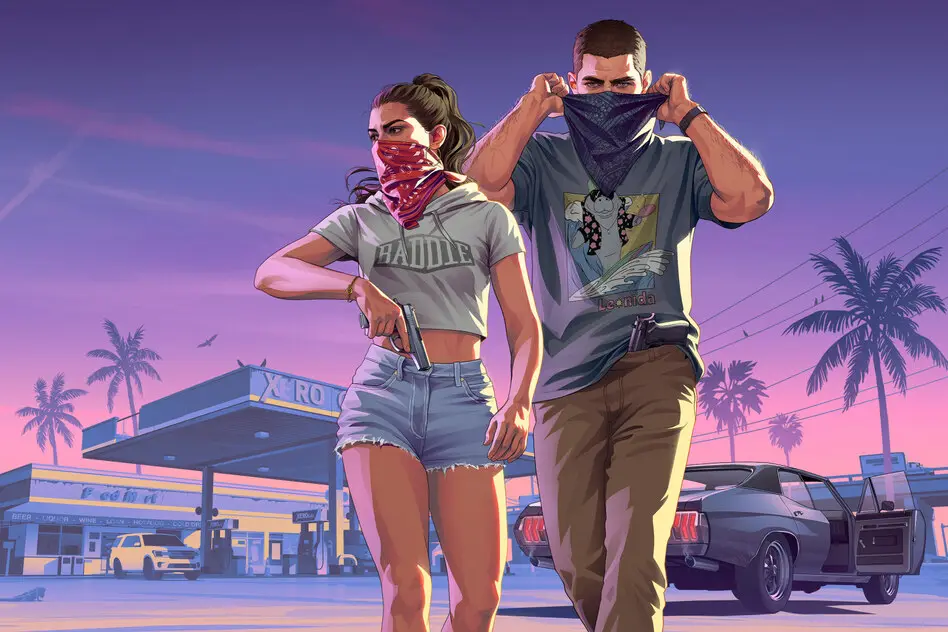
“… before GTA 6,” this comment has been floating around the Internet for years, has become part of the everyday language of young people and can be found in the song lyrics of rapper Zah1de. The joke behind it is the 13 years of development time that it took for the new part. Hardly any video game or cultural product of the last few decades has been as eagerly awaited worldwide as GTA VI, which is scheduled to be released on November 19th.
But GTA has long been more than just gaming: the computer game is not only strongly influenced by pop culture moments, but has also created them. Time to take a look at the series and ask what it can tell us about the genesis of pop culture today.
Originally called Race 'n' Chase, Scottish studio DMA Design had developed a game whose main objective was to chase criminals as a police officer in a pixelated top-down world. However, it quickly became clear to the developers: The real fun begins when we switch sides at the end of the game. “It’s more fun to be bad,” as Gary Penn, who worked for DMA at the time, described it in an interview. Stealing cars, running over passers-by and being chased by the police for it.
The highly controversial PR guru Max Clifford was tasked with a PR campaign for the game and scored a coup by generating negative coverage before its release, resulting in politicians and activists speaking out against the game's release. If you want to get young people to do something specific, you forbid them.
The first hype about the game was born. In the years that followed, deliberately playing with the scandal would become a successful pattern for the GTA series. With GTA III (2001) the series made the leap into the mainstream. The three-dimensional game world was visibly based on gangster films; for the first time, popular songs were played on the radio stations in the stolen cars - an innovation that turned out to be a successful formula.
Vice City (2002) took this principle further: 80s music, Miami Vice, Scarface and an appearance by Phil Collins in the follow-up game Vice City Stories turned GTA itself into a kind of walk-in pop culture archive. A real Hollywood star, Ray Liotta, was also brought in for a speaking role, who in turn had already gained experience as a gangster actor in “Goodfellas”.
After the game became the fastest-selling video game in history, it was clear that Rockstar (DMA's successor studio) had found its formula for successful video games. Despite all the success, culture at this point was still being processed one-sidedly by GTA and processed virtually. A real interaction would only emerge in the following years.
With GTA San Andreas (2004), the game world was expanded to an entire state. The plot revolves around the hip hop and gangster culture of the 90s. The introduction to the game is legendary.
After returning to his hometown of Los Santos, protagonist “CJ” is dragged out of a taxi by the corrupt officer Tenpenny and threatened to frame him for murdering a police officer – which Tenpenny actually committed himself. CJ is thrown out of the patrol car, stands in the alleys of his youth and says: “Ah shit, here we go again.” It's now a popular meme on social media.
With Samuel L. Jackson (Officer Tenpenny), a top-class Hollywood actor was once again brought in as a speaker and the soundtrack ensured a commercial comeback for G-Funk. Beyond that, however, another scandal should cause a stir.
When hackers found a disabled sex mini-game (“Hot Coffee”) in the source code, another public outcry was literally inevitable. US Senator Hillary Clinton then called for greater regulation of video games. A story that was made into a film in 2015 with Daniel Radcliffe in the lead role. GTA was now no longer just influenced by pop culture moments, but created them.
With GTA V (2013) and its online version, the dividing line between culture and gaming in the GTA universe is finally blurred. Frank Ocean, Gilles Peterson and Rosalía, among others, become radio presenters, and rapper Dr. Dre releases exclusive songs in The Contract game expansion. Numerous musicians, including German DJs such as Keinmusik and Solomun, are integrated into the game as non-playable characters, so-called NPCs. The highlight of the “club culture phase” was probably the record label CircoLoco Records, which Rockstar founded together with the well-known Ibiza party series “CircoLoco”.
When the sixth part of the series appears on November 19th, 13 years after the release of its predecessor, it will probably only be a formality that all records will be broken. According to Rockstar, the second trailer for the game alone was viewed around 475 million times across platforms.
The background music – “Hot Together” by The Pointer Sisters – saw a 182,000 percent increase in clicks on Spotify. And when the gameplay trailer for GTA VI went online exclusively on Netflix on August 27th, some of the streaming giant's servers even collapsed.
An NPC from the said gameplay trailer has amazing similarities to the streamer N3on. In the trailer, he climbs out of the trunk of a stolen car, puzzled, while streaming live on his cell phone. When asked what he was doing in the car, he said he was doing the “Trunk Challenge” and then excitedly asked his livestream audience: “Holy shit chat, what do I do?” N3on, for its part, recreated the scene directly in real life. It is difficult to understand who is quoting whom here.
The story of GTA is also a story about how pop culture is created. What took months at the end of the 1990s to reach children's rooms via tabloid scandals is now reciprocally available at any time.
What used to be clearly separated steps from production to reception is now a loop in which the beginning and end can no longer be clearly separated. What was once clearly structured by the sender and receiver logic has become a network of millions of actors acting simultaneously.
Development studios, music labels, streaming communities, critics, journalists, artists, fashion designers and the players themselves - who ultimately produces pop culture and who receives it can no longer be distinguished here. In the end, only one thing is clear: “It’s more fun to be bad.”