
Politics taz
The future of Gen Z is decided: between the Bundestag and the barricade
Juli Felder (17) and Lina Friedrich (21) both want to change society as Gen Z, but argue about how to get there. What will happen to the movement? more...
Deutsch (original) ·Auto-translated to English
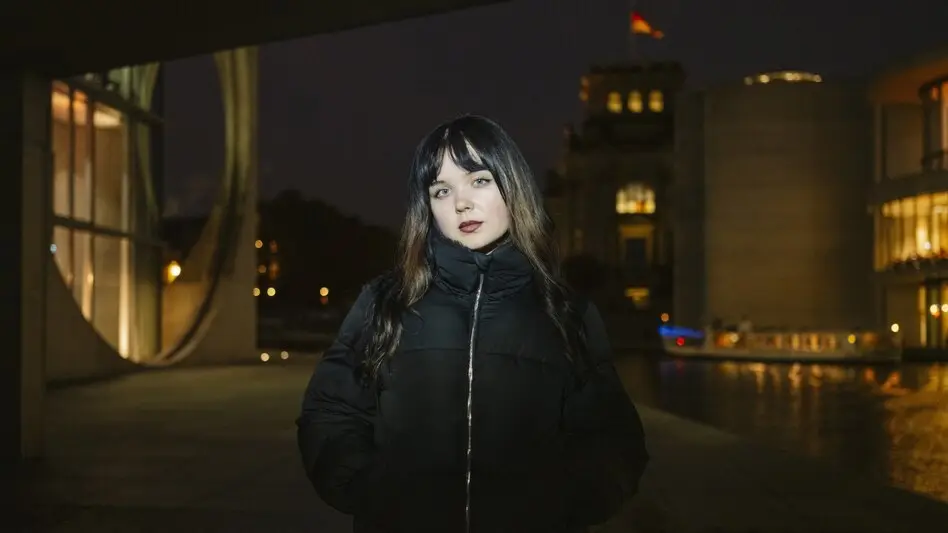
Lina Friedrich can't drink the rhubarb lemonade she's holding in her hand. She's too excited. But she really wants to keep the bottle and forever. So she spontaneously pours the pink liquid into a drain on Friedrichstrasse in Berlin and puts the empty glass bottle in her handbag. As a reminder. Because the left just gave her the limo! In the Bundestag!
It's a cold Tuesday evening in early November. Members of the Left faction invited Lina Friedrich to ask her questions about the “Gen Z regulates” youth protests in a background discussion. Lina Friedrich, 21 years old, who had never been in parliament before, had never organized a demo until a few weeks ago, worked in the catering industry and is actually afraid of giving lectures, spoke as an expert in the Bundestag. She says she has never felt so understood. After everything she said, there was applause.
She was invited as one of the speakers for “Gen Z regulates”. Under this name, around 120,000 people nationwide protested on Halloween against many things that not only, but particularly affect young people: social and educational cuts, mandatory military service, too little climate protection and social inequality in Germany. Further protests are planned for November 14th and 20th.
Lina Friedrich, long black hair, long black coat, actually has a different name. She wants to protect herself with the pseudonym because she has already received right-wing hate messages. It is not self-evident that she speaks for the new movement. Some even think that she is completely wrong. On the evening of Friedrich's visit to the Bundestag, the left-wing faction posted a photo of her on Instagram. The comments below explode: You invited the wrong people, this is a fake account.
It's complicated. Because there is no such thing as a “Gen Z regulates” movement. It is currently being created and you can watch it. It's a fight for attention and the question of what this youth protest wants to become - and who gets to decide about it. The dispute is between people who have no political experience at all, like Lina Friedrich, but who in just a few days instigated nationwide youth protests on the Internet. And on the other side: young people who have been involved in left-wing extremism for years and who do all the work in local strike committees. Does the dispute over direction help the movement to find itself or does it destroy it before it can achieve anything?
There are two large accounts on Instagram, both of which claim to speak for the protests nationwide. There is “genzregelt_germany” with an orange logo and squirrel, which distanced itself from “any violence” in statements, has 16,000 followers and has already collected more than 25,000 euros in donations. Lina Friedrich belongs to this side and only this side has spoken in the Bundestag so far.
And there is “genzregelt” with the image of a masked person as its logo. The account appears much more radical, published its first post a week earlier and has almost twice as many followers. On the day that Friedrich is in the Bundestag, the account changes its design from orange to bright green.
It all started at the beginning of October with a video on Tiktok. Lina Friedrich sees it while scrolling through social media one evening at home in her apartment. Students are protesting in France, but the protests have not yet escalated. In the video, Tiktoker Lil Drazzy says to the camera, addressing his then 45,000 followers: "On October 31st, we'll all be on the streets. The French are doing it, we're doing it. Nobody wants to take the first step, so Gen Z takes the first step."
Lina Friedrich says she was already watching the protests in Paris and thought: Wow, it's time for us to take to the streets in Germany. She joined a public Telegram group started by Tiktoker Lil Drazzy. People wanted to organize themselves through the chat.
Friedrich's generation, those born between 1997 and 2012, call older people on television “lazy.” They more or less grew up during the corona pandemic, which ruined some of their lightheartedness and also some of their political organization. The pandemic, many say, was one of several reasons why the large climate movement, for which hundreds of thousands of people, especially young people, regularly took to the streets in 2019, no longer exists. Some hope that “Gen Z Rules” has the power to mobilize masses again, recognizing in this the long-awaited social protest and the potential to become a new social movement. The only question is what kind.
This text first appeared in wochentaz, our weekly newspaper from the left!
Every week, wochentaz is about the world as it is – and as it could be. A left-wing weekly newspaper with a voice, attitude and the special taz view of the world. New every Saturday at the kiosk and of course by subscription.
Many people ask that. Since Lina Friedrich became press spokesperson, her phone has been ringing every 10 minutes. The attention does something to her, she has less appetite, she says, but it's a good excitement. At the beginning she joined the Telegram group because she had felt politically powerless for a long time. “I’ve always been extremely world-weary,” she says. She grew up in a large East German city and did not graduate from high school. She later studied at a private university because that was possible without a high school diploma. She financed this with student loans and a part-time job.
What does she mean by world-weariness? She tells how she saw the same people begging on the street on the way to her training, how a friend without a German last name couldn't get an internship, how Nazis in the Bundestag scared her and how she still owes 2,000 euros in wages from her last job in the restaurant.
A current Forsa survey for Stern and RTL shows: 83 percent of people in Germany understand the Gen Z protests. Maybe that's because they address something that affects almost everyone: the promises of liberal democracy no longer apply. Equal opportunities, advancement, a better future and the opportunity to help shape it - these promises are still repeated, but no longer fulfilled. This hits young people the hardest.
Lina Friedrich begins to organize the protest via the “Gen Z regulates” Telegram group, helps to prepare a website and fine-tune the demands. No one really took on the task of speaking to the press on behalf of the movement, she says. She and two others eventually take it over.
There are people in the group who didn't know each other before, as Friedrich and other members confirm. They use words like “team,” “meeting,” and “call,” and many have no academic background. Everyone says that they have never organized a demo before.
This can be a strength because they reach people for whom classic left-wing structures have a hermetic effect.
But sometimes also a disadvantage. On a demo packing list, the group advises that you should bring your ID card and a charged cell phone and call 110 in an emergency. People with protest experience throw up their hands when they hear tips like this. After all, the police, who are supposed to be called so trustingly, are often not a friend or helper.
According to her own statement, Friedrich was the last person to be accepted into the organizational group without being checked. The members of the group then conduct online intake interviews. At the beginning they didn't want anyone who was already organized in a political group or party.
Almost at the same time there was another beginning of the movement. One that is not formed in Telegram chats and group calls, but in plenary sessions and on barricades in front of school doors.
On October 12th, students in Germany blocked the entrances to a school, the French Gymnasium in Berlin, for the first time since the protests in France. An action of solidarity with their peers in the neighboring country. Two days later, Hamburg students join in with another school blockade.
After these two actions, a movement dynamic develops that has nothing to do with the planning of Lina Friedrich's team. On the day of the Hamburg blockade, a new Instagram account with the name “genzregeltberlin” called for a general meeting in Berlin – that same evening.
Despite the spontaneity, around 150 young people show up at the meeting point, a conference hall of the socialist newspaper Junge Welt. Palestine and Rojava flags hang on a pillar. Flyers with the inscription: “The spark from France has spread” go through the rows.
On the podium, a Parisian student talks about her experiences with the youth protests in France. Behind her is a flag with the inscription “Gen Z regulates it – Berlin”. The slogan is now circulating on social media. The young people crowd into the room, many have to stand. After the lecture, they divide into district committees to organize further school blockades.
Unlike the team around Lina Friedrich, most of the students in these groups already belong to political organizations; many come from the “School strike against compulsory military service” initiative. Some are organized into Marxist-Leninist groups.
Juli Felder also came to the general meeting. The 17-year-old from Berlin is planning a new blockade here.
Just two days later, on October 14th, 150 people barricaded the entrances to the Andreas-Gymnasium in Friedrichshain with construction fences and garbage cans from 6:30 a.m. Juli Felder is in the front row. She wears a red Adidas track jacket, red and white keffiyeh and eyebrow piercing. She leans against one of the barricaded trash cans and looks calmly at a line of police. They're standing right on the other side of the barrel - ready to break the blockade. Felder repeatedly shouts together with the other protesters: “The rich want war – the youth want a future.”
Juli Felder has been organizing in the “School Strike Against Conscription” initiative since March 2026. There she works in various committees, tries to recruit students to her cause, and represents the movement as a press spokeswoman.
The school strike movement is against the rearmament in Germany and against possible conscription. It organizes itself decentrally, without nationwide coordination, in strike committees. On the website, the initiative writes: “We don’t want to go to a war in which we have to shoot young people from other countries who, like us, don’t want to go to war, who have fears and hopes just like us.”
Before Juli Felder organized herself in the school strike movement, she gave speeches at Fridays for Future demonstrations in Berlin and read texts about the oppression of women in patriarchy. “Then the topic of conscription came up,” she says. "At first I was just against it. But the more I learn about it, the more I see the connections between war and capitalism."
That's why she wanted to organize herself further and do more against a possible war. So Felder looked at various organizations: Schoolchildren against the right, the youth organization of the Left Party, Solid. In the spring she joined the Socialist German Workers' Youth, or SDAJ for short, a Marxist-Leninist youth organization.
Meanwhile, Felder says: “For me, communism is the end goal.” Felder wants to achieve this goal through democratic socialism. “Under capitalism, we are all exploited for the super-rich who wage wars and destroy our environment.”
Six days after the school blockade that Juli Felder helped organize, on October 20th, a website programmed using AI with a squirrel logo suddenly went online: “Nationwide protest of Generation Z” is written there. Within one day, 10,000 people registered to protest. Behind the page are the people from the Telegram group, which includes Lina Friedrich.
At this point, Juli Felder doesn't know who is organizing the appeal. The group seems very opaque to her. “Unlike school strikes, there are no elections or committees,” she says. Then everything happens very quickly. While you can see the growing number of registrations on the website, politicians are running rampant with sometimes racist warnings about excessive violence. The domestic policy spokesman for the CDU parliamentary group warns of hijacking by “criminal forces from the migrant milieu”. Baden-Württemberg's CDU interior minister is threatening to retaliate with “all the rigor of the rule of law.” The website operators distance themselves from any violence, which in turn is criticized by many left-wing radicals.
Because many of them believe that riots, even looting, like in France, are never apolitical. You have to take this anger into the movement instead of distancing yourself from it. In many cities, socialist groups, especially the International Youth, help organize the “Gen Z regulates” demonstrations. The International Youth belongs to the so-called Communist Construction, an organization that has been criticized for appearing authoritarian and referring positively to Stalin. Such groups see their task as providing discipline to the protests and preventing them from becoming too well-behaved. The tenor is: Just don't allow yourself to be hugged by politicians who invite activists and have your photo taken with them! Just don't become like Fridays for Future, which was supported early on by the Greens - a betrayal for many left-wing radicals.
There are cracks running through the movement – in the language, in the demands. Is the question of violence the core of the dispute over direction? It's not that simple. Juli Felder, for example, sees herself as a pacifist and doesn't want anyone to be hurt unnecessarily.
Even if the movement, to which Juli Felder and Lina Friedrich belong, argues, their protest also shows that there is much that connects a generation that grew up with images of war on their smartphones.
Long before the Gen Z protests, something like a new young peace movement was slowly emerging. Many young people are politicizing along the line of conflict over compulsory military service. They receive letters for compulsory military service because the German Defense Minister wants to build the “conventionally strongest army in Europe” for the first time since 1945. Since the end of 2025, students like Juli Felder have been protesting against compulsory military service during school strikes. They exist in many schools, but the protest hasn't gotten really big so far. Maybe that’s changing with “Gen Z rules.”
At the same time, criticism of the reintroduction of compulsory military service is just one topic in the movement's large bouquet of demands. Broken schools, the climate crisis, rising costs of living, government surveillance and poor psychological care are also mentioned in the calls. Can a movement address all of society's problems at once and still be successful?
Manès Weisskircher researches movements and protest at the University of Trier. He says: The dilemma is that many young people are understandably dissatisfied with numerous social developments. “If you address too many topics, however, there is a risk that nothing will get through.” In order for “Gen Z regulates” to gain a foothold in the long term, the demands must first and foremost be specified.
However, he emphasizes that “Gen Z regulates” is still in its early stages. And it is precisely the object of reporting that focuses more on form than content. “There is primarily talk about forms of action and possible escalation potential and hardly any talk about the issues and grievances that concern young people.” This makes it more difficult for them to be successful with their concerns, even though there is a broad social understanding of their dissatisfaction.
On Saturday, October 31st, the Gen Z demonstrations will start nationwide at the same time - at 2 p.m. Before that, luxury shops in German city centers quickly screw their shop windows with pressboard. The outward movement is still holding together. In public, no one is bothered by the different Instagram accounts.
In Berlin the police count around 5,000 participants. There are also many older people among them who do not belong to Gen Z; Antifa and Palestine flags wave through the air. Homemade protest posters on cardboard often say “Merz leck Eier”. Hardly anyone comes to the Brandenburg Gate disguised - and if they do, they usually wear a Halloween costume.
"We are not demonstrating against the police here. We want to protest peacefully," says a speaker at the beginning of the event. That's why he immediately explains how the demonstrators should react if riots break out: "Then we'll all sit down peacefully. Let's practice this." In fact, 5,000 people sit down at his command.
Lina Friedrich and Juli Felder both come to the demonstration in Berlin. While Felder is in the crowd trying to recruit students for the school strike committees and their socialist youth organization, Friedrich stands backstage surrounded by journalists. Deutschlandfunk, rbb, n-tv – and the international press also wants to talk to her. A film team accompanies you throughout the day. "I really got goosebumps. So many people are peacefully standing up for their goals today," she says into the microphones.
Juli Felder stands a few 100 meters away in the crowd and appears rather disappointed: “The mood is not really combative,” she says, looking at the colorful demonstration. She wants a different kind of protest, one that is less ingratiating to those in power.
“I don’t want to be invited to the Bundestag either,” says Juli Felder.
You are reading a text from our future department. If you're interested in more positive perspectives, subscribe to TEAM FUTURE, the constructive newsletter on climate, knowledge, utopias. Every Thursday you will receive an email from us with strong thoughts for you and the planet.
🐾 Sign up now for the TEAM FUTURE newsletter – free of charge
At around 5 p.m. the rally in front of the Brandenburg Gate breaks up. But many don't go home, including fields.
Because in Berlin there is a second Gen Z protest a few hundred meters further north. He is registered under the name “Gen Z stands up”. A communist group called for this. 3,500 people come to this second event, only 1,500 fewer than at the Brandenburg Gate. The mood seems significantly more tense. Some demo participants throw pyrotechnics in the direction of the police officers. Later the situation gets out of control. Felder says she was pulled out of a human chain by the police. “When I was already on the ground, several police officers kicked me,” she says. Afterwards she shows the taz her bruises and abrasions.
In Frankfurt am Main there was looting that night, which the whole of Germany discussed in the days that followed. In most places, the “Gen Z rules” demonstrations remain peaceful.
After the demonstrations, Lina Friedrich's group “genzregelt_germany” published a statement on Instagram. “We expressly distance ourselves from any form of violence as well as from violent actions by other groups that were not part of our demonstration.” Several local genzregelt accounts reacted indignantly in the comments. Then Lina Friedrich's organizing team explains on Telegram that the second, more radical Instagram account does not belong to the movement - even though it already has more followers at this point.
Since the statement, the organizing group around Lina Friedrich has received a lot of hate. They are “cops with an Instagram account,” appear authoritarian, and presume to speak for everyone without having been elected. Some suspect that the Federal Office for the Protection of the Constitution is behind the account.
Lina Friedrich knows the criticism and can understand it. She coordinates an answer with her team and writes: "We want everyone to have a say and feel heard. We are working on a structure that makes exactly that possible. Unfortunately, something like this doesn't happen overnight." As soon as these structures have been created, we will be open to elections. "Unfortunately, at the moment it makes little sense to hold an election. That would delay the process and therefore weaken the building of the movement."
Although she was not elected, Lina Friedrich was in favor of the movement on the Left in the Bundestag. This gave part of the movement a voice. What about the other youth groups who independently organized the protest in their cities. Why weren't they heard?
Nicole Gohlcke, deputy parliamentary group leader of the Left and spokeswoman for education, explains it this way: “It’s logical that we invite those who made the initial call.” This should not be a predetermination. She thinks it's great if the organized youth organizations also take part in "Gen Z regulates". But it's about talking to those who are not yet organized into political groups. “The movement becomes big and powerful when it reaches beyond the organized milieu.”
In mid-November, actors from the radical left part of the movement spoke of an unofficial agreement between the wings of the movement. People want to stop fighting each other on the Internet - even if they still can't imagine calling for the same demonstrations together. The left wing and the more moderate wing are now working in parallel. Despite the differences in content, all groups want to take part in the international strike day on November 20th.
Does a movement even have to speak with one voice? Isn't this just a need for the media so that complex reality fits into short statements in a beautifully simplified manner? Does a movement need a face? The student protest in Serbia shows that there is another way. The heterogeneous protests ended the authoritarian rule of Aleksandar Vučić - without central leaders and with the rule that each representative of the movement can appear in the media no more than twice, also to prevent smear campaigns against individuals.
Of course, the events in Serbia cannot be transferred one-to-one to Germany. But despite all their differences, “Gen Z regulates” is part of something bigger. Since autumn 2026, people have been taking to the streets not only in Germany, Serbia and France, but also in Kenya, Spain, India and Italy. They don't all have the same reasons for doing it and they aren't all young. Nevertheless, Gen Z everywhere plays an important role in protesting against their feeling of lack of a future. The fact that young people in Germany spend cold autumn afternoons at demonstrations or in front of barricades instead of despairing in isolated cases is already a success of “Gen Z regulates”.
A few weeks ago, Lina Friedrich didn't have many plans for November. Her grandparents wanted to visit her to finally screw on a lamp in their apartment. On November 9th she wanted to start a new full-time job as a saleswoman. After her first visit to the Bundestag, this seems unbearable to her. How bad would it be to miss everything?
Luckily the shop needs to be remodeled and she still gets a few days off. So she's back in Berlin and processing invitations. Tuesday evening: Greens in the Bundestag. Wednesday evening: Left, for the second time. She sits opposite the parliamentary group leader at a long table with apple spritzers, coffee cups and a table microphone.
“It’s nice to see you again,” says Heidi Reichinnek.