
Germany taz
The water balance of summer: too dry and too hot
The water balance for Germany sets new negative standards. In order for the natural reservoirs to fill up, long, widespread rain is necessary. more...
Deutsch (original) ·Auto-translated to English
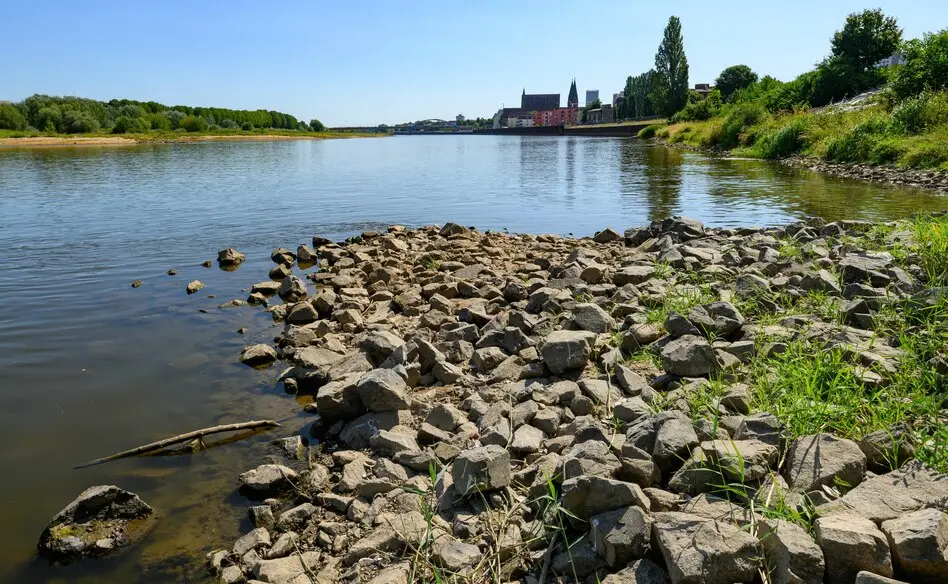
Germany is running out of water: After evaluating the water level data by the Science Media Center, the hydrological year 2025/26 will set new negative standards in Germany. According to this, last winter was already exceptionally dry, before a spring that was too dry and another drought summer followed: The high temperatures ensured that plants evaporated more water. The hydrological year ended on October 31st.
“A dry winter meant that the groundwater did not recover,” explains Thorsten Wagener, professor of hydrological systems at the University of Potsdam. This means that less water can flow through the rivers. “Due to the increasing influence of climate change, we are losing the natural snow and glacier storage in mountain regions,” says Wagener. As a result, many rivers would lose an important part of their discharge volume. The discharge from the Rhine at several gauges was only 50 percent of the long-term average for the period 1991 to 2020. But the Oder, Elbe, Moselle, Danube, Inn and Lech also reached values that are classified as “very low” or “extremely low”.
The consequences: “In the upper reaches, the ecology often suffers from rivers that are too warm and lack oxygen,” says Wagener. These sections are important refuges for fish and other creatures. “In the lower reaches, society then suffers due to low transport capacity for shipping or reduced water extraction for cooling power plants.”
In the past hydrological year, the groundwater problem was compounded by the lack of precipitation: According to data from the German Weather Service DWD, an average of only 126 liters per square meter fell nationwide in the spring - 68 percent less than the average for the years 1961 to 1990. This ensured that the subsoil nationwide suffered from drought to a depth of 1.8 meters at the beginning of July.
The high temperatures contributed to the severe drought: in order to cool themselves down, plants evaporate more water. A beech tree, for example, can cool its surroundings by up to five degrees if there is enough water. The first heat wave this year came unusually early at the end of June. A new high in Germany of 41.7 degrees was measured in Brandenburg's Lausitz.
In order to replenish the natural reservoirs, “above-average long and large-scale precipitation as so-called land rain is now required,” explains Enno Nilson from the Federal Institute of Hydrology (BfG). However, it is not certain that this will come: “The previous winter was below average in this respect, which was a prerequisite for the low water year of 2026,” says Nilson. The climate change projections show that in the foreseeable future there will be much less water in Germany throughout the year.