
Germany taz
The truth: informers in a dough coat
What was probably the last bread in the GDR waited 36 years to be discovered and is now on display - not without surprises. more...
Deutsch (original) ·Auto-translated to English
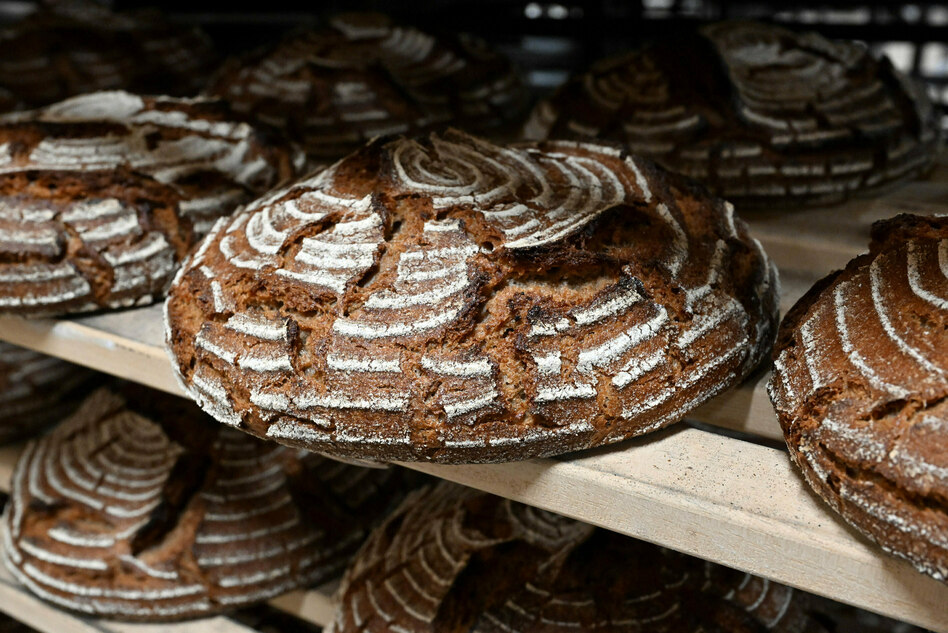
When Michael Hagedorn bought bread in an East Berlin bakery on June 26, 1990, he actually just wanted to be on the safe side. In a few days the West German D-Mark is to be introduced in the East, and the student fears complications. However, the pastries disappear in the freezer for decades - and are now on display in Berlin's Germany Museum as probably the last bread in the GDR. But the image of the newly minted star is beginning to crumble: are the pastries hiding parts of his history?
The Eastern bread weighed exactly 1,000 Eastern grams when it was purchased 36 years ago. The price was just 80 pfennigs. But what Hagedorn probably didn't know at the time was that the baked goods were said to have been several decades old at the time of their sale in East Berlin. In addition, it apparently also worked for the Ministry for State Security as an unofficial employee from 1971 onwards.
“As a farmer's bread in the farmers' and workers' state of the GDR, his path was to a certain extent predetermined,” says an informant who doesn't want to read his real name in the newspaper, but is well connected in the pastry scene. At the beginning of the 1970s, the Stasi recruited more and more people and equipped them with listening devices to spy on citizens. “Tree cakes, Christmas stollen, Quarkkeulchen – by the eighties at the latest, you could no longer feel unobserved at a buffet in the GDR.”
Popularly known as “Leipziger Lausche”, the ruling SED party regularly called for large-scale breakfast events in state-owned companies. At the solidarity breakfast for the fulfillment of the plan, or SFP for short, system critics should reveal themselves in a relaxed atmosphere, all while observing supposedly harmless delicacies. A pastry with the code name IM Roggen proved to be particularly talented. According to the Stasi file, it was an “inconspicuous loaf of bread of brown color” that was ideal for the tasks assigned to it.
“The sticky crust, the dented knuckles, the Saxon dialect despite the VEB Backwaren-Kombinat Berlin sticker: everything we know about IM Roggen fits the picture perfectly,” says the informant. The bread was able to stay in the same position for hours and listen without moving. Another part of the recipe for success: its repulsive appearance. “Other spy pastries were eaten sooner or later, but no one dared to touch IM Roggen with its bland and uncrunchy appearance.”
The list of dubious achievements attributed to IM Roggen is long: IM Roggen is said to have overheard members of the Leipzig rock band Renft as an old piece of bread next to the ashtray in the rehearsal room and even inspired the songwriter Wolf Biermann to write his “Stasi Ballad”.
Even though Bread couldn't be promoted as an unofficial employee, it received bonuses such as crumb refreshers, toast cures and preferential treatment during Trabant deliveries, noted in the files. In private, however, the pastries tried to maintain the bourgeois crust. IM Roggen is said to have used his own allotment garden primarily to grow strawberries and other fruits, which he processed into jam. Contemporary witnesses report a “bread like any other”.
“Back then, IM Roggen was said to have a sense of dry humor,” explains the informant. According to contemporaries, J. D. Salinger's novel “The Catcher in the Rye” was said to be his favorite book. Our own reports to the Stasi were jokingly introduced with the same phrase, “Whose bread I eat, the song I sing.” “A form of cynicism that can only come from someone who is committed to the system down to the last crumb,” says our informant.
After the fall of the Wall, the trail of the mysterious spy bread is finally lost. Until recently, the bread was believed to be a culinary accompaniment to Wirecard fraudster Jan Marsalek in Moscow. But now the question arises: Did the submerged Lausch pastries and the unthawed bread in the museum come from one and the same sweat?
The informant demands that all ingredients be disclosed and a credible statement from those responsible. "If we are to believe that the bread is really not IN rye, it needs supporting materials instead of toppings. Only then will the wheat be separated from the chaff," he believes. So far, neither the Deutschlandmuseum nor the GDR-Bread itself have responded to the allegations. His owner Michael Hagedorn, in turn, even wants to examine “legal cuts”. “We’ll see what emerges beneath the crust.”