
Germany taz
The truth: Even without thrush, finch and starling
The funny animal world and its serious exploration (253): Only the male blackbird sings? A mistake! more...
Deutsch (original) ·Auto-translated to English
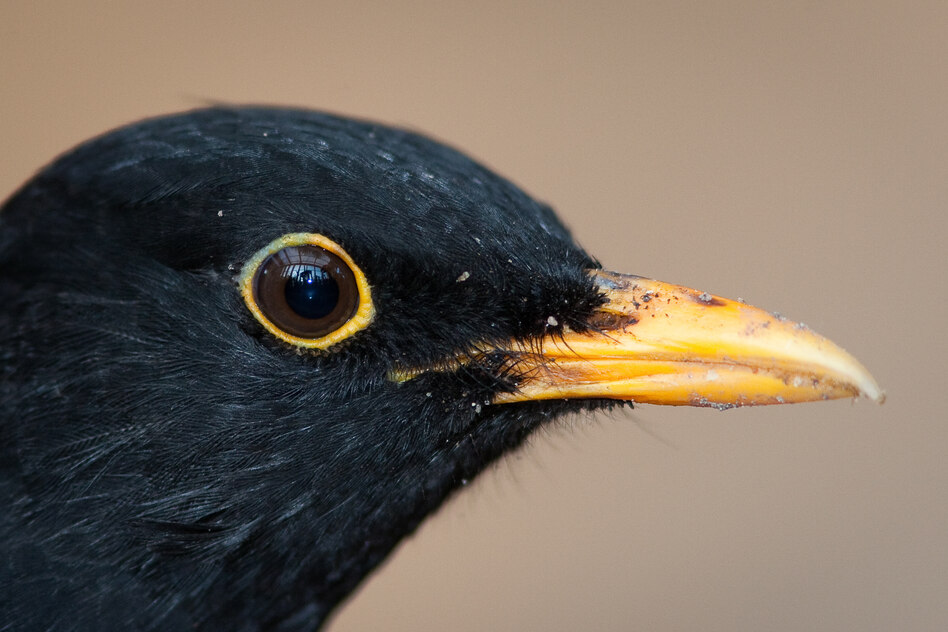
“Never before had song seemed to me so related to language,” wrote philosopher Vinciane Despret (“Autobiography of an Octopus,” 2024) after listening to a blackbird. In Robert Musil's story "The Blackbird" ("Legacy during his lifetime", 2021) she is confused with a nightingale whose song she had imitated.
For a long time, ornithologists assumed that only male blackbirds sang, but ornithologists have now discovered that 71 percent of all songbirds also sing.
The role of male blackbirds in choosing nesting sites is still similarly controversial: According to Wikipedia, some authors “assume that the female makes the decision alone, others assume that the male shows the female the possible nesting sites or has more or less influence in some other way.”
This is reminiscent of two gender-separated research groups at a private university in Berlin. They asked married couples in the new Karow-Nord district whether the man or the woman was the deciding factor in choosing their single-family home - and came to very different results.
In another blackbird research – as part of a “Jugend forscht” competition – the “special prize winner” was based on the question of whether London and Berlin blackbirds sing differently: “Yes, differences (dialects) can be demonstrated.” A number of bird researchers devote themselves to blackbird song, because the blackbird is considered to be particularly creative in inventing, combining and varying motifs. The melodious verses sound catchy and pleasing to human ears, in complete contrast to the whining or “tixing” that can be heard when excited, a series of high “tix” sounds.
Not least because of their song, blackbirds have been naturalized in New Zealand and Australia. However, many farmers there now see them as pests and are persecuted because they plunder their orchards and vineyards.
Blackbirds were once shy forest birds, but gradually they migrated to cities, where they multiplied rapidly and are now one of the most popular and least shy wild birds. The amateur ornithologist Dr. Salm-Schwader assumes that the reason for this relocation is related to the invention of the lawn mower and the large, short lawns that this made possible in urban parks and gardens. They make it easier for blackbirds to acoustically locate earthworms, which make a scratching noise in their burrows when they move.
Along with insects, earthworms are part of the blackbirds' main diet. Dr. Salm-Schwader argues that keeping lawns short has had a positive effect on the intelligence development of both blackbirds and earthworms, because the shorter the grass, the faster both have to react.
The “Icarus” project of the Max Planck Society, which has equipped 200 blackbirds born in captivity with sensors and released them, wants to take a further 1,800, which will also be equipped with sensors, “from nature”, as it is called, in order to track the flight routes of the 2,000 blackbirds. “But what do you know if you know whether and where the songbirds are hanging around?” MDR asked itself.
"Their migration movements from north to south and vice versa are known. Also that some no longer make the journey every year." We also know that many of the blackbirds that live in the north fly south in autumn, while fewer and fewer of the blackbirds that live in Central Europe migrate to warmer regions.
It is also known that blackbirds living in cities fly south less often than those living in forests. And that male blackbirds stay in their territories more often in winter than females. In the cities, four or more pairs breed per hectare; in the forests, there is at most one breeding pair per hectare. The bird watchers' observations also revealed that the females build their nests alone in bushes or on the ground and that they also incubate their four to five eggs alone. Meanwhile, the males feed them and then also take part in raising the young.
In the city, the blackbirds look for nesting sites higher up than in the forest and are not afraid to use scraps of paper, plastic and fabric as nesting material and to accept unusual nesting sites - behind neon signs, in mailboxes or in the engine compartments of junk cars. A blackbird once built its nest on a mountain lift. When it was put into operation, the male had to fly up and down again to look after the female and later her young.
In cities, clutch losses occur again and again due to cats or corvids. The biologist Cord Riechelmann wrote (taz dated July 27, 2004) that magpies "in some areas eat a large proportion of the first broods of blackbirds. However, there is no detectable influence of this fact on the population of blackbirds. In cities, blackbirds sometimes have up to three broods in a year and obviously they can 'afford' to lose the first clutch of eggs."
What they hardly survive, however, is the Usutu virus, which has been transmitted by mosquitoes since 2018: “Entire streets in Hamburg are full of dead blackbirds,” reported Renke Lühken from the Institute for Tropical Medicine to NDR. Nabu wrote on its website at the time: "Blackbird deaths are obviously becoming ever greater. While there were only 1,500 suspected cases, there are now already 5,000 reports of sick or dead birds in Hamburg." Since the beginning of 2026, not only have sparrows disappeared in Berlin, but blackbirds have also hardly been seen.
Where blackbirds breed and are fed in gardens, they may ask the garden owners for help when a magpie approaches their clutch or young. The English author Len Howard reports on this (“Birds as Individuals”, 2024). It's about tits, blackbirds and other songbirds that she fed and looked after for years and that lived in her garden, which also included the inside of her house.