
World · taz · · 12h
German car manufacturers in crisis: “The current situation is quite embarrassing”
Deutsch (original) · Auto-translated to English
taz: Mr. Tumminelli, what concerns you most when you think about cars?
Paolo Tumminelli: The current situation is quite embarrassing. In 40 years the European Community has not managed to create a bank that offers us an EU credit card; or a server network that we use to manage communications and social media. Instead, we look at plastic bottles and how their lids should be designed. We had the best designers in the world and then this thing appears that you have to fold down so that you can only drink from it if you have both hands free. I understand the goal – honestly! – but one could have imagined sensible solutions to the matter.
studied architecture and design in Milan, worked at Alfa Romeo's Centro Stile. He taught industrial design in London and Arnhem and has been professor of design concepts at the Cologne International School of Design since 2003. He also worked for Rosenthal, on juries and on books. At the beginning of the year he was appointed curator by the Torino Automobile Museum.
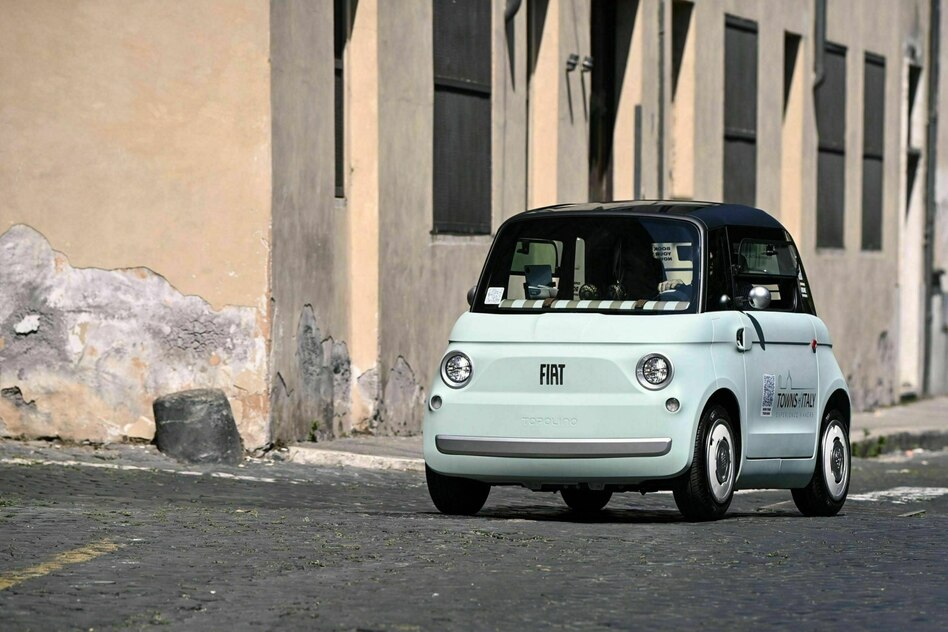
Tumminelli: There is no longer any sense of courage in the mobility sector. Meanwhile, the Chinese are building trains that move at 450 km/h and are testing trains that can reach 800 km/h. What local car manufacturers can do are Renault 5, Renault 4, Fiat Topolino, Pandina and Grande Panda. Audi is now building the A2 again.
taz: Models from decades ago, spiced up with hybrids and parking assistance, navigation systems and LED tinsel?
Tumminelli: Fiat, and I don't mean that in a derogatory way, was never cool. It was a mark of reason. And now they're trying to corner the curve with SUV fastbacks, nostalgic models and fancier equipment? What kind of strategy is this? “Back to the origins”? More like “Let’s get in line”.
taz: Many people are less worried about the development of cars or the EU, but simply about their jobs.
Tumminelli: It's about more. Because the car has a structural significance – in the media and politically. It is also a political issue. Germany has already lost communications and consumer electronics. What remains of “Made in Germany”?
taz: The Chinese brands Geely, SAIC and Changan are serious players, but almost no one sees them as competition.
Tumminelli: Because the industry remains arrogant even though the new car market is collapsing. At the same time, the proportion of new Chinese cars is growing.
taz: Why is no one interested in other models?
Tumminelli: The car manufacturers sell ultra-expensive nonsense that no one wants to afford. Customers are completely unsure: electric or not? And if so, how many watts, how many volts should it be? And what will prices and taxes look like in the future?
Tumminelli: Everyone! With the E-Plan 2035, Europe has de facto stopped the development of combustion engines. The most efficient gasoline engine is now built in China, Mazda is introducing the Skyactive Z series: big and simple instead of downsizing nonsense.
taz: A combustion engine that meets the Euro 7 standard.
Tumminelli: Toyota's parallel hybrid system remains top in city traffic. Instead, Europe wanted the plug-in hybrid, which is of no use to anyone. Dieselgate was misused to force a turnaround among private customers. But diesel remains the king of the road. Germany built the best diesels in the world. It's high time to think pragmatically.
taz: Let's turn to the beautiful, your core competence: design, culture and ethics and how they order our relationship and interaction with the world.
Tumminelli: Today everyone builds the same car. The quality is enormous in the process and non-existent in the concept. There is no development, no sequel that ties into something meaningful. Polestar, a Volvo brand, came with the Model 4 without a rear window, instead a camera. But for what? Mercedes apparently only cares about the shape of its radiator. There are now around eight types in all shapes and colors. Who cares? What is there simply expresses arrogance.
taz: In terms of the design of the models?
Tumminelli: Regarding the importance of design. We are having an intensive social discussion about the freedom to move around individually in private. And the creative answer is aggressiveness. In a situation in which the automobile faces headwinds due to emissions - and in such a situation, the industry defies criticism and invents the dummy exhaust! Isn't that too stupid? They sell expensive, unnecessary stuff for running in tunnels.
Tumminelli: Automobile fans are getting older and fewer, but even more extreme. They are served by an automotive press that has been in decline for years and therefore stands out from the automotive crowd. The car has become a niche topic, an exclusive scene. This creates models that represent the opposite of what normal citizens understand by mobility and freedom.
taz: Cars are being built that very few people want?
Tuminelli: It used to be, “Tell me what kind of car you drive and I’ll tell you who you are.” This identification is impossible today. Firstly, because the automotive product is so vague and diffuse, even the identities of once extremely strong brands like BMW or Mercedes. Today every model stands in contrast to all others. Some Mercedes are Renaults, some look good, some look shit, some are small and cheap, some are big and expensive. If you say today, “I drive a Mercedes,” that doesn’t mean anything anymore.
taz: How is this reflected in the design of new cars?
Tumminelli: For a long time you identified with your car, represented something [draws a picture frame in the air with his fingers]. Cars had relatively large windows, the ratio of door to window was one to one, balanced. Now we're two to one.
taz: Side windows look grim, pinched shut.
Tumminelli: For the rear doors it's more like four to one. The windshields are super flat; This means that the outside light is reflected and therefore the occupants are hardly visible. Not only is this bad for the driver, it also means you can't be seen from the front. Invisible from the side, from the front, additionally darkened windows. As a pedestrian or cyclist, it is impossible to tell whether the driver is nodding at you or looking elsewhere. Basically, you disappear in the car. Is no longer part of the picture. The “I’m no longer significant” message is, I think, a pretty interesting problem.
taz: Only the car counts, not the driver anymore?
Tumminelli: Once you are invisible, that becomes crucial, especially in terms of the whole social negotiation and acceptance. You don't see people, they don't see you. I'm two meters tall, but when I cross a street as a pedestrian, I have a wall of vans and SUVs in front of me. Not all cars used to be nice, but they took up less space - and you could see through them.
Read the full story at the source
Source: taz