
Germany · taz · · 2h
The Schneider/ Schwerte case: The favorite professor, an SS man
Deutsch (original) · Auto-translated to English
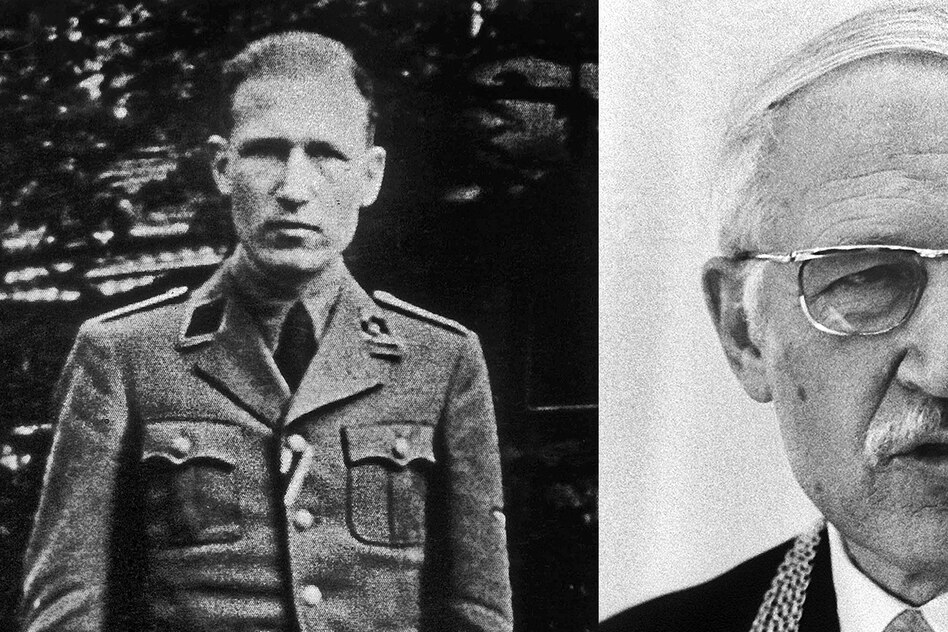
The hall is overcrowded. The historian Dr. Angelina Pils wants to present her doctoral thesis on a man whose unmasking triggered a political and scientific earthquake in 1995.
The story is unprecedentedly spectacular: SS warrior Hans Ernst Schneider was a senior employee of the Nazi machine. At the “Ahnenerbe” research center, he organized conferences and procured equipment for human experiments on concentration camp prisoners, including with poison gas. “Attempts of the worst kind,” says Pils now.
In 1945, Schneider went into hiding without a trace and was soon declared dead. He took on a new identity as Hans Schwerte, remarried his fake widow and made a career as a literature professor. At the RWTH Aachen, the chameleon rose to the position of rector in 1970 as a well-respected and sometimes revered left-liberal German scholar.
Nobody knew anything or wanted to know anything about the man who loved Thomas Mann's con man Felix Krull. It was only at the age of 85 that Schneider- Schwerte was exposed in 1995 by an informant who remains anonymous to this day. He lost his professorship and the Federal Cross of Merit, and his salary and pension amounting to millions were demanded back. He remained silent about his double life until his death in 1999.
Dr. For her work, Angelina Pils read Schneider's diaries for seven years: 40 thick ring binders that fortunately were not destroyed after his death like other documents. “It’s really not always easy,” she says. Pils reports on Schneider’s “frequent self-talk.” In 1993 they were still riddled with “deep-seated anti-Semitic resentments and nationalistic thinking”. He continued to hang out in “old SS circles and congratulated former comrades on their birthdays.”
According to Pils, he pushes the concentration camp murders away from him as if he had been a bystander. “My path in life until May ’45 remained unaffected by Auschwitz.” Her comment: “And that from an SS Hauptsturmführer from Himmler’s personal staff!”
Numerous former employees and students from the 60s and 70s sit on the podium and in the audience. They remember Schneider II, alias Schwerte, almost only positively: he was “an approachable, nice person.” The attributions range from charming to endearing. “Such a fascinating teacher,” says one.
As rector, he insisted on being addressed as “Magnificence,” reports Pils. A woman says that after a seminar he liked to go to the nearest bar with students to continue the discussion. For example about Goethe's Faust, his favorite topic. It was once said in a literature seminar: “Art is the ultimate metaphysical power of man.” Schneider- Schwerte's own art was the chameleon identity, the great masquerade.
Only a few disagree: No, the very nice man “sometimes exploded when something didn’t suit him,” says one. Another: It was not uncommon for him to become “downright abusive” and to “attack those with different opinions in a highly authoritarian manner.” They had no idea of his first life, but internally attested to him having “the appearance of an East Elbe Junker”.
A former German studies professor also tries to justify his admiration for the former literary star on the podium. Schwerte's bold vita has long since been shattered. But the professor doesn't really want to believe it, until today.
A long debate ensues: What kind of one – or two – was that? Even after 30 years, many seem undecided about how they should respond to Schneider- Schwerte's lifelong role-playing game. There were not just two names for one person, but two real, opposing attitudes that the man could switch back and forth between at will.
Angelina Pils tries to protect the audience a little afterwards: Yes, the insistence against her better judgment was sometimes intense. "But that's often the way it is in science with contemporary witnesses. 'He was good to me,' said almost everyone. And then they can't put together how they personally remember a person and what at least the second truth is. People can find it incredibly difficult to bring themselves to reflect on that."
To change an old image, they would have to correct themselves. “In this respect,” says Pils, “the evening was a psychological lesson in how contemporary witnesses deal with memory.”
Read the full story at the source
Source: taz