
Politics taz
Demo after the death of construction worker Ahmed D.: “People are dying because of the system of subcontractor chains”
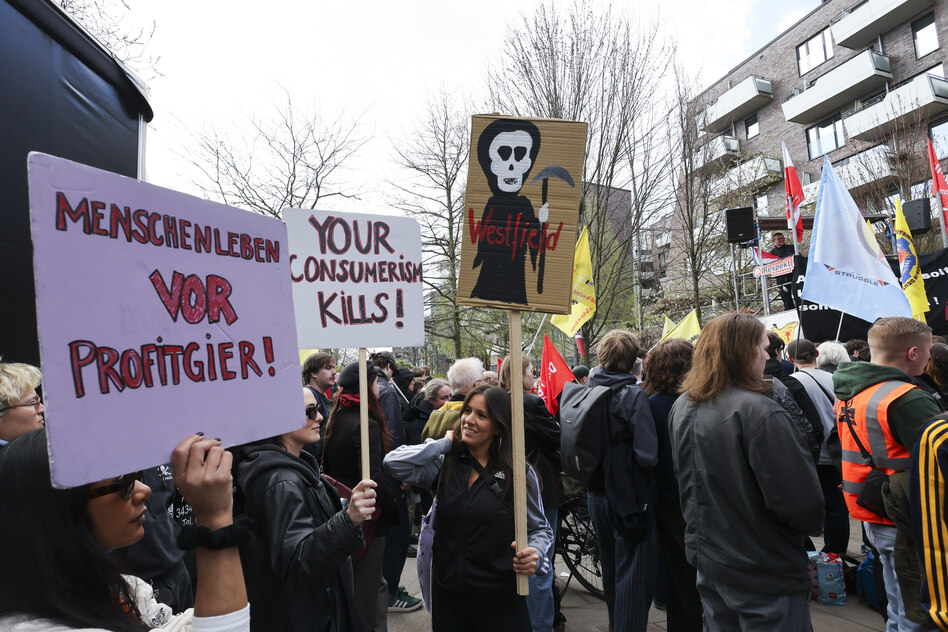
Precarious working conditions, poor wages and accidents on construction sites: A rally in Hamburg commemorates construction workers who died in accidents. more...
Deutsch (original) ·Auto-translated to English
Niklas Wulff: Unfortunately, little is known about Ahmed. He was 27 years old and came from Egypt. Here he probably worked for a construction subcontractor. He probably died in an accident on a demolition site in Wilhelmsburg. His body was taken to Rissen in the forest and found there by walkers. It is not clear what happened. This is additionally cruel.
taz: Why do serious accidents keep occurring on construction sites?
Wulff: Unfortunately, accidents in the construction sector are very common. This is almost completely ignored by many people and politicians. This became clear at the Westfield construction site in Hafencity. The construction trade association, which was responsible for checking occupational safety, warned almost weekly that the conditions on the construction site were intolerable. But there was no sufficient response to it. Even after the fatal industrial accident in which five Albanians died, construction continued two days later. This shows that it's all about the money.
36 years old, is a specialist planner for energy infrastructure and works in construction supervision. He is a member of the anarchist union Free Workers' Union Hamburg.
Wulff: Absolutely. This is nothing new either. Since the 1990s, there has been a trend in Germany for large construction companies to outsource their activities to smaller companies. In this way they try to compensate for fluctuations in orders. This has become the standard organizational model in the construction industry today. Large companies receive orders and pass them on to smaller companies.
taz: What's the problem with the subcontractors?
Wulff: Above all, it is the competitive pressure that is structurally generated by the system. On the one hand, this leads to low wages and, on the other, to poor safety conditions. In the end, safety regulations mean costs for companies: employees have to be trained; Care must be taken to ensure that they wear the correct safety clothing. Small companies do not adhere to security standards as much as larger companies.
Wulff: Ladders don't work properly; People who work with asbestos are not adequately protected, for example by wearing a full body suit. These are fundamental problems. We also know of cases where workers have to purchase their safety shoes privately. According to German law, that shouldn't actually be the case. With small subcontractors, the pressure of competition means there is less time to pay attention to safety standards or to train workers.
taz: Why is there so little attention to such cases?
Wulff: When people from other countries come here and work, they lack a social environment. In addition, the officially responsible DGB union IG BAU is almost not represented in small companies. The German majority society therefore has few points of contact. Active attention is required in order to even notice these grievances and then be able to criticize them.
by Wilhelmsburg Solidarisch, the Tischler*innennetwork and the FAU Hamburg on October 30th at 5 p.m. at Fährstraße 42-44, then at 8 p.m. at the Überseequartier subway station
Wulff: People are dying because of the system of subcontractor chains. It simply cannot exist. In addition, there is no investor liability in the construction sector. This is a big problem. Under German law, companies are not liable in cases of doubt. Unfortunately, experience shows that you cannot rely on the legal system anyway, especially as a non-German construction worker. That is why we are committed to ensuring that people organize themselves on construction sites and enforce their rights and safe working conditions.