
Germany taz
Debate about voting rights in Berlin: Why is the CDU talking about repopulation?
The proposal to expand voting rights makes a right-wing extremist conspiracy theory popular with the CDU and SPD. This is difficult to resolve with arguments. more...
Deutsch (original) ·Auto-translated to English
Are the conservatives still doing well? This question comes up more often these days if you make the mistake of carefully following the reactions to the exploratory results from the Left, the Greens and the SPD.
The most recent example is the proposal to extend the right to vote to Berliners without a German passport, at least at the local and state level. The future coalition wants to work for this - probably with a Federal Council initiative that has little chance of success.
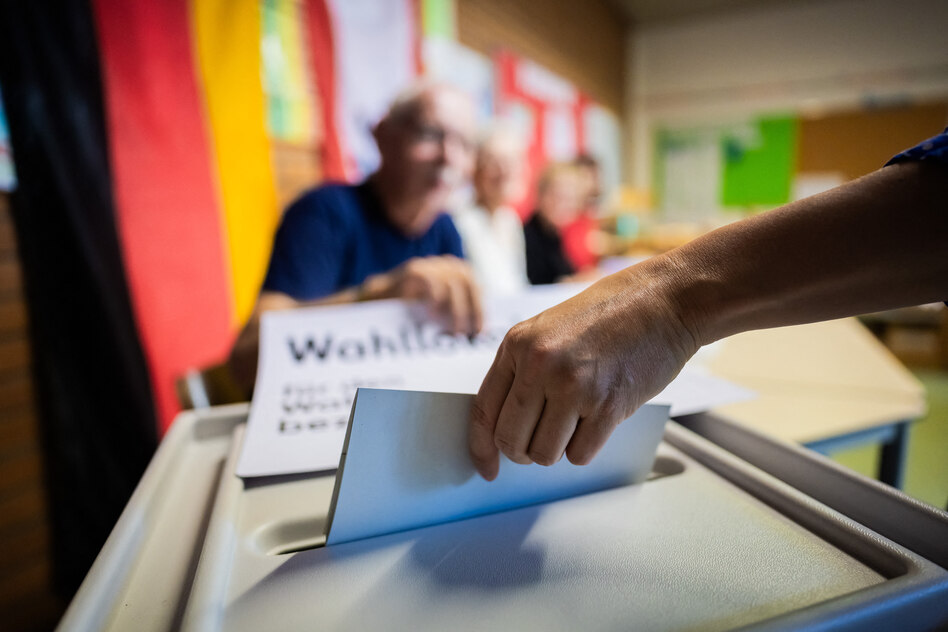
After all, a constructive proposal that is long overdue given the problem: More than a quarter of Berliners were denied democratic participation in the House of Representatives elections at the end of September. People who live here, work here, contribute to social life and, above all, are significantly affected by political decisions.
Now one could discuss whether it is a smart idea to seek a change to the Basic Law, or what consequences it would have if a person without a German passport became mayor of Berlin - after all, the passage in the exploratory paper also includes the right to stand for election.
But the debate is far from that level. In Die Welt, chief reporter Anna Schneider spoke of the “population exchange,” long dismissed as a right-wing conspiracy theory, which is now becoming a reality in Berlin because the left is incorporating its “new voter milieu.”
With this, Schneider is blowing the same horn as the CDU. Top candidate Stefan Evers feared a “turbo for illegal immigration” with which the left wants to secure its power. SPD right winger Franziska Giffey also warned of “shocking images from France” that would also appear in Berlin if people without a German passport were allowed to vote in Berlin.
As a reminder, the “great exchange” is a conspiracy narrative deeply anchored in the ideology of the extreme right. According to this, “globalist elites” (ultimately just a code for the Jews) plan to “replace” the white, Christian majority population in Western countries by encouraging mass immigration from predominantly Muslim countries.
The very term “great exchange” implies violent repression. This is also reflected in the synonym “Umvolkung”, which is more common in AfD circles. The National Socialists originally used the term to describe the ethnic cleansing in the conquered eastern territories.
Now the goal of left-wing politics is more to enable people to stay where they want to be and not to force them back and forth. Broken down to the urban context of Berlin, this not only means welcoming refugees, but also preventing people from being pushed out by ever-increasing rents.
On the other hand, the exchange of parts of the population, ultimately enforced by force, has always been an elementary part of a state policy that is committed to the interests of capital. Just think of the over 2,000 forced evictions that take place in Berlin every year, or the numerous evicted squats and house projects. Last but not least, every landlord with a personal use notice can carry out a mini-exchange by simply suing the tenants.
Against this background, it becomes clear that all the talk of population exchange is probably just a projection. This underground debate is not about the right to vote, but rather about the fears of the wealthy and have-nots of losing status.