
Germany · taz · · 3h
The Legacy of Walter Rodney: When Africa's Story Was Retold
Deutsch (original) · Auto-translated to English
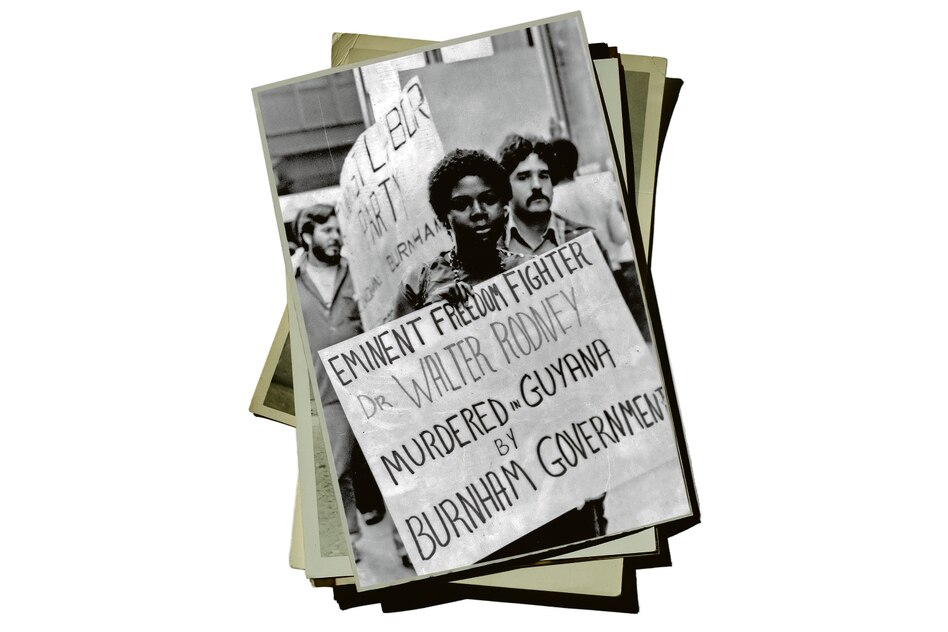
Almost 70 years ago, the decolonization of African states began after decades of European rule. But formal independence hardly led to economic improvements in the states at the time, and the racist narrative of self-inflicted backwardness still exists today.
In the midst of these developments, historian Walter Rodney asked himself: Why is Africa so poor, despite its diversity of resources? He formulated his answer in his 1972 book “How Europe Underdeveloped Africa”. A book that still has an impact today.
Born in 1942 in Guyana, at the time a British colony, Rodney grew up in a politicized working-class family that fought for the South American country's independence. After studying history in Jamaica and England, he went to Tanzania, where the development of African socialism, the so-called Ujamaa, was being pushed forward under President Julius Nyerere.
In Dar es Salaam, the center of African liberation at the time, Rodney takes part in shaping a decolonized society that should break away from European dependence.
You are reading a text from our future department. If you're interested in more positive perspectives, subscribe to TEAM FUTURE, the constructive newsletter on climate, knowledge, utopias. Every Thursday you will receive an email from us with strong thoughts for you and the planet.
🐾 Sign up now for the TEAM FUTURE newsletter – free of charge
Inspired by this environment and driven by resistance to the continuities of colonialism, he formulated his thoughts. In his book he tells the story of Africa as one of exploitation by Europe. It was the first comprehensive presentation of African development from a non-European perspective. Rodney divided the development of Africa into a period before the arrival of European colonizers, one during and one after.
With the beginning of the slave trade and colonization, the active underdevelopment of Africa by imperialist Europe also began. His basic thesis: Prosperity in Europe and poverty in Africa are connected and are two sides of the same coin. African labor and local resources – both material and non-material – were plundered from the continent to the benefit of European prosperity.
With his elaboration, Rodney offered a radical counter-history of Africa, which he himself says is aimed particularly at an African audience. Written in understandable language, Rodney wrote a “history from below,” says Anil Shah, research associate for development policy and postcolonial studies at the University of Kassel. And his message is still relevant today, says Chinedu Chukwudinma, author of the book “A Rebel’s Guide to Walter Rodney.”
The fact that the unequal dependencies between Europe and Africa are far from over can be seen, for example, in the way we deal with colonial crimes and the leverage of development aid. It was not until 2021 that the federal government officially classified the colonial crimes in Namibia as genocide and offered development aid as compensation.
The dominant narrative of this aid – reconciliation and generosity – reinforces neocolonial dependency structures. They suppress the question of the structures and causes of these unequal and unfair conditions. To this day, the work offers orientation for penetrating this.
How does change begin? In the column “The Initiation” we tell you every week about a historical moment that triggered something.
Read the full story at the source
Source: taz