
Germany · taz · · 55m
Danger Dan about his new album: “It’s about anti-fascist self-protection”
Deutsch (original) · Auto-translated to English
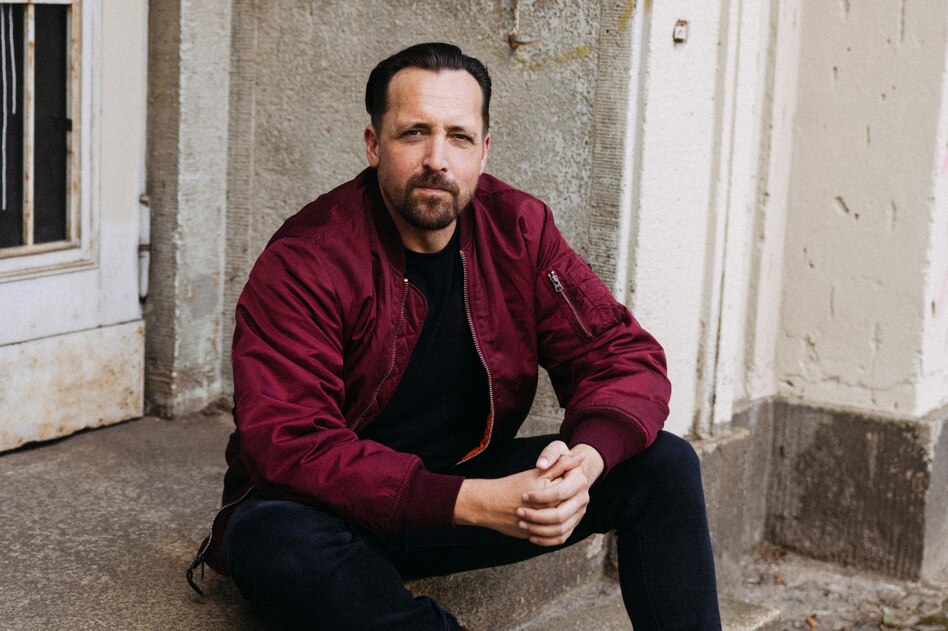
taz: Daniel Pongratz, you sing in the opening song of your new album: “No matter where I am / I always have the feeling / I don’t belong here / most of my friends / have the same problem / together it’s somehow nice”. What is the aim of this rather good-humored celebration of outsiderdom?
Daniel Pongratz: I don't see myself as much of an outsider. That's not what the song is about for me. We rapped with the Antilopen Gang in 2014: “Antilopen Outlaws, yes, we are the outsiders”. At that time we were the same within the hip-hop scene. But as your success increases, it becomes implausible to say that.
Pongratz: In recent years, identity and belonging have become increasingly important to people. I fundamentally question that in this song. The way the world is laid out is absurd, you can't shake the feeling that you're in the completely wrong film. Finding your place in it is a hopeless endeavor.
taz: What do you mean, “in the completely wrong film”?
Pongratz: I don't want to formulate it that specifically, I'll content myself with the negation. But behind the negation there must be a better life and a utopia somewhere, otherwise there would be no need to negate the conditions.
Daniel Pongratz was born in Aachen in 1983. He played in various punk bands in his youth, was later active in the hip-hop scene and played in a reggae band.
Since 2009, Pongratz has been a member of the hip-hop combo Antilopen Gang, which he founded together with his brother Tobias Pongratz (Panik Panzer), Kolja Podkowik and Jakob Wich (who died in 2013). The Antilopen Gang was recently on the road as a trio. The band has released five studio albums so far, well-known songs include: “Beate Zschäpe listens to U2” and “October in Europe”.
In 2018, Danger Dan released his debut as a solo musician (“Reflections from the glossed over life”). He became famous three years later with the piano piece “That's all covered by artistic freedom” and the album of the same name. His new album “Keine Angst” (Sardine Oil Industry/Warner) is being released these days. Danger Dan and Igor Levit actually wanted to perform the song “Keine Angst” on the ZDF satire program “Die Anstalt” in July, but the broadcaster’s director prevented this on the grounds that the song incited violence. Afterwards, a broad social debate arose about left-wing militancy and the intervention by ZDF.
taz: You also sing in the piece: “In search of myself / I crossed the world / from Paris to Singapore / I found no trace of myself”. That's a beautiful description of restlessness. Are you really traveling all over the world so much, or are these lines meant more metaphorically?
Pongratz: (laughs) I've been to both Paris and Singapore, and I actually walked the Way of St. James, as the song says - the Portuguese-Spanish section, from Porto to Santiago de Compostela, only with a backpack. I spent the night in terrible pilgrim hostels, but luckily I also sinned badly in between and stayed in the best hotels in the region. The background to this long-distance hike was this: After the release of my second solo album, a lot of people recognized me on the street, which completely changed my private life, and maybe I even became a little socially paranoid. So I just wanted to be by myself and think. However, I am also a bit lonely there; I had no contact with most of the other pilgrims. The verses are not just meant metaphorically.
taz: There is this gap between an underground culture with attitude, which you and the Antilopen Gang represent, and what is called mainstream, even on public television. This most recently became clear in July, when you were supposed to appear together with the pianist Igor Levit in a satirical show on ZDF. The station thought the song “No Fear” that they wanted to play was too radical. The lyrics could be understood as a call to violence, it was said.
Pongratz: Yes, that was intense. The fact that the director of ZDF disinvited us because of this song is really worrying.
taz: At its core, “Keine Angst” is about the legitimacy of anti-fascist militancy. People should get together, collect information about Nazis, and train for violent confrontations. They sing: "Don't be afraid, take it into your own hands / They look dangerous, but we'll put them to rest / Coordinate yourselves, start training / If you fight together, then it can work".
Pongratz: It's about anti-fascist self-protection and when it is justified. And I'm not saying anything new. I even refer to the “artistic freedom” song when I sing: “The legal gray area has once again been scratched.”
taz: Five years ago there was a debate about militancy on the left in the wake of your song “That’s all covered by artistic freedom”. Back then you were still formulating in the subjunctive, now you're switching to the indicative...
Pongratz: ... maybe even the imperative.
taz: The song “Keine Angst” has a completely different specification. In the old song you made fun of the AfD, it was more ironic. Why wasn't that enough for you anymore?
Pongratz: I now find the situation so serious that I didn't want to approach it exclusively with humor. I think we're heading towards a fork in the road. Fortunately, there is still a time window and opportunities to get involved in anti-fascist ways. But the longer we wait, the harder it becomes. We have completely different approval ratings for the AfD today, see the state elections, but debates beyond the AfD, for example about migration, have also been completely shifted. The Nazis on the street feel strengthened by this.
taz: We're still talking about a work of art. A song isn't an instruction manual, is it?
Pongratz: A song doesn't have to be a guide to action, but it might still provide inspiration to act. I have at least thrown out a suggestion or an idea of what could be done.
taz: Were you surprised by the force of the debate about the new song?
Pongratz: Well, there were several debates. The current director of ZDF, Norbert Himmler, was still in a different position at the station in 2021, but back then he tried to disinvite Igor Levit and me when we performed the art freedom song with Jan Böhmermann. At that time there was already a lot of trouble behind the scenes. Himmler is now director. Is the director already a little afraid of what will happen if the AfD sits on the television council with even larger shares? One might think that there is a kind of anticipatory obedience.
taz: What other debates about your song do you mean?
Pongratz: There were internal left-wing trench warfare based on the song that had nothing to do with the song itself. This could be seen, for example, in around eleven opinion articles in the taz, which sometimes contradicted each other and revealed much more about the conditions in the taz editorial team than about the song. Among other things, the Middle East theme was interwoven into the song. I believe this discussion goes far beyond an Israel-Palestine positioning; it is about a debate between authoritarian and anti-authoritarian leftists. This had little to do with a criticism of the song; the discussions about the song became a proxy conflict. In the future, please talk to each other and not about me, that's not helpful. (laughs)
taz: For many, you crossed a red line by “greeting” convicted criminals in the last line of “Keine Angst”. Why this musical solidarity address?
Pongratz: Everyone says you should fight against Nazis. If people actually fight against Nazis and the first thing you do is lose solidarity with their actions, then for me something is wrong. I think that moral boundaries don't necessarily run in the same place as legal boundaries. Point.
taz: When it comes to defending those affected, violent resistance may be legitimate. But if you attack and beat up Nazis at a demonstration, as happened in Budapest, that is not a direct self-defense situation.
Pongratz: Let’s take the case of Eisenach. Neo-Nazis around the militant group “Knockout 51” have been terrorizing a city for years and attacking everyone who doesn’t fit into their worldview. Anyone who is not white enough, German enough, straight enough or Jewish has to be afraid. The public prosecutor and police do nothing! The indictment later revealed that there was even suspicion of collaboration between “Knockout 51” and the police. I have the feeling that you can speak of self-defense. You have to look at each case individually. But even if hundreds of German neo-Nazis are marching through Budapest, I understand why you go there and don't leave the people there alone with the German Nazis.
taz: In the song you also point out that in the case of right-wing attacks you should inform local media and influence the police and judiciary. Social engagement instead of blunt force like the right-wingers practice. Isn't your position more difficult to convey when you refer to attacks like the one in Budapest?
Pongratz: In my opinion, the two do not contradict each other. I also wouldn't say that Nazis only use blunt force. I feel this myself too: the AfD makes inquiries about me and about financing structures; For example, she asks whether the Music Initiative co-financed my album. Where public money could be involved and I appear, the party takes notice. So work is being done at all levels and with all means. When I still lived in Aachen, Nazis patrolled the city looking for us. That was terrible. Back then, I was happy about every neo-Nazi house search and every conviction. And I still am today. But we couldn't and can't rely on it. In the end, it wasn't the public prosecutor's office that solved the problem, but rather an Antifa structure in Aachen.
taz: But we don't want to live in civil war scenarios.
Pongratz: No, of course not, I don't even know how people come up with civil war scenarios here! Unfortunately, it seems to be the anti-fascist reality of having to defend the current situation from something even worse and not fight for the revolution. We have to defend the bad to prevent the worse - that's where we are right now.
This text first appeared in wochentaz, our weekly newspaper from the left!
Every week, wochentaz is about the world as it is – and as it could be. A left-wing weekly newspaper with a voice, attitude and the special taz view of the world. New every Saturday at the kiosk and of course by subscription.
taz: Erich Kästner wrote about the rise of the National Socialists that one should "not wait until the snowball has turned into an avalanche. You have to crush the rolling snowball." Hasnain Kazim took up this in his Spiegel column, but he comes to the conclusion that left-wing violence can also set off an avalanche: "Anyone who evaluates violence according to its political purpose will at some point be able to justify all violence. Today it affects the political opponent, tomorrow the journalist, the day after tomorrow the neighbor. Then the snowball has long since become an avalanche." What would you say to him?
Pongratz: I am not aware that there are currently any serious left-wing structures that want to use violence to create a social upheaval and to do so by beating journalists and neighbors into their worldview. Someone must have read too much Compact. Rather, it is about resistance to existing violence. Everything else is constructed narratives, often based on strange theories of extremism, as if they were two sides of the same coin.
taz: Your critics would say that your song contributes to spirals of violence.
Pongratz: As I said: I am referring to anti-fascist self-protection, if you will, to defending democracy. It's about preventing violence.
taz: You are – not just because of the song – the focus of the right-wing extremists. How exhausting is that?
Pongratz: We are a team and we actually talked about whether we wanted to release this song. I find it super tiring. But I don't see any alternative. Either we fight these battles now, or soon there will only be cultural events like the AfD wants.
taz: You don't seem to have lost your sense of humor. In the song “In the Red Rose” there is clearly a self-deprecating moment: “Drinking, drinking, fighting / Oh, how free we felt / In the Red Rose at half past two in the morning”. Where does something like this come from, who else influenced you besides punk, hip hop and pop?
Pongratz: “In the Red Rose” is inspired by the song about Bolle (“Bolle recently traveled at Pentecost,” editor’s note). This is one of my favorite songs, I sang it with my sister-in-law last summer. There's the funny line in it: "But Bolle still had a great time." I would like to write a song like that one day. This turned into this hit song. In the song “Every Limit, Every Law, Every God” I’m referring directly to Rio Reiser. The pause I make before the word “free” is a quote from “We have to get out of here”.
taz: You once said that you almost never listen to songwriters' music. Then why do you play them yourself?
Pongratz: I like the limitation: piano and lyrics and nothing else. But I actually rarely hear songwriter music, if at all it's Georg Kreisler or Rio Reiser solo on the piano. I just don't think most songwriters are good. They often don't affect me or have nothing to do with my world. I listen to a lot of roots reggae and skinhead reggae instead. I also think that you can hear it a bit in the vocal melodies or dub effects that I occasionally incorporate.
taz: Your new songs are often very intimate. For example, they are about the death of a friend and former bandmate who took his own life in 2013. They sing: "I thought that it would hurt forever / forever and miss you / maybe that's the most brutal thing about life / that it just goes on". Does composing these pieces also have a therapeutic effect for you?
Pongratz: When I sit alone and play the piano, I just think of things that concern me and that are going on inside me. That's why these personal pieces are created.
Pongratz: I rented a practice room. There I smoke a lot, play the piano and start singing and writing.
taz: Is it difficult to sing about these things publicly?
Pongratz: I find it more difficult to play it in front of people who are close to me. I met my brothers at the weekend, we sat together on the balcony and I played the album for them. At the end we lay in each other's arms and cried. This is more difficult for me than singing in front of a large, unfamiliar crowd.
taz: In “That it’s so beautiful here” you sing about your own eye disease. What kind of illness is this?
Pongratz: I have the rare eye disease retinitis pigmentosa, which causes my vision to deteriorate. The disease ends in blindness and cannot currently be cured. Now that it gets dark earlier, I notice how limited my field of vision is. But I'm still coping well. Our entire live team is sensitized to this and the edges of the stage are covered with fluorescent tape. And when I come off stage, my tour manager accompanies me. Being confronted with this finitude changes a lot. I enjoy many moments much more intensely since I knew I had this illness.
taz: You also release a love song to a man, “Why it didn’t work out”. What did you learn about yourself while writing the song?
Pongratz: I didn't learn anything while writing, but in order to write I went through some internal processes. I am still friends with the man in question. In the song I ask myself whether I have not allowed my feelings and whether I have hierarchized my heterosexual and homosexual relationships differently. A few years apart, we discussed again what was actually going on between us at the time. We only decided retroactively that he was actually my ex-boyfriend. I asked him if it was okay for him if I published our story when I played him the song.
taz: Igor Levit should have accompanied you when you appeared on ZDF. Will he now go on tour with you?
Pongratz: Unfortunately, he himself is always in high demand, so nothing is planned at the moment. But if I perform in Berlin and he has time, he'll definitely come over. We have become friends over the last few years and often meet to drink beer, eat goulash or cry about the political situation. Igor and I come from completely different worlds. That's what makes this friendship so exciting for me.
taz: You used to be active in the subculture, but today you are quite successful. Should you actually be grateful to ZDF for uninviting you?
Pongratz: Because of my legacy, you mean? Back in my AZ punk and hip hop days, mainstream was a dirty word for us. Back then, we loved accusing artists of selling out. But I don't know whether a 15-year-old today thinks I'm a bourgeois sell-out product and whether this generation even still thinks in these categories. If so, then no amount of disinvestment from ZDF would change that. You only get street credibility from geography teachers. (laughs)
taz: But there are always attempts at appropriation, in the style of radical chic?
Pongratz: I have never ingratiated myself anywhere. But I remember an evening in Jena in the JG Stadtmitte (Junge Gemeinde Stadtmitte, editor's note) with Pastor Lothar König, who has now unfortunately passed away. I asked him after the concert: “What did you think of it?” Lothar said: “That was really shit.” I then asked: “What did I do wrong?” He: "The FDP city councilor was there. I never wanted to be at the same concert with the FDP city councilor." Lothar asked me to become much more aggressive and evil in the future, which I promised him. Hopefully I have now fulfilled this promise with the new album. Let's see if the FDP city councilor still comes to the concert after the recent scandals - hopefully not.
taz: Now you are touring as a solo artist. What's next for your band, the Antilopen Gang?
Pongratz: We recently played our last concert at the Spandau Citadel, and we all felt like it was a very nice ending for the moment. We don't yet know exactly if, when and how things will continue. This antelope machine has been running almost continuously since 2013. Now we consciously make a cut and see what happens. Luckily, the little Antelope world we built together will remain with me - my entire live team, for example, is from the Antilopen Gang circle of friends. So this doesn't really feel like a farewell to me.
Read the full story at the source
Source: taz