
Politics taz
Claudia Müller about red-red-green in MV: “The green signature runs through all areas”
Mecklenburg-Western Pomerania gets a red-red-green government for the first time. The designated Green Environment Minister Müller would also like to see such an alliance in the federal government. more...
Deutsch (original) ·Auto-translated to English
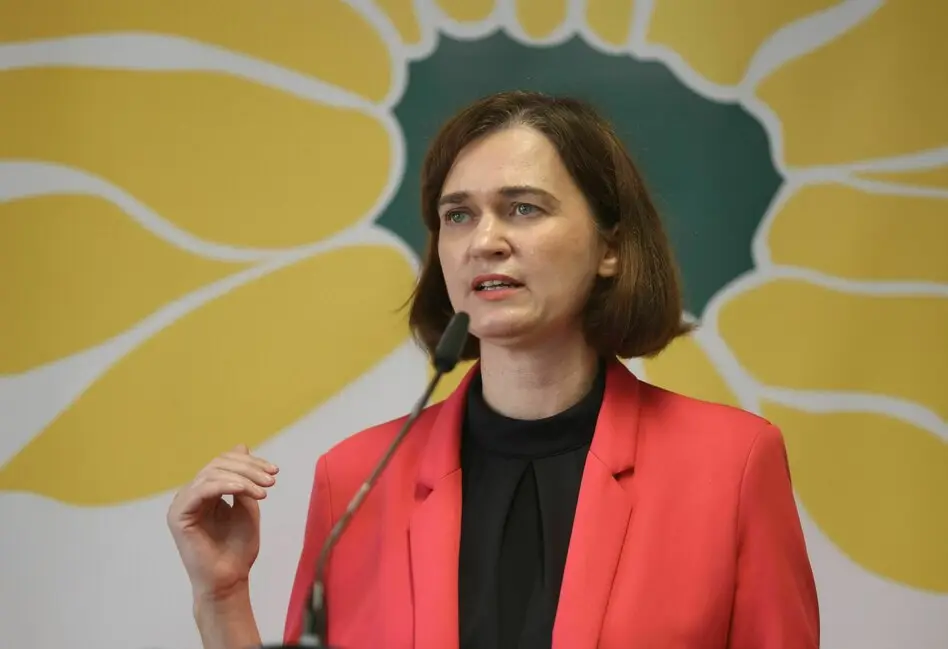
taz: Ms. Müller, before the state elections in Mecklenburg-Western Pomerania, things were extremely toxic between the Greens, the Left and the SPD. What was the mood like during the coalition negotiations?
Claudia Müller: I wouldn't say toxic. It was an election campaign and the tone gets a little rougher towards the end. The mood in the negotiations was good. Because we talked about what stood between us right at the beginning. This not only affected the election campaign, but also the entire issue of Nord Stream and how to deal with it.
taz: In the past, you had repeatedly criticized SPD Prime Minister Manuela Schwesig's support for Putin's gas pipeline, but she had pushed back violently.
Müller: Exactly. We spoke out here and clarified the issue between us. That had to be the case. That cleared the air. Then finally came the exploratory and, above all, the coalition talks - and they were intensive.
45, born in Rostock, is the designated Minister for the Environment, Nature and Climate Protection, Energy and Mobility of Mecklenburg-Western Pomerania and is therefore the first Green party to hold government responsibility in the history of the state. Müller has been a member of the Bundestag since 2017, most recently as parliamentary director of the Green parliamentary group. She is expected to be sworn in as minister on Monday.
taz: That’s what everyone always says: “intensive”. What does that mean in this case?
Müller: In Mecklenburg-Western Pomerania, we Greens sat at the table for the first time in the state's history. Now we were three parties. This has never happened before in Mecklenburg-Western Pomerania and everyone had to get used to it. And that is well known, we always enjoy working on texts. More than the coalition partners. I think that was a certain challenge for them too, but it was also appreciated.
taz: You emphasized that the coalition program now presented has “a clear green signature”. Where exactly have the Greens immortalized themselves here?
Müller: We have a clear commitment to the expansion of renewable energies, the climate check and a marine protection strategy. Or take the trainee starting bonus, the interest-free 1,000 euro loan for people starting their first training in Mecklenburg-Western Pomerania. That came from us. And the clear green handwriting actually runs through all areas, through all chapters. But energy, climate, nature and environmental protection in particular are now much more emphasized than in previous coalitions.
Müller: Specifically, this means that all proposals that come to the cabinet must be clear that they do not conflict with climate protection and climate adaptation in Mecklenburg-Western Pomerania. Otherwise it will not be decided. This is a pretty sharp sword – because it really affects all ministries. The climate check is active climate protection in daily government action.
Müller: Hm. (pause) If you look at the contract, you can see that a lot is subject to financing reservations. This also means: We will only be able to implement new projects with the new double budget, i.e. from 2028.
taz: As of this Thursday, you have been designated Minister for the Environment, Nature and Climate Protection, Energy and Mobility. So this also applies to your department?
taz: The Greens now have a large department, but you only have one minister. The equally small Left Party, on the other hand, received the two ministries it demanded. Would you have wanted more for your party?
Müller: Of course. But we also had a clear focus, namely on the responsibilities. We said that responsibilities and creative freedom are more important to us than heads. And we achieved that.
taz: What was striking was that the Greens had a lot of outside support in their team of negotiators, including Renate Künast and Michael Kellner. Is the green staffing level so thin in Mecklenburg-Western Pomerania?
Müller: My regional association has never conducted coalition negotiations, so it made sense to bring experienced negotiators onto the team. It's also about negotiating on equal terms.
taz: Can red-red-green in Mecklenburg-Western Pomerania be a blueprint for a corresponding federal coalition?
Müller: Our negotiations were very constructive and quiet. And I think that will be the case in government too. We have seen a pragmatic left that is interested in the issue and its implementation. What we see above all among the left in Berlin-Neukölln was definitely not an issue for us in Mecklenburg-Western Pomerania.
taz: And what does that mean for the federal government now?
Müller: I would like us to be the blueprint for red-red-green in Mecklenburg-Western Pomerania in the federal government. So that the Left Party in the federal government is developing more in the pragmatic direction and not in the other direction. But the Left Party has to clarify that for itself.
taz: A special feature of the new state parliament is that there is no longer a democratic opposition, only the AfD. What does this mean for the next five years?
Müller: It will be a very uncomfortable state parliament. We already experienced this in the constituent session. The AfD has almost 45 percent of the seats. That's massive in this small state parliament. That will do a lot to the mood. There is also a question that concerns us together because it is also relevant for interest groups that previously turned to the democratic opposition parties: How do we ensure that people continue to have access to control of the government without having to turn to the AfD?
Müller: We said we wanted to significantly expand certain citizen participation formats. I have a question mark as to whether that is enough. Because this is an exchange, but not government control. Otherwise it means: Those up there do what they want. I'll be honest: this worries me.