
Germany · taz · · 3h
CDU not very democratic: When election losers grab a little power
Deutsch (original) · Auto-translated to English
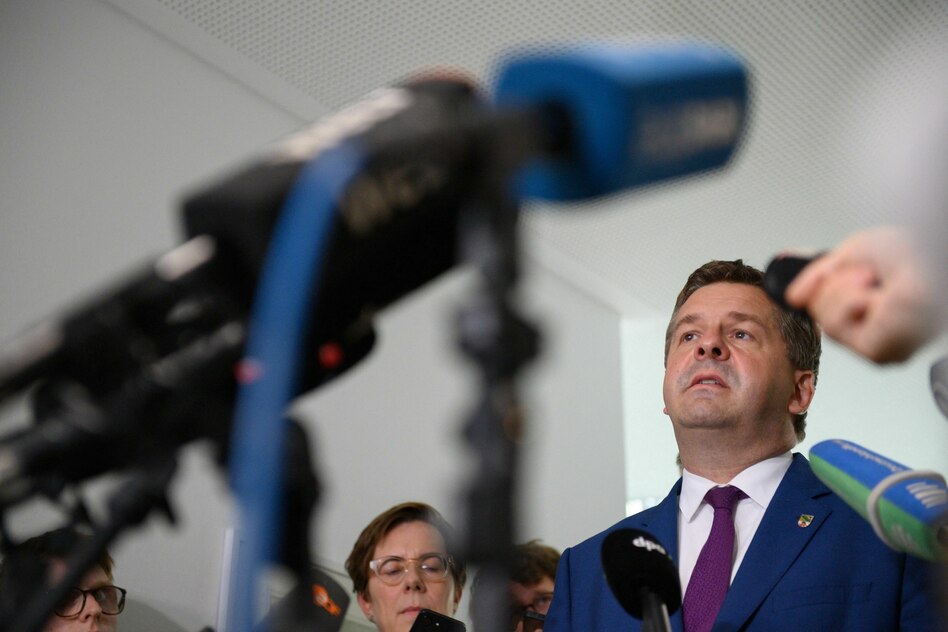
Just two days after the electoral defeat, which was unexpected at least in terms of magnitude, Saxony-Anhalt's incumbent Prime Minister Sven Schulze was elected chairman of the CDU state parliamentary group. At the meeting of the parliamentary group, which had shrunk from 40 to 15 members, Schulze surprisingly ran as a candidate against the previous parliamentary group leader Guido Heuer. With 8 votes to 7, he only narrowly prevailed thanks to his own vote.
Like all Union MPs, Schulze only gained his mandate via the state list because he lost his Magdeburg constituency to the AfD. A personal union between the prime minister's office and the parliamentary group chairmanship is considered unusual in the Federal Republic.
Sven Schulze cannot give up power despite his stated “assumption of full responsibility” for the election defeat. Demands for him to resign had already become loud at the CDU's less than festive election party on Sunday evening. Eva Feußner from the Querfurt constituency, who lost both her party's support and her position as Education Minister last year, for example, called for a radical new start.
Schulze initially seemed to accommodate this. “We have not received any government mandate and will see our role in the opposition,” said the current head of government after a short period of deliberation about his decision not to run for the office of prime minister again. On Monday evening, the CDU state executive also resigned. A new election is not expected until the end of November or beginning of December. The young 37-year-old deputy chairman of the CDU/CSU parliamentary group, Sepp Müller, has already announced his application for the state chairmanship.
Müller is seen internally as a critic of Schulze, although both want to maintain the firewall, at least against the left. He received an indirect reprimand from Chancellor and CDU federal chairman Friedrich Merz because he declared shortly before the election that the task of forming a government would lie with the AfD if the election results confirmed the polls. Actually no disagreement with Schulze, who did the same thing after the election. However, in Markus Lanz's ZDF talk show, Müller clearly distanced himself from Schulze because of his application for the parliamentary group chairmanship. This is a “fatal signal” when people were talking about a new beginning the evening before.
In view of his badly damaged position in the state party, Schulze now wanted to at least secure the role of opposition leader in the Magdeburg state parliament. But he could have done himself and his union a proverbial disservice. The close election for parliamentary group leader once again shows how inhomogeneous and even divided the CDU regional association in Saxony-Anhalt is.
Predecessor Guido Heuer was somewhat successful in keeping the wings together, from the AfD supporters in the Harz Mountains to the more liberal ones in Magdeburg. However, a stable and united faction will be crucial if AfD Prime Minister Ulrich Siegmund is to be elected, at least not with votes from CDU defectors. The AfD leaders openly announce that there are already discussions with such candidates. Your group is three votes short of an absolute majority.
Surprisingly, Sven Schulze is expecting a new state government to be elected at the beginning of October, i.e. at the inaugural session of the newly elected state parliament. If that doesn't work, according to Article 60 of the state constitution, he could continue to serve as acting leader for up to six months - in the grotesque combination of prime minister and opposition leader.
Read the full story at the source →
Source: taz