
Politics · taz · 2h
CDU after election in Saxony-Anhalt: “Giving up is not an option”
Deutsch (original) · Auto-translated to English
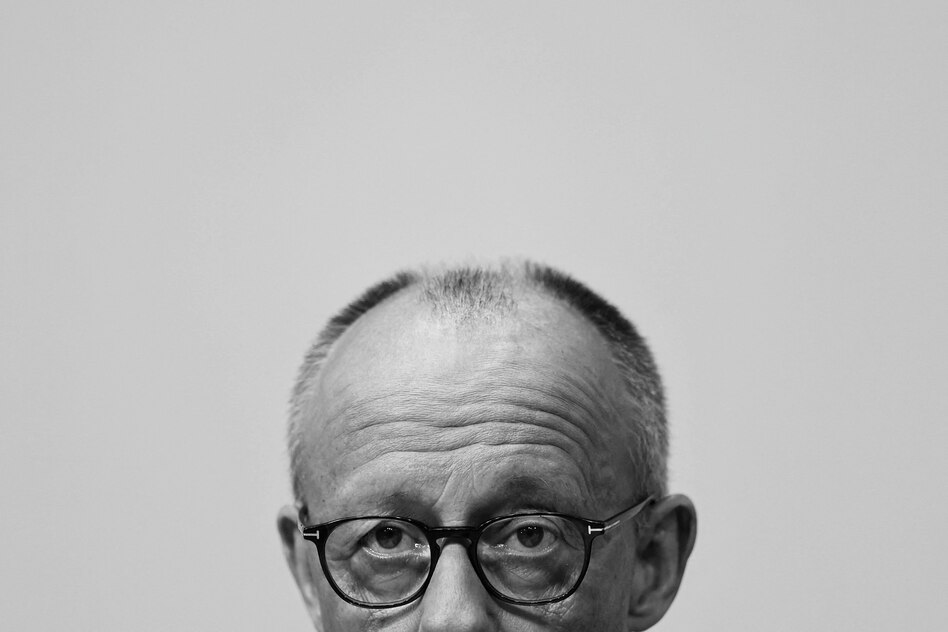
There is great horror, even in the Chancellery. Friedrich Merz said he was “deeply shocked” by the election outcome in Saxony-Anhalt as he stood on stage next to election loser Sven Schulze at party headquarters on Monday afternoon after the CDU committee meetings. The election result, the Chancellor continued, will not only change things in Saxony-Anhalt, but throughout the entire country. “And it also has an impact on the international situation.”
The CDU fell dramatically in the state elections in Saxony-Anhalt, winning just 17 percent. The AfD, on the other hand, is only three votes short of an absolute majority in the state parliament. It is a turning point: for the first time since 1945, right-wing extremists are on the verge of power in Germany. And the CDU couldn't prevent it. The party is in the biggest crisis in its history, not just in Saxony-Anhalt, but throughout the country.
It now seems to have dawned on Merz that he has a big part to play in this. It is said that this was a topic of discussion in the committees in the morning and they remained objective, they say. The issue cannot be ignored; the post-election surveys were too clear for that.
“If the federal government made better policies, the AfD would not be so strong in Saxony-Anhalt,” say 88 percent of those surveyed. “The CDU promised too much before the federal election, but delivered little of it,” 84 percent agree with this statement. And three quarters of those surveyed are of the opinion that Merz personally damaged the CDU's performance, and almost half of the CDU supporters also see it that way. AfD top candidate Ulrich Siegmund alone says: “Friedrich Merz was a very good campaigner for us.”
After thanking and praising Sven Schulze, Merz also starts a little self-criticism. “I know that my person was also a constant topic in this election campaign and that reforms were a constant topic in this election campaign,” he says. He is firmly convinced that these are urgently needed for the future of the country. So he doesn't want to let go of it, even if large parts of the population find it socially unfair.
But according to Merz's sensational idea, you not only have to justify it rationally, but also convey it emotionally. This is now a shared task and he is also taking on this task. He wanted to find “a new, better narrative” for the reforms with the SPD. However, Merz presents all of this in a very sober manner. And hasn't it been said so often and without success that we really want to improve communication?
There are big doubts in the CDU as to whether Merz can even do that. Too often this sets the wrong tone, especially in direct communication with citizens. But the party is still keeping a low profile, as there are one local and two important state elections coming up in the next two weeks. In the polls in Mecklenburg-Western Pomerania the CDU is now in single digits, in Berlin there is still hope for an election victory. You don't want to endanger that with a debate about the Chancellor's future.
Merz himself makes it clear that he doesn't want to give in under any circumstances. Several times that lunchtime he said sentences like: “I have no intention of shirking responsibility.” Or: “Giving up is not an option for me.” Nevertheless, it always seems as if Merz's days in the Chancellery could be numbered. But replacing the chancellor is not that easy in Germany. And who should actually replace Merz? The name most often mentioned is Hendrik Wüst, the Prime Minister of North Rhine-Westphalia, who governs relatively quietly with the Greens. But Wüst has a very important state election coming up in April that is very important for the CDU and he probably wants to win that first.
This afternoon, after this drastic election, Merz is also trying to take people's worries away a bit. “I want to assure everyone that our institutions are strong and stable,” he says. The Basic Law protects and guarantees this order. And: “The federal government I lead will ensure that the Basic Law is implemented.” However, Merz doesn't say how he wants to do that in case of doubt.
Sven Schulze stands next to Merz and lets his gaze wander through the foyer of the CDU headquarters. He seems almost uninvolved. The CDU state executive committee meets in Magdeburg early on Monday evening. Many expect that Schulze will make his position as state chief available there. In Berlin he can at best elicit a possible resignation. He speaks of a “serious defeat”, that he will “draw appropriate conclusions” and propose a procedure to the state executive board. If that happens, the CDU in Saxony-Anhalt would probably be busy with itself first. After all, the election result, which makes a Kenya coalition tolerated by the left impossible, seems to mean that the CDU is currently being spared a major argument: about the party's dealings with the left.
The danger remains, which we hear about again and again, that defectors from the CDU faction, which has shrunk to 15 seats, could elect AfD man Siegmund to the prime minister's office. Two of the names that are always mentioned still belong to the group: Ulrich Thomas from the Harz and Lars-Jörn Zimmer from Bitterfeld-Wolfen. The two had already drawn up a nine-page “memorial” in 2019 that explored the similarities between their party and the AfD. The CDU must “reconcile the social with the national,” it said.
Thomas vehemently rejects this suspicion. It was “total nonsense,” he told the taz during the election campaign. "They have insulted me for five years and called me stupid, and they won't get any approval from me. For me, the CDU is and will remain my political home." Schulze also said firmly on Monday: “There will definitely be no one from the CDU parliamentary group.” The BSW will ensure that the AfD can govern. Whether this will happen will perhaps only be seen when the election is actually held in the state parliament. A date for this is open. Until then, Sven Schulze will remain in office as Prime Minister.
Read the full story at the source →
Source: taz