
Politics · taz · · 3h
Carolin Amlinger on defensive politics: “We need a social renewal of democracy”
Deutsch (original) · Auto-translated to English
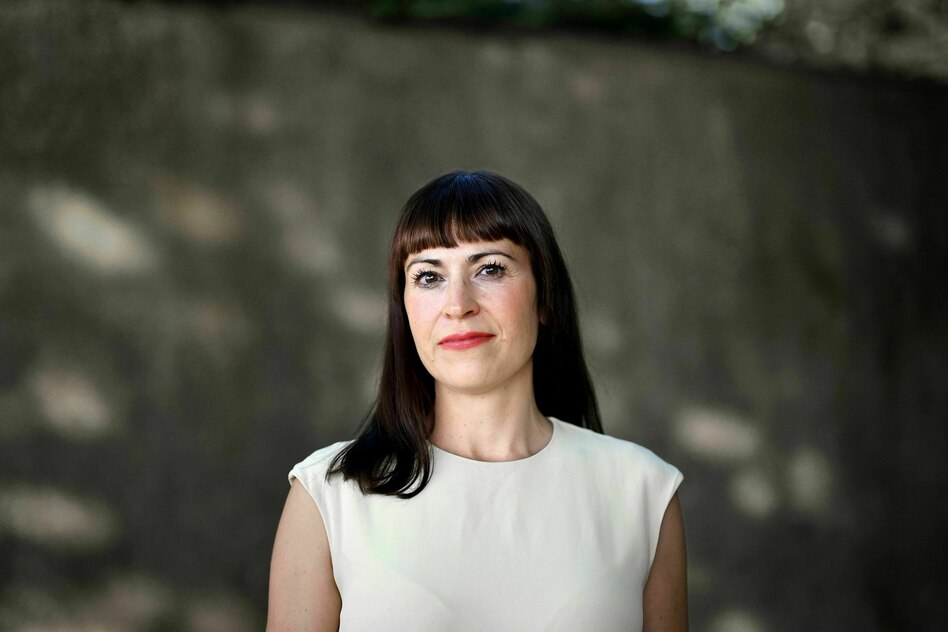
taz: Ms. Amlinger, it is possible that the AfD will sit in the next state government of Saxony-Anhalt. It would be a turning point if the AfD took government responsibility for the first time. Can the advance of the right-wing extremists even be stopped?
Carolin Amlinger: This question was already discussed before the election. At that time, some still hoped that Saxony-Anhalt could become a laboratory for successful anti-fascist politics. After the election, we must note that despite the great commitment from civil society, it was not possible to contain the AfD. First of all, this shows that short-term measures, such as protest or the development of anti-fascist infrastructures - such as democracy initiatives - alone cannot stop the long-term upward trend of the right.
taz: Without the many initiatives and protest events, the AfD might have won even more votes.
Amlinger: Definitely. Above all, however, the great commitment had the very important function of bringing the now small but still existing democratic majority out of political powerlessness and giving them the feeling of being powerful and of being able to do something. In addition, the initiatives have created protective spaces that will become even more necessary under a possible AfD government than they already are.
As part of the “Democracy needs many voices” action week, over 150 media outlets in Germany have joined forces - the taz is there. They want to draw attention to the fact that free, professional, responsible media are necessary for democratic cohesion. The organizer is the BDZV, the Federal Association of Digital Publishers and Newspaper Publishers.
t az: You mean for migrants, people of color, left-wing or queer people?
Amlinger: Exactly. But these are just short-term measures. A long-term anti-fascist policy is needed to contain the AfD - and at the same time the global rise of the radical right, which is neither an East German nor a specifically German phenomenon.
born in Zell in 1984, works as a sociologist at the University of Basel. In 2025 she published “Lust for Destruction: Elements of Democratic Fascism” with the sociologist Oliver Nachtwey at Suhrkamp.
t az: Sounds great. But what would this anti-fascist policy actually look like?
Amlinger: That becomes clear when we look at who votes for the AfD and for what reasons.
taz: In Saxony-Anhalt there were many people who considered themselves to be in a poor economic situation.
Amlinger: Right. And that is no coincidence. A central pattern of post-war societies has been reversed: left-wing parties are no longer dominant among workers and the lower middle class, especially among those who are culturally right-wing. This shift, which in Saxony-Anhalt has also been articulated as a protest against the current government reforms, is a reaction to the economic liberalization of the last decades. They have caused income inequality to grow enormously. This is a central driver for right-wing parties in many Western democracies.
taz: But the AfD is - like the Republicans in the USA, for example - a party for higher earners. Why do ordinary workers vote against their objective interests?
Amlinger: Because they perceive society, democracy as a whole, as a society of collective loss. Even if they haven't suffered a decline, they worry about it, so they have a certain fear of status. However, they do not attribute this fear to the increased inequalities or the federal government's austerity policy. No, they project it onto migrants. And even identify themselves with performance and competition.
taz: In the book “Lust for Destruction: Elements of Democratic Fascism,” which you wrote together with the sociologist Oliver Nachtwey, you describe the cause of this projection as “zero-sum thinking.” What does that mean?
Amlinger: When people no longer perceive the world in which they live as one in which resources are growing but are shrinking, the logic of social conflicts changes. It is often no longer a question of how the distribution is distributed, but rather of who is allowed to sit at the table. Climate change is fueling the awareness that our own future is dwindling.
taz: So it's enough to promise that certain policies will make things worse for others to develop the feeling that it would make things better for yourself. Without that being objectively so.
Amlinger: Exactly, that's zero-sum logic: The other person's disadvantage is my advantage. This affective bracket holds together the AfD's very heterogeneous voter base: people who are actually economically disadvantaged, especially from the working class, who expect more welfare chauvinism from a social closure. Self-employed people and small business owners who perceive themselves as high performers and complain about a violated reciprocity of the community, which would supposedly advantage low performers. People from the upper middle class who feel their entrepreneurial freedoms are restricted by equality programs, social reforms, and climate policy.
taz: The latter groups in particular have tended to gain in recent decades, including in Saxony-Anhalt - they have accumulated assets and live in their own homes.
Amlinger: Even for people who have really moved up, society can appear as a loss calculation, and the future security of their prosperity can appear to be massively at risk - even though their own home has been built and the car, paid for in cash, is just around the corner. The sharp rise in gasoline prices in recent months has increased this feeling of threat to prosperity - and indirectly played into the hands of the AfD.
taz: And why do young people in particular allow themselves to be lured by the AfD? In Saxony-Anhalt, 43 percent of those under 25 voted for the right-wing extremists. 21 percent of the same age group in the last federal election.
Amlinger: The sentence, “The children will get better one day,” no longer applies. For everyone who is young today, it is no longer so easy to achieve social advancement through personal educational investments. The decisive factor is her parents' wealth. This means that those who are already better off move further up the ranks. Everyone else stays where they are – and is relatively relegated. Here reality comes into conflict with the performance standards with which the younger generation still identifies. This creates destructive energies.
Amlinger: Yes, and in a very special way. In this sense, the AfD is a revolutionary party, or more precisely: a national revolutionary party. She wants to eliminate the democratic system from which many people have become alienated. The revolutionary impetus that was long embodied by the left has moved to the right, especially among young people. Added to this is a transgressive desire to cross borders, to use violence to empower oneself. With the AfD you can live out your feelings of social dominance.
taz: You and Oliver Nachtwey call it “lust for destruction”. Another desire seemed to have been very important in Saxony-Anhalt: the desire to help shape things. People were promised that they would write history, make the future, and be part of a collective, albeit exclusive, departure.
Amlinger: It is always said that the right has no visions of the future to offer, but simply conjures up an empty past. That's true to some extent, of course, but the movement nature of it gives young people in particular the feeling of having a future in an end time. And only to them, based on their ancestry.
taz: Future for some, at the expense of the future of others.
Amlinger: Exactly. This is precisely what makes the AfD so dangerous. It is not just a more right-wing version of the CDU. She wants to fundamentally restructure society. What's interesting is that this is exactly why it is so attractive to many. It has shed the image of the protest party and is presenting itself very effectively as a departure. In a society that many perceive as closing, she stages the ultimate closure as an offer.
taz: What does the long-term policy against it look like?
Amlinger: That is a negative result from our analysis. First of all, it is important to politicize zero-sum thinking in a different way: not to wage distribution conflicts horizontally, not to attribute inequality culturally to migrants, but rather as a vertical conflict between top and bottom.
Amlinger: We urgently need to curb the enormous wealth inequality in our society. The highest incomes must be taxed much more heavily in order to create funds for expanding the welfare state and infrastructure. High assets and inheritances too. We need a social renewal of democracy so that everyone has the opportunity to lead a dignified life. There is also a need for social spaces where people can get together. Open meeting places where social groups come together and can thus experience security - but not regressively as a community that isolates itself from the outside world. A lot of this has already been successfully tested in Saxony-Anhalt.
taz: But how do you want to bring back the many who have already drifted to the right?
Amlinger: That's not easy. What is clear is that social shaming has not caused people to turn away from the right. On the contrary, they felt strengthened in their own resentment. At the same time, I don't believe that AfD voters can be turned around in a conversation. Nevertheless, you have to stay in the conversation, listen to their concerns to some extent, but at the same time not leave them unchallenged.
taz: So can we still stop the AfD?
Amlinger: We can't help but assume that the AfD can be stopped. That is our first task.
Read the full story at the source
Source: taz