
Germany · taz · · 1d
The federal and state governments agree: Habemus new fuel discount
Deutsch (original) · Auto-translated to English
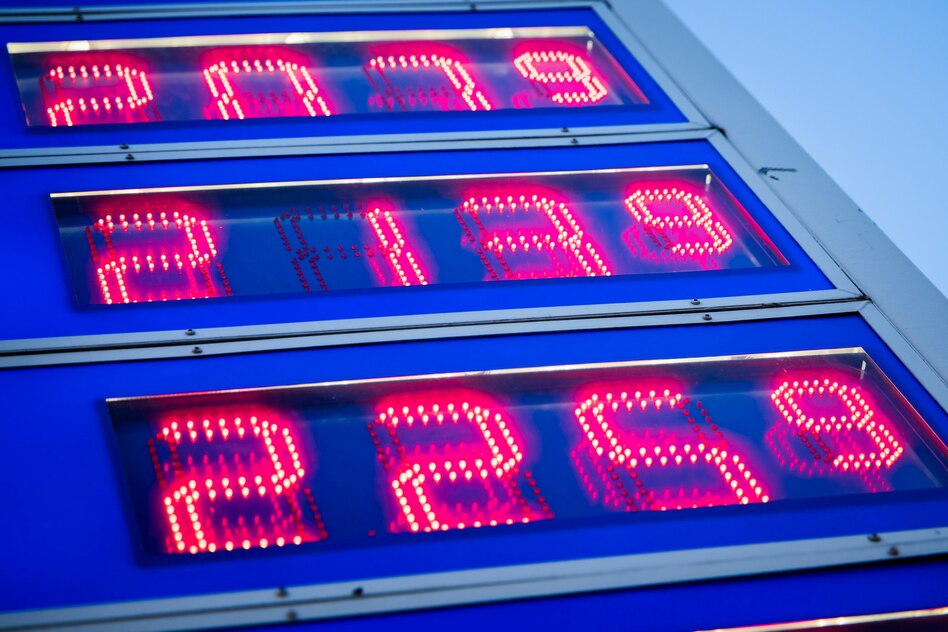
dpa | In view of the high fuel prices, motorists in Germany are to be given relief in the short term with a new refueling discount. This should apply until the end of the year. According to a statement from the federal government, the aim is for the fuel discount to be implemented at the beginning of October. If it is passed on in full, the relief could be 17 cents per liter.
“The federal and state governments will work together to relieve the burden on citizens and companies in view of the high fuel prices,” the federal government further announced – shortly before the state elections in Mecklenburg-Western Pomerania and Berlin. Chancellor Friedrich Merz (CDU) announced relief on Tuesday. However, the specific measures initially remained open.
In addition to the fuel discount, a fuel price cap is also planned from January 2027 at the latest, but as a crisis instrument and not permanently. A resolution paper states: “The federal government will enter into regular discussions with the oil industry and introduce a non-permanent, crisis-related fuel price cap based on the example of Luxembourg or Belgium as early as possible, but no later than January 1, 2027.”
According to the federal government, the relief volume of the tax measures adopted is 2.5 billion euros. The states should contribute 50 percent of the costs. According to Finance Minister Lars Klingbeil (SPD), remaining expenditure in the 2026 budget should be used for the federal share.
As the federal government announced, taxes on gasoline and diesel are to be reduced by effectively 17 cents by the end of 2026. From the beginning of May to the end of June there was already a refueling discount on petrol and diesel with a reduction of the same magnitude.
Klingbeil said on the sidelines of a meeting of finance ministers in Dublin about the fuel discount that he could not give a specific date and that the reduction should come as quickly as possible.
“Anyone who relies on the car every day reaches their limits,” said Merz, according to the statement. “We show that we are resilient in times of crisis and help citizens.” He also spoke of a strong signal with a view to tense.
Klingbeil said: “Getting fuel prices down, relieving the burden on people, ending the rip-offs at the gas pumps – that’s exactly what was important to me and that’s what we’re achieving with our agreement.”
The countries' negotiators also welcomed the agreement. Lower Saxony's Prime Minister Olaf Lies (SPD) said: "Fuel prices are currently completely out of control. With this agreement, we are finally taking decisive action." Rhineland-Palatinate Prime Minister Gordon Schnieder (CDU) spoke of an important signal that the federal and state governments had quickly found a common path despite the strained budget situation.
A fuel discount has been criticized because it is not targeted. The federal government held out the prospect of further, more targeted relief. With regard to the Iran war, the resolution paper states that the federal government will continue to closely monitor price developments and possible economic consequences.
On this basis, at the beginning of 2027, further targeted measures for citizens affected by the crisis - especially those with small and medium incomes - and companies would be identified "and, if necessary", initiated. In addition, the federal government will create the conditions for the implementation of an income-related direct payment mechanism.
Regarding the price cap, the paper states that security of supply must be guaranteed. Abusive price surcharges must be prevented.
The SPD has been calling for such a fuel price cap for a long time. SPD parliamentary group vice-president Armand Zorn said. “It is a significant success for the SPD that with the introduction of a fuel price cap, the oil companies’ cash-in is finally being limited.”
Federal Economics Minister Katherina Reiche (CDU) spoke out against a price cap and warned of a weakening of the medium-sized refinery industry. With a view to the agreement, Reiche emphasized that affordability and security of supply belong together: “Our refineries and their infrastructure are indispensable for the reliable supply of business, industry, mobility and heat.”
“That is why we are consistently aligning our refinery strategy to strengthen the resilience of our locations, secure their ability to invest and compete, and thus secure our country’s long-term supply.” Reiche told the “Handelsblatt”: “The fact that eleven refineries produce in Germany makes us more independent from abroad, and that cannot be put at risk.”
The crisis in the Middle East is driving fuel prices in Germany from record to record. The price of diesel climbed to another high on Thursday.
According to an analysis by the ADAC, a liter cost a nationwide daily average of 2.471 euros, almost two cents more than the day before. After setting several price records in a row, Super E10 was reduced slightly to 2,308 euros.
The agreement between the federal and state governments on a relief package against high fuel prices has met with criticism from consumer advocates, social associations and the opposition in the Bundestag. The new fuel discount is not targeted and, like the intended fuel price cap, only helps for a short time.
Consumer advocate Ramona Pop criticized the federal government for once again resorting to watering cans. “This is expensive, short-sighted and not very accurate,” said the board member of the Federal Association of Consumer Organizations of the “Rheinische Post”. What is needed is relief that primarily reaches households with small and medium incomes and takes the heating season into account. Dependence on fossil fuels must be consistently reduced.
The social association SoVD welcomed the federal government's action. However, watering can solutions such as the tank discount are not the right solution, said SoVD board chairwoman Michaela Engelmeier to Funke Medien. It would also relieve the burden on those who did not need support. A fuel price cap, on the other hand, is a sensible measure.
From the perspective of Left Party leader Ines Schwerdtner, a price cap and lower taxes can help in the short term. “But a plaster doesn’t heal a wound,” she told Funke Medien. “What is still missing is a plan for how energy can become affordable in the long term and not become a luxury good.” As long as Germany remains dependent on international crises and conflicts for oil and gas, the next price shock is only a matter of time.
Clear criticism also comes from the Greens in the Bundestag. "The fuel discount is back. What madness," said parliamentary group vice-president Andreas Audretsch to the editorial network Germany. “The money must end up in the people’s wallets, not in the pockets of the oil companies,” he criticized.
Greenpeace expert Marissa Reiserer made a similar statement about the fuel discount. “A big chunk of it ends up in the pockets of the oil companies as excess profits.” All of this has been confirmed to the federal government by various sources. Nevertheless, she decides again for “this unsuitable discount”. Instead of wasting billions in taxes on watering cans, the real problem must be addressed: dependence on oil.
Read the full story at the source
Source: taz