
Germany taz
Bulgaria: Runoff election decides head of state
Bulgaria's President Ilijana Jotova is ahead in the first round of voting, as expected. What is surprising is their relatively narrow lead. more...
Deutsch (original) ·Auto-translated to English
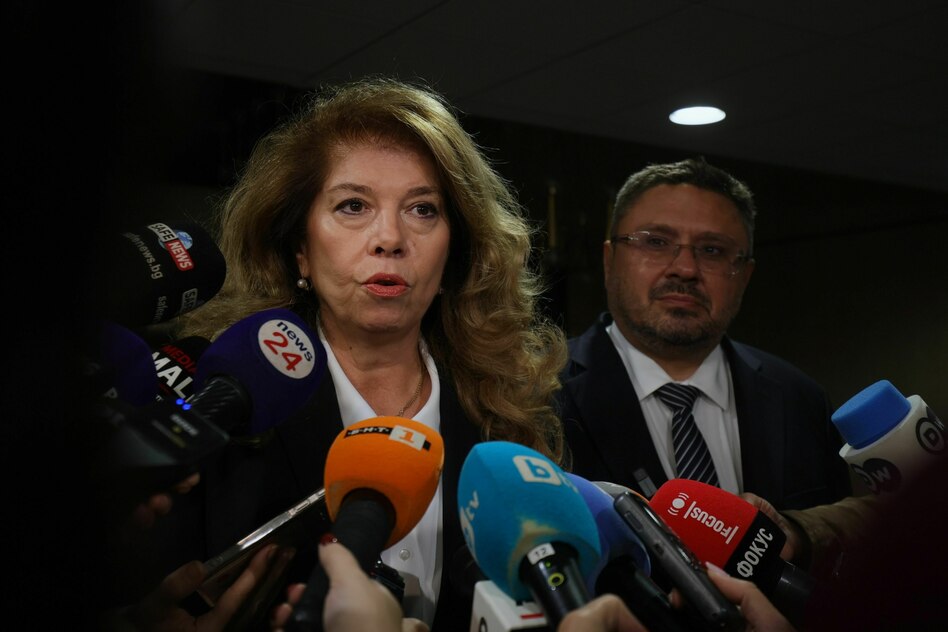
dpa | In Bulgaria, an EU and NATO country, the decision on the future head of state will be made in a runoff election. As a projection by the Bulgarian opinion research institute Mjara shows, none of the candidates achieved the required absolute majority in the first round of voting. In addition, the voter turnout of 22.2 percent was well below the required 50 percent. This means that next Sunday there will be a runoff election between the two best placed candidates - current President Ilijana Yotova and former interim head of government Andrei Gyurov.
According to Mjara, incumbent Jotowa received 35 percent of the vote. Jotova's challenger, the pro-Western Andrei Gyurov, came in second place by a small margin. According to the information, the economist with a doctorate surprisingly achieved 31.9 percent, although according to all pre-election surveys, Gyurov's deficit should have been much larger.
It is still unclear whether and how many additional votes Gyurov can mobilize for the runoff election. The 50-year-old is supported by the reform-minded liberal-conservative opposition camp. It is also unclear where the votes of the voters of eliminated candidates will go in the runoff election.
The second-placed Gyurov called on President Jotova for a debate - which had not taken place in the election campaign before the first round of voting. “We should both face the Bulgarian citizens in an open, honest and civilized debate,” Gyurov said after pollsters’ forecasts became known.
The Ukrainian war is raging just a few hundred kilometers from Bulgaria. Four merchant ships were allegedly hit by drones off the Bulgarian Black Sea coast in October. In addition, antennas of the satellite internet service Starlink, whose network is an important part of Ukraine's defense in the Russian war of aggression, were set on fire near the capital Sofia.
The theater of war in Bulgaria's immediate vicinity gives the upcoming run-off election an important foreign policy dimension. The voters will also decide whether the southeastern EU country on NATO's eastern flank will focus more on a consistently western orientation, as Gyurov suggests.
The second option would be for Jotova to represent the cautious foreign policy line of Prime Minister Rumen Radev's government in the presidential office if re-elected. Jotova was President Radev's deputy before his resignation from the highest state office in January 2026.
Prime Minister Radev spoke out against a Ukraine tribunal because Russia was not defeated. Most recently, Radev rejected his country's participation in new EU financial aid for Ukraine. In this sense, the former journalist Jotowa repeatedly advocates for an end to the war in Ukraine through negotiations.
Although the Bulgarian president is directly elected by the people, he or she has relatively few powers. The Bulgarian head of state, for example, cannot dismiss the head of government like the French president, but he is commander in chief of the armed forces. There is also a right of veto to send laws back to Parliament. That is why, according to the opposition, the head of state and the prime minister should not belong to the same political camp.
“I believe that Bulgaria needs an active president who will bring balance against the concentration of power,” said Gyurov, who is supported by the opposition camp, on election night.