
Germany · taz · · 3h
Book by Hendrik Bolz aka Testo: Jute bags and bursting dreams
Deutsch (original) · Auto-translated to English
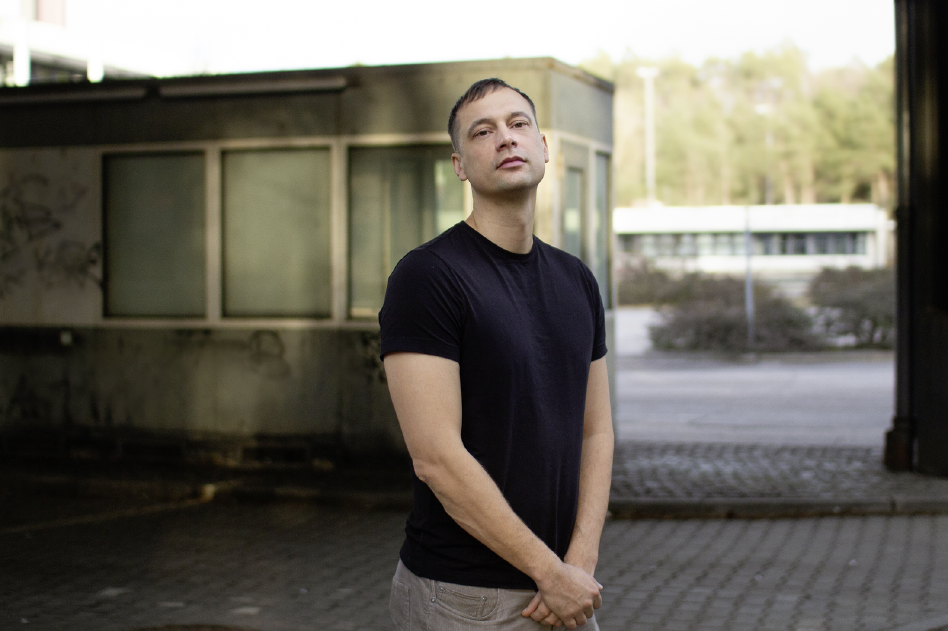
The umbrellas are of little use. There is no place where it doesn't rain in from the side. Drop by drop, the coffee specialty with the lovingly poured foam is diluted by the dirty Berlin precipitation. The guests gradually leave the outdoor area. Hendrik Bolz remains seated. “When it doesn't rain, there are very funny people here,” he says, almost disappointed.
He is no stranger to the sociotope of West Berlin. Born in Leipzig, he grew up in Stralsund and left his East German homeland after school to study at the Free University of Berlin. The move to the capital forms the end of his autobiographical novel “Zero Years”, published in 2022, which deals with his growing up in the not so recently reunified East Germany. The book was successful. In 2024 it was staged for the theater stage in Leipzig.
It wasn't all good for the author. While working on “Noughty Years,” as Bolz writes on the first pages of his new novel, “Out of Ruins. Young Man in Times of Crisis,” he “experienced a kind of small retraumatization.” Anyone who knows the predecessor can understand this: in “Noughties” bones crack, blood spurts and a lot of alcohol flows. The coming-of-age story is not a friendly one.
“But then he moved to Berlin and then everything was great!” the now 38-year-old jokingly imitates part of the response to his debut. At first he actually had no desire to revisit his past for his new book, to rummage through stressful memories again, to write another “Dark Germany story,” as he calls it. Then he realized that the pain also shows that it's important, he says, "and somehow I enjoy it too."
The transition from the prefabricated housing estate to the student town of Schlachtensee didn't go quite so smoothly. The young protagonist in “From Ruins” experiences a moderate culture shock after his arrival in Berlin. He comes from a world of soldierly masculinity, of “body armor,” as cultural theorist Klaus Theweleit would call it. He trains a lot and is at least as used to violence as he is to consumption: “The best is the toughest, the one who can beat everyone up and drink the most,” says Bolz.
But a steeled body, willingness to use violence and hard drinking are not considered social currency in the student cosmos. Instead, the protagonist is irritated by women who find thugs repulsive and are attracted to sensitive men with long hair and a jute bag instead of a sports bag.
Other ideas about life in the capital do not materialize either. "My image of Berlin was influenced by German rap and the Bild newspaper. It was about mass brawls, Tilidin, the Rütli school," says Bolz. He describes a city in which the law of the stronger, more successful and more beautiful applies and freely quotes the Berlin rapper Sido: "You need a car as big as a ship, I heard that you are otherwise nobody. You need a ship as big as a house, I don't know why, but they say that you need that."
His protagonist moves through Berlin in a strange way, constantly scanning his environment out of his small-town habits: Who is well dressed and wears the right brands? Who can be dangerous to me? Who is a “victim”? He tries to numb doubts, fears or recurring panic attacks with strength training or alcohol. “Push away”, “make it big”, “make it wide” – these are words that come to his mind again and again when he feels unpleasant feelings arising within him.
"Hi and welcome to 'Kulturschock', I'm very pleased that you're here again. I'm Hendrik Bolz and I meet here every week with great people from the cultural sector." The author sits in front of a bookshelf, a stand microphone is aimed at him. Bolz hosts his new podcast. Like “Springer Boots,” which he co-hosts with Don Pablo Mulemba and for which they both won the German Audio Book Prize last year, it is produced by MDR. The guest is the TV presenter Louis Klamroth. The two talk about “Looksmaxxer”, a male online subculture that focuses on optimizing one's own appearance in sometimes extreme ways. Bolz talks about his past, which was also shaped by a certain ideal of beauty for men. The fact that this friendly, humorous man in the blue fleece sweater was once a thug with a boxer haircut and a knife in his pocket requires imagination.
He promotes his novel on Instagram. “Which songs can get you in the mood for the book?” asks a follower. Bolz recommends “Get in!” from Sido's solo debut album from 2004: "Get in, I want to show you something // The place where my people hang out // Tall houses, thick air, a few trees // People on drugs, dreams are bursting here."
After a bumpy phase getting to know the capital, Bolz devoted himself to rapping. But he was less able to identify with the violence, sex and drug stories of classic gangster rap. “For me, the distance was also due to the fact that it would have been somehow embarrassing for someone from a small East German town who is now studying in Berlin to act like a crass guy.” Another Berlin rap group, K.I.Z., showed him that you can “make cool and hard music that is still somehow clever and has a wink.” Together with the rapper grim104, he founded a duo that has this wink in its name: Zuzug Masculin. Bolz gives himself the stage name Testo, based on the muscle-building hormone testosterone.
In 2013 a solo EP was released under the pseudonym. The track “Kill your heroes” says: “I graduated, studied, was no longer cool enough for my friends […] wanted to live like Bushido does, gangsters or rappers, quit school, great plan, today you're shitting on the couch and Bushido is shitting in the Bundestag, well done.”
Hendrik Bolz: "From ruins. Young man in times of crisis". KiWi Verlag Cologne 2026, 272 pages, 22 euros
The line fits “From Ruins.” Despite occasional escapades at home, the protagonist becomes more and more comfortable with student life in the capital, even though cranky math and ethics fellow students annoy him just as much as left-wing revolutionary role-playing games on May 1st in Kreuzberg. "I then went through a phase where I had done therapy. And my first step was that I thought: This whole masculinity image of myself has made me sick, I want to get rid of it completely now. I'm going to put on the tightest pants and let my hair grow long and don't go to sports anymore, I want to be the soft one now," he says. “At some point I realized: No, that doesn’t really fit either.”
It has now stopped raining. We go by bus and train to the “Rust- und Silberlaube”, a central building of the Free University, which “was founded with the help of the Americans as a response to Soviet influence at the Humboldt University,” as Bolz mentions in the novel. He co-produced a short film to promote the book. A young man, portrayed by Berlin actor Beren Zint, can be seen at locations in the story, including on the FU campus. There he wears exactly the brands that are repeatedly emphasized in the book and that the protagonist considers to be the style of his time: black Alpha bomber jacket, white shirt, wide light blue jeans, white Nike Shox shoes. In some scenes the jacket collar is turned up. “You can't look better, I still think so today,” says Bolz, amused.
If you follow his descriptions, he must have once stood out here. What is noticeable today is that he moves much faster than the students. Here, among the more than 30,000 people enrolled, he didn't meet anyone who was a bit like him - rap listener, weight training fan, prefabricator kid? “No,” replies Bolz, “nobody.”
In his novel, the protagonist examines the university's bulletin board and discovers, among other things, a call for demonstrations against the newly introduced Bachelor-Master system. But he doesn't think much of the political agitation on campus: "Exploitation, imperialism, warmongering, if you read through all of that, you really get into a doomsday mood, it makes you really depressed [...]."
Bolz's writing style is not dissimilar to that in "Noughties": often brief, often dry, sometimes dark, sometimes vulgar. Again, the audience gets to know the protagonist primarily through his inner monologues; again, these are more often loose chains of associations than consistently clear thoughts. The sometimes drastic brutality, which was often present in the predecessor, appears in a more measured manner in “From Ruins”. In addition, the author occasionally zooms out from the first-person perspective and writes objectively about the political and social reality of the 1900s.
In passing, he also draws a generational psychogram: The age cohort now known as “millennials” came of age in a world of evolving globalization. This was followed by an education shock (“Pisa”), the dot-com bubble, September 11th, and a financial crisis. The capitalist promise of advancement sounded hollower. Anyone who achieved success with effort could lose it again without effort. Young people of this era were considered tired of politics and sought competition in other arenas. “Something is always crunching, somehow it has something to do with me and somehow it doesn’t,” Bolz’s character ponders in view of the news situation, “An alien world that should actually be mine.”
Today, on the FU bulletin board there is, among other things, a black and white flyer from the DKP, an information poster about “group-related misanthropy” and a call for a demonstration against “increased armament and conscription and war”. A few meters further is the “Projekt-Café Kauderwelsch”, which offers vegan pastries and fair trade organic coffee.
“I was never there either,” says Bolz. Shortly afterwards he says goodbye to training.
Read the full story at the source
Source: taz