
World · taz · · 3h
Book about religious traits in politics: hoping for a bit of meaning
Deutsch (original) · Auto-translated to English
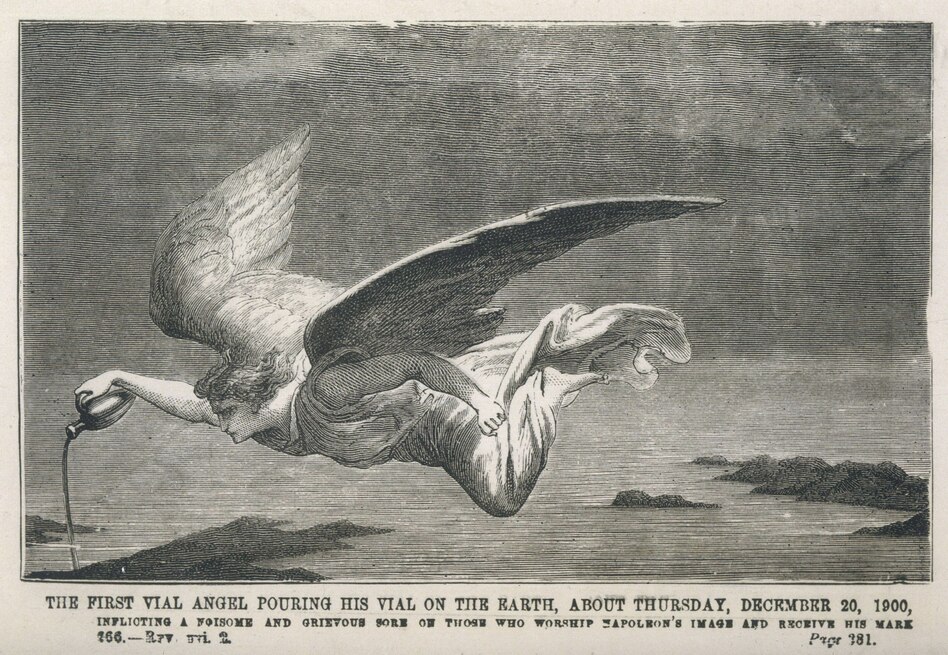
It is paradoxical: no matter how crisis and catastrophic the current situation is, most people still seem to take to heart what the cultural theorist Frederic Jameson formulated in 1994: it is easier to imagine the end of the world than the end of capitalism. At the same time, the extreme individualism that drives rivalry, mutual outdoing and restless self-optimization also awakens a romantic longing for supposedly authentic community and a nostalgia for a past in which everything was supposedly still intact.
These longings are driven by a hope for redemption. Belief in the expectations of salvation history expresses the urgent desire to gain certainty about the course of history - which is actually contingent - to charge it with a positive meaning and to take an advantageous place in it. The fact that the salvation-historical claims of various prophets are mostly demagogic nonsense should not be met with moral indignation or know-it-all arrogance. The most important thing is that so many people believe them.
With these initial observations, Jens Balzer begins his essay on the meaning of messianism and apocalypticism in current political discourses. The cultural critic has once again taken up an urgent topic. With “After Woke” (2024) and “Ethics of Appropriation” (2022), Balzer had already managed to hit a nerve and constructively enliven feature section debates. Now he takes a large panoramic look at the authoritarian political theology of the present: the tech-libertarianism of the entrepreneur Peter Thiel, the geopolitical large-scale fantasies of the Russian philosopher Alexander Dugin, as well as the visions of redemption in Islamism as well as in parts of religious Zionism and the postcolonial left.
They are all linked by an approach that the philosopher Eric Voegelin called “immanentization of the eschaton” in 1952. This means that actors move the end of time (ancient Greek: éskhaton) from the afterlife to this world and believe that they can force the creation of paradise on earth through their own actions - and thus bring history to a meaningful conclusion. This figure of thought can be found, Balzer shows, in the words and deeds of Hamas, in the messianism of the Iranian regime, in the extremist Greater Israel movement Gush Emunin or in parts of the post-colonial art and cultural scene, whose ideological struggle against Israel has taken on the characteristics of a belief in redemption.
The figure of the Katechon is central to some current manifestations of messianism. Thiel and Dugin, for example, are referring to a biblical motif from the second letter to Paul. At that time, Paul was addressing the early Christian community of Thessalonica, which expected the imminent end of the world and the imminent return of Jesus as Messiah. Who or what the catechon is remains unclear in Paul's letter. In any case, in the situation of Christ's delayed arrival, this mysterious figure is able to stop the figure of the Antichrist - and thus prevent the apocalypse.
Precisely because of this openness to interpretation, the Katechon motif was taken up again and again after Paul: for example by church father Tertullian, who saw the Roman Empire as a Katechon against the forces of chaos and decay, by the pioneer of authoritarian political theology Carl Schmitt, or today by Peter Thiel and Alexander Dugin, who use this to legitimize and - in the spirit of Walter Benjamin - aestheticize their own political ideas and projects.
Dugin, for example, uses the figure of the Katechon, which he recognizes in the Russian regime or in Vladimir Putin himself, to legitimize the ongoing war against independent Ukraine; Similarly, he glorifies the Hamas massacre on October 7, 2023 as legitimate self-defense by the indigenous Palestinian community against the supposedly alien power of Israel. The entrepreneur Peter Thiel also explicitly refers to the figure of the Katechon in his writings, who, among other things, opposes the diabolical “political correctness” and “wokeness” that stand in the way of his authoritarian tech vision.
Jens Balzer: “Redemption”. Matthes&Seitz Verlag Berlin 2026,
Balzer's essay succeeds very well in analyzing the individual manifestations of current authoritarian political theology in detail and repeatedly shows cross-connections. His depictions of René Girard's theory of mimetic rivalry and Pope Leo's response to Peter Thiel's selective play with Christian motifs are inspiring. The synthesis that Balzer’s essay leads to remains exciting – but also somewhat puzzling. It revolves around the question: What gives us true salvation and hope in contrast to authoritarian political theology?
Read the full story at the source
Source: taz