
Anti-fascism taz
Book about digital fascism: When the swarm makes fascism
It is not extremists who are “hijacking” social media, it is their digital network structure that is driving fascism, writes Simon Strick in “Fascization. Line of Flight of the Digital”. more...
Deutsch (original) ·Auto-translated to English
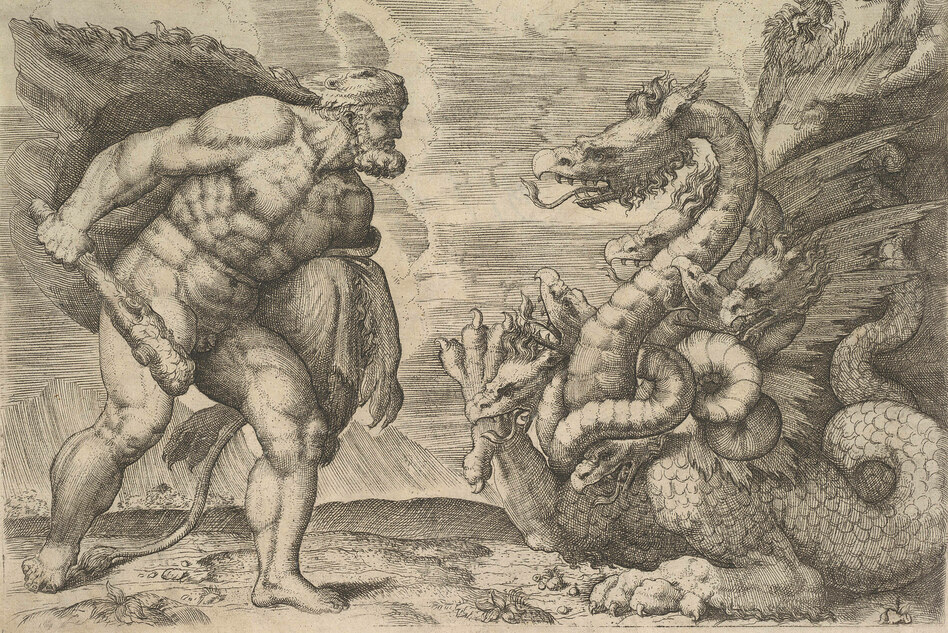
A tried-and-tested plot in horror cinema tells of an evil thing that you think is at the door, while it has long been inside the house. The protagonists frantically call out defense strategies to each other, but the thing has already taken over the action. All attempts to do so must ultimately fail due to the naivety of those involved. It is a similar situation today to those who are calling for a return of fascism, relying mainly on classical theories. Their attempts to make the phenomenon tangible fail.
It can be said that many of the questions derived in this way, such as whether “democracy has to tolerate this?”, are pointless. On the one hand, because democracy produces the phenomenon. On the other hand, because it cannot be reconciled with the fascism of the twenties and thirties. It's just as contagious, but its virality has mutated. His uniformity doesn't march in the streets, it dissolves into polo shirts or the internet's meme culture. The monstrous there calls for destruction as a cartoon frog and has at the same time reached global size.
The amount of books that try to explain fascism now fill entire libraries. At the same time, says Simon Strick, what is currently happening is little more than a “poverty politics of speaking”. The media and cultural scientist counters this with his 300-page essay “Fascization. Line of Flight of the Digital.” His central thesis: Forget the idea of seeing the Internet as a democratic space that is “hijacked” by extremists. This is one of the greatest illusions of our time. It is the digital network structure itself that is causing us to slide into fascism.
Right-wing ideology is not proclaimed personally by a leader; rather, it is a swarm activity, more of a widespread effect than a leader's command. Strick therefore discusses how fascism is done rather than what the term exactly means - that's what makes his book so worth reading. In addition to numerous anecdotes and references, it primarily provides a new perspective on the topic.
Strick writes: “Fascism will not come back, as a foreign power, a radical party or the paradoxical twin of democracy.” To paraphrase the psychoanalyst Félix Guattari, this means: “He won’t come back because fascism has already been working all the time in the house you think you’re defending.” The horror of our time is that the policies of “never again” are no longer effective. What to do? A first step would be to focus more on the process. Or, as Strick puts it, “tracing the path of a machine.”
We begin the journey in a laboratory that could also be our mental state. There we encounter an apparatus that constantly shortens and shortens, sharpens and reinterprets, weaves new patterns while destroying complexity and contexts of meaning. What is noteworthy is that the emergence of the machine coincides with that of right-wing populism. The traces lead back to the 1990s. This is where the disastrous simultaneity of fascism and digitalization begins. Strick identifies it as a “deep-seated entanglement,” which is commonly referred to as a “shift to the right.” A frightening implication is that if digitalization cannot be stopped, then the “process of fascistation” may not be either.
What does this process consist of? Fascization is initially a habituation to “eliminatory speaking,” Strick quotes the philosopher Pierre Zaoui. It does not necessarily have to result in a totalitarian state or fascism. The new variant differs from an authoritarianism that forces silence. On the contrary, it encourages people to speak. Fascization is “collective practice” and daily repetition in social networks. What is initially just chatter slowly becomes fascistic language, because the machine manages feelings, especially negative ones, and calls for a reaction. She slips into the clothes of freedom and into the psyche of the user, opening and closing doors, hallways and corridors at the same time. This is how the patterns of today's digital public sphere emerge.
This text first appeared in wochentaz, our weekly newspaper from the left!
Every week, wochentaz is about the world as it is – and as it could be. A left-wing weekly newspaper with a voice, attitude and the special taz view of the world. New every Saturday at the kiosk and of course by subscription.
This is above all schizoid: social media appears as a problem and a solution at the same time. They are identified as a threat to democracy and at the same time seized upon to save it. In the hands of the populists they become a weapon, in those of their opponents they become democratic saviors. Ultimately, it doesn't matter what you feed the monster, it will get bigger.
Simon Strick: “Fascization. Line of flight of the digital”. Suhrkamp, Berlin 2026, 300 pages, 20 euros
In his essay, Strick advocates research that does not address the normalization of right-wing extremist attitudes in society with numerical findings and argues about the lack of “cohesion”. The call for fact checks, appeals to “media literacy” or simply “monitoring extremists” are also naive given the situation. It is now much more about learning to understand the new fascism that is appearing everywhere.
Stopping him would also be extremely difficult. One will be forced to leave the familiar theoretical home to fight in a “placeless place” – against a monster that is both an opponent and a terrain of conflict.