
Politics · taz · · 1h
Burning barricades in France: The angry frustration of the young generation
Deutsch (original) · Auto-translated to English
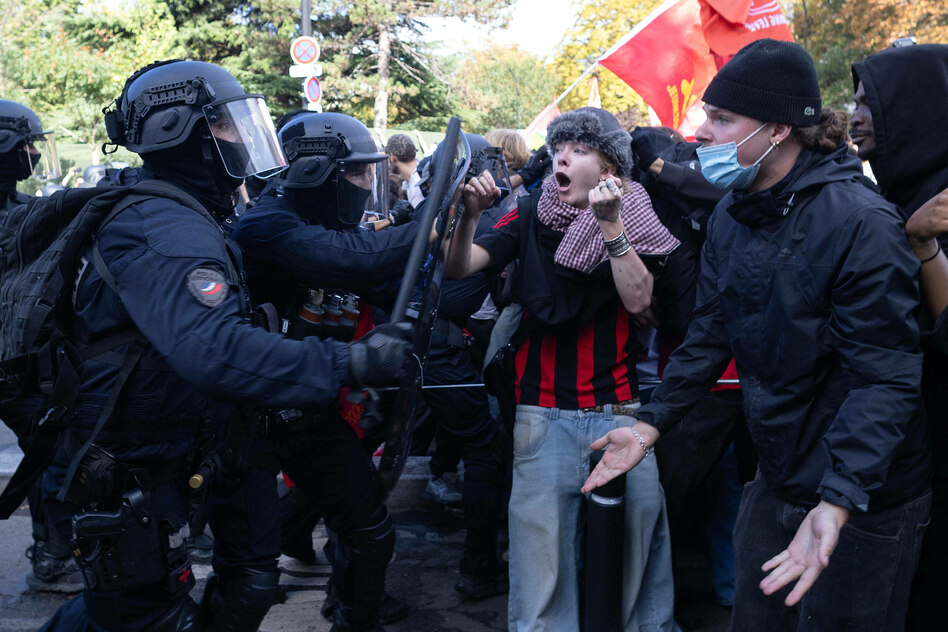
In around 1,200 of a total of 3,700 lycées (upper and middle school schools) in France, students are currently on strike against local grievances and are venting the discontent of their generation. Barricades made of garbage cans have been erected in front of the school gates to disrupt lessons and normal school operations. In many places these barricades and pieces of furniture were set on fire. In some cases, students were supported by parents and teachers.
The law enforcement officers sometimes used disproportionate force against the protesters. In front of the Lycée Blaise Cendrar in the northern Paris suburb of Sevran this week, four police officers from the horse unit tried to evacuate a peaceful gathering of students, parents and teachers. These scenes caused shocked reactions and, if anything, spurred the movement on.
Starting in Paris, the protests have spread rapidly over the past few days to Marseille, Strasbourg, Toulouse, Rouen, Nantes, Montpellier and other cities across France. The middle schools in the outlying areas were often particularly affected, where the lack of teaching staff and desolate hygienic conditions are said to be particularly severe. Since the middle of the week, students at 30 universities have also joined the protesting students. Because of the beginning of mobilization, the campus in Nanterre, in the west of Paris, was closed on Friday. The historic rebellion of May 1968 began in this university.
The government blames so-called “Casseurs” (rioters) for the violent clashes and suspects political masterminds of the “ultra-left”, namely the left-wing party La France insoumise (LFI), are behind this spontaneous youth movement. This publicly called for active solidarity with the student protests and condemned the “police repression”. LFI had also called on the parents of the young people demonstrating to protect the students during police actions if necessary, which in return was interpreted by the government as incitement to violence and resistance against the law enforcement officers.
According to authorities, 400 middle schools were still closed on Friday morning. According to the Interior Ministry, 40 school principals have been physically attacked during protests over the past three days. In Marseille, a school principal was doused with gasoline. In Nantes, unknown people set the facade of the Nelson Mandela Middle School on fire, completely gutting the entrance hall. Fires also caused considerable damage in two schools in Paris. A public transport bus was burned in Marseille. More than 2,000 young people were temporarily arrested.
French Justice Minister Gérald Darmanin is demanding that the parents of the underage rioters pay for the property damage. He also fears that the student strike will degenerate into a general revolt by young people from the suburbs like in 2005. But Darmanin also admits that the young people's dissatisfaction is “legitimate”. He “understands the students and young people who are rightly concerned about their future.”
The protests are primarily about specific problems: missing teachers, damp or leaky walls or a lack of toilet paper and unusable toilets. In addition, there are demands that cannot be met in the short term with staff or money. For example, “Parcoursup”, a selection process for middle school graduates for admission to university, is controversial, but also the disadvantage of young people in the suburbs. The fear of the future mentioned by Darmanin and the pessimism of this generation, confirmed by surveys, are currently mixed in a “convergence of movements” with anger about inadequate climate policy or the LGBT+ movement or solidarity with Palestine, explains sociologist Paolo Stuppia in Libération.
The background to the conflict is also the current debate about the government's national budget. Due to high levels of debt, the government is forced to make savings in almost all areas. Like all civil servants, the teachers, who are already comparatively poorly paid, will not receive any cost-of-living compensation next year. There is less money available for the education system to improve the poor teaching conditions. This makes it difficult for the government to respond to the immediate demands of the students.
Read the full story at the source
Source: taz