
Germany taz
Bremen clinic operator closes location: shrinkage treatment becomes expensive
The municipal hospital group Geno is in crisis: 560 jobs and two locations are being lost. A loan from the city prevents bankruptcy. more...
Deutsch (original) ·Auto-translated to English
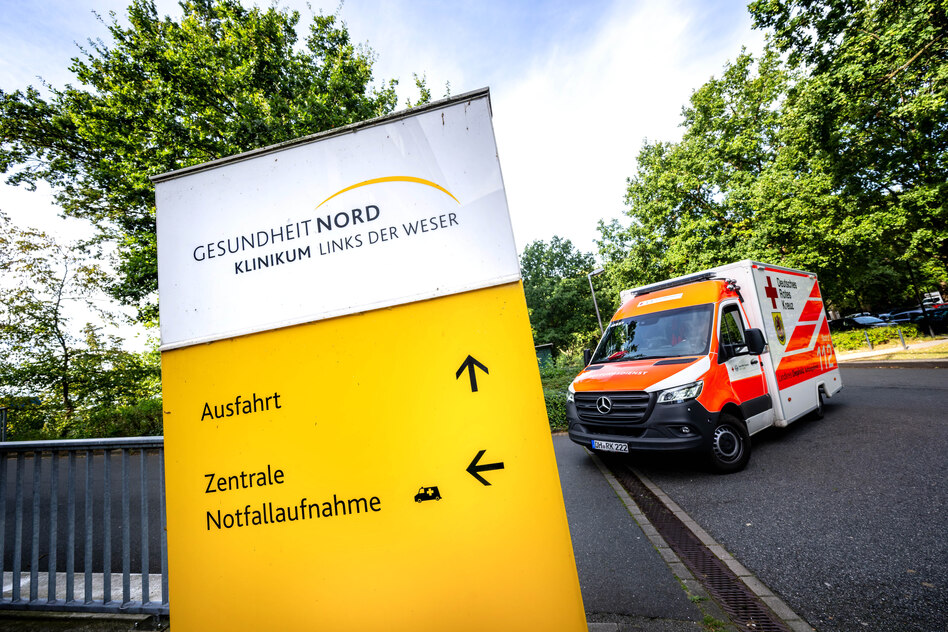
The existence of the Bremen Hospital Society Gesundheit Nord (Geno) is threatened. The country will probably step in with an aid loan of 293 million euros - according to a Senate resolution on Tuesday. According to the left-wing health senator Claudia Bernhard, the main thing is to gain time so that “drastic measures” can be implemented. Only thanks to the loan can “the municipal clinic group be protected from imminent insolvency” and thus secure health care for patients.
Preventing insolvency is important to those in charge of politics: this is the only way to prevent the Geno from being privatized - with a municipal provider, the city can continue to influence health care and ensure that services are also offered that are usually not worthwhile, for example pediatrics.
However, the restructuring plan being pursued now will not work without deep cuts: Geno had already put forward its own proposal for savings at the end of last week. After a supervisory board meeting on Friday, the management informed its employees about the situation in a letter - and was specific: around 500 full-time positions would have to be cut, it was said. And: locations will be further reduced.
A Senate press release now even speaks of 560 full-time positions being eliminated. There are 6,800 jobs across the entire group, spread across 8,000 employees. According to a company spokeswoman, the positions will be eliminated across the entire hospital network and all professional groups. “Normal fluctuation will not be sufficient to reach this number in a reasonable time,” writes Geno. So there will be layoffs.
And the planned location closures? Geno operates four hospitals in the city; The closure of the Links der Weser clinic has been a decision since July 2023. The main departments will move to the Bremen-Mitte Clinic by the end of 2027. Now, according to the new plans, the Bremen-Ost Clinic will also be radically shrunk: only forensics and psychiatry will remain there, and all departments for somatic diseases will be eliminated. What would remain is the Bremen-Mitte Clinic as the maximum provider and the Bremen-Nord Clinic as the regional provider.
The closure of hospitals and the concentration on fewer locations is politically desired and is a core of the health reform by former Health Minister Karl Lauterbach (SPD). There is general agreement in many parties; in Bremen, for example, the opposition CDU has also spoken out in principle in favor of such a strategy.
However, the cuts now planned are not in the interests of the supporters: “If you concentrate on good quality, it doesn't have to be worse for people's care,” says Ralph Saxe, health policy spokesman for the Green Party, which co-governs. "But here it's open heart surgery. It's all rushed."
Actually, everything was supposed to get better after structural reforms at the municipal Bremen clinic group; the business plan called for black numbers in 2026 for the first time in a long time. Already in September it became public: That won't work; a deficit of 18 million euros is now expected for the current year. The costs have risen because materials and personnel have become more expensive, and revenue has fallen: many treatments in hospitals are now only carried out on an outpatient basis. As so-called hybrid DRGs, they are then reimbursed much less by health insurance companies.
However, Geno places the real blame for the existence-threatening crisis on the much-maligned GKV contribution stabilization law that the federal government passed this summer: this alone, the hospital association explained at the end of September, would result in a burden of 263 million euros for the 13 hospitals in the state of Bremen over the next four years. The law costs the Geno 40 million euros every year, it says in the letter to the employees.
The red-green-red government coalition largely adopts Geno's reasons for the crisis, including criticism of the Statutory Health Insurance Contribution Stabilization Act. The Bremen CDU rejects the accusation: “It is not appropriate to shift responsibility to the federal government,” said parliamentary group leader Wiebke Winter. For decades, millions have been made available for Geno and renovation plans have been announced. However, there was no sustainable renovation.
The truth is that the cuts that are now to come have been around for a long time. The plans to close all somatic departments in the East Hospital sound radical - they are not really new. Long before the decision was made to close the Links der Weser clinic, the clinic in Bremen-Ost was on the renovation list.
This was the only way, the coalition said in 2015, that the hospital group could become financially stable in the long term. But the resolutions were not implemented; they failed due to local resistance. Instead, in the years since 2015, a three-digit million sum has been pumped into the renovation of the site: among other things, the intensive care unit was completely rebuilt; Recently there were also plans to expand internal medicine - although it has actually been clear for some time that Geno has too many beds overall.
The 293 million euro loan that the country is now making available for emergency rescue covers many costs that would not have been incurred if planning had been better. Geno itself had announced a deficit of 20 million euros this year and 40 million euros in the next four years. But the amount that the country makes available to avert insolvency must be higher: severance payments must be paid. And ultimately, the loan should be enough to cover your own interest.
The country itself is currently having a hard time making ends meet. The Stability Council had already criticized Bremen's budget planning in the summer as inadequate. “With all understanding for wishes: We must continue to set priorities on the essentials,” Finance Senator Björn Fecker said on Monday. The essential thing is to save the Geno through shrinkage.