
Germany · taz · · 52m
Bremen memorial for victims of emetics: drowned on state orders
Deutsch (original) · Auto-translated to English
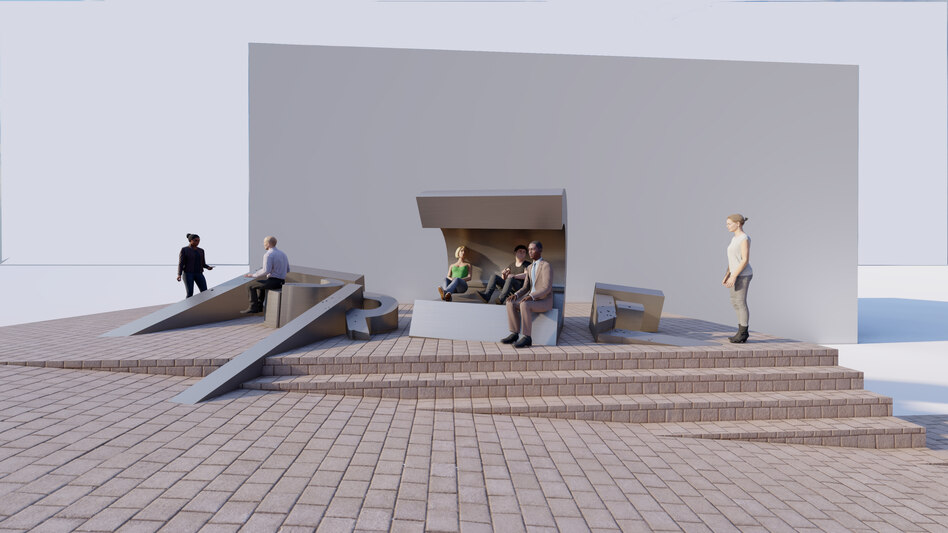
A new memorial site is opening in Bremen. It was designed by the South African artist Usha Seejarim. It commemorates the victims of the emetic torture, which was carried out in around 1,200 cases in Bremen alone between 1991 and 2005. To preserve evidence, police forcibly administered vomit-inducing emetics such as ipecacuanha syrup to people suspected of drug trafficking. “All the victims we know of were black young men,” says Gundula Oerter from the Laye Condé Memorial Initiative.
The initiative has been driving forward the review of police practice for over 20 years. Laye-Alama Condé died on January 7, 2005 in a hospital in Bremen. Ten days earlier, the police had subjected him to the violent procedure. On December 12, 2001, 19-year-old Achidi John died in Hamburg as a result of the use of emetics. The then Interior Senator Olaf Scholz introduced the police measure there in the same year.
The memorial does not just call for remembrance. It is also a protest against anti-black racism, which, according to the European Union Agency for Fundamental Rights (FRA), has been increasing across the EU for years. The numbers are also rising again in Germany. Some of the highest discrimination values were measured here anyway. Bremen's current police chief Dirk Fasse will give a speech at the opening of the memorial. In addition to the artist Usha Seejarim, Bangaly Condé, a brother of the killed man, will also be present.
The Bremen Initiative had already called for a permanent memorial site in 2013. To emphasize this, she set up a mobile memorial in the city for several years. In 2020, the citizens finally debated the project. The FDP warned that such a monument would send “a wrong signal” and lead to heroizing the “deeds of petty criminals”. The CDU and AfD, its spinoff MRF and Citizens in Anger (BiW) also voted against it.
However, the majority of the red-green Senate and the Left supported the project. The aim is to establish a “place of reminder to politics and society” in order to “always critically question the proportionality of state measures.” At the beginning of 2022, the cultural authority announced an artistic competition with a funding amount of 60,000 euros. A jury convened by the authority, which was expressly made up of people with experience of racism, chose Usha Seejarim's design.
The South African artist's work consists of five steel letters that form the word "FORCE". The use of the English-language term refers to both the violent practice of torture itself and the police state power from which it emanated. The letters, several meters tall, offer seating and an opportunity to linger and discuss. The place is deliberately intended to be uncomfortable due to sloping surfaces and the clinically sterile material. At the same time, it is reminiscent of the hospital-like environment in which the emetic was administered.
Usha Seejarim called the memorial “Death by Drowning”. The English-language title leaves it unclear whether death by “drowning” or “drowning” is meant. He refers directly to the case of the Sierra Leonean Laye-Alama Condé, who drowned from the additional fluid introduced into him after several attempts to give him emetics. This is how Lutz Müller described the cruel practice in 2021 to the taz. The police chief, who was in office from 2012 to 2021, took up the issue during his term of office and worked to address the practice that ended in 2005.
Condé was taken into police custody on December 27, 2004 on suspicion of drug trafficking. He was forcibly given water and emetics via a nasal tube for several hours until he fainted, tied to an examination chair with cable ties and handcuffs.
Even after he had already vomited several capsules of cocaine, police doctor Igor V. continued. The pathologist was the only one who was later charged. After a five-year trial, the proceedings were conditionally discontinued in 2013. The court cited the defendant's inability to stand trial due to health reasons as the reason. In the reasons for the judgment, it also stated that “possible misconduct by third parties or a political failure” could not be ruled out. However, the public prosecutor's office never investigated politicians or third parties, such as the head of the Medical Evidence Preservation Service.
As early as 1991, the law enforcement authorities in Bremen used emetic torture. This was their response to a massive drug problem. Emetic torture was introduced under the Bremen traffic light coalition, despite numerous warnings, including from parts of the medical profession. Justice Senator Henning Scherf (SPD) and Interior Senator Friedrich van Nispen (FDP) were responsible. In the following years, six other federal states followed suit: Berlin, Hamburg, North Rhine-Westphalia, Baden-Württemberg, Lower Saxony and Hesse. The Frankfurt Higher Regional Court banned its use there in 1996.
Only a ruling by the European Court of Human Rights ended this practice nationwide. The court recognized the procedure as a violation of the ban on torture. Abu Bakah Jalloh had appealed to the court: he had already been forcibly administered emetics in Wuppertal in 1993 and had sued in all instances for over a decade.
As early as the 1990s, the Bremen Anti-Racism Office began accompanying survivors of emetic torture and documenting the physical and psychological consequences. One affected person reported in March 1995: "It took me a long time to recover. For a long time I had diarrhea with a terrible noise in my stomach." He complained, among other things, of headaches, fatigue, stomach pain and kidney pain. “I haven’t gotten over it mentally.” Some survivors didn't talk to anyone about their experiences for years, says Gundula Oerter from the memorial initiative: "Being humiliated and dehumanized like that - these experiences have an impact for decades."
Since 2006, the initiative has organized an annual memorial event on the anniversary of Condé's death. Oerter remembers that she was initially confronted with silence and attempts at cover-up. A turning point was the critical publication of material by the Bremen police in 2014, which Lutz Müller in particular pushed forward. His confession: Under no circumstances should a person be harmed in police custody.
According to Oerter, this was a late but important step: “At that time, Lutz Müller broke with existing racist, misanthropic and anti-right-wing positions.” This “initiated a different dialogue in urban society”.
It's not finished yet. “Although emetic torture is history in Bremen,” says Oerter, “anti-black racism or racist profiling are not.” That is why the initiative also calls for appropriate compensation for those affected. “We also need a format for asking for forgiveness that resonates with those affected,” says Oerter.
So far, the citizenry had only recorded its admission of guilt in an official resolution from 2020. However, many surviving victims and relatives were unaware of this, says Gundula Oerter. “Therefore, despite our great joy about the memorial, there is still a blank space.”
Read the full story at the source
Source: taz