
Germany taz
Industry needs protection: Researchers warn against dismantling the steel industry
Steel is strategically important for production in many industrial sectors. That's why the aid is worthwhile for the weakening industry. more...
Deutsch (original) ·Auto-translated to English
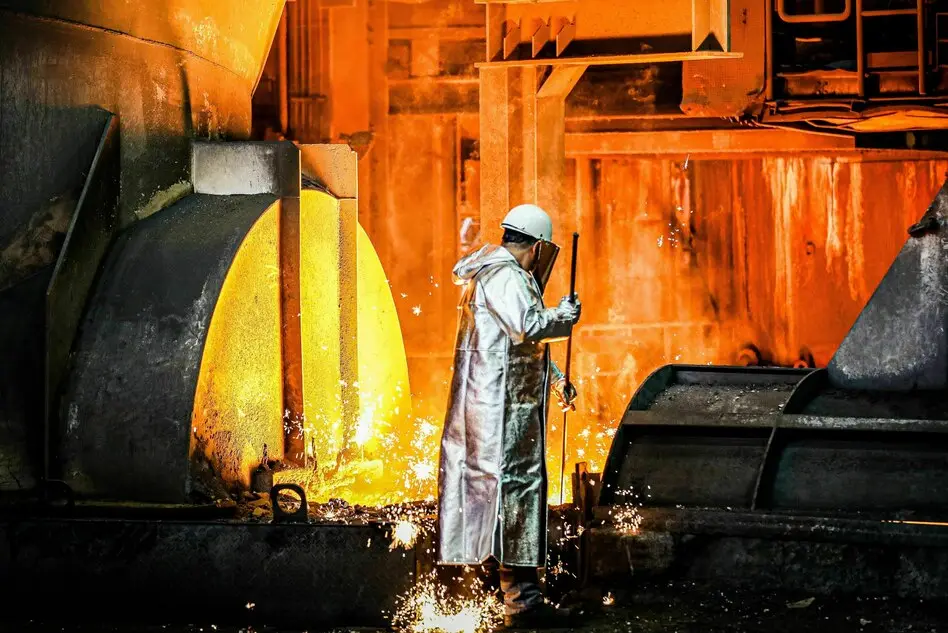
A few days before the German steel summit on Monday in Salzgitter, the trade union-affiliated Hans Böckler Foundation is calling for effective support for the local industry. To do this, Germany needs a capped price for industrial electricity and hydrogen, government support for investments in climate-neutral production tied to location commitments, Buy European rules for public procurement and effective protective mechanisms against steel, which is brought onto the world market at cheap prices through environmental and social dumping as well as subsidies in the producing countries. These measures are "still inadequately implemented. It is Germany's turn," says Christina Schildmann from the Hans Böckler Foundation.
In the new geopolitical situation, Germany must maintain its own steel production - if necessary with high subsidies. The local economy is so dependent on steel that there is a risk of 50 billion euros in lost value per year if Germany were to experience a global “steel shock”. This was already shown by a study by the University of Mannheim on behalf of the foundation last year. In this scenario, large exporters such as China reduce their exports to Europe in the short term due to geopolitical conflicts or supply chain problems.
To be more competitive, the German steel industry must “switch quickly and broadly to climate-friendly production,” according to economists Tom Krebs and Patrick Kaczmarczyk. Therefore, political support for the transformation makes sense economically and for the climate.
The opposite happens. Last week, Germany's largest steelmaker Thyssenkrupp announced that it would not start operating its billion-dollar green steel production until 2029, a two-year delay. The Indian steel giant Arcelormittal had already stopped plans for climate-friendly steel from the plants in Bremen and Eisenhüttenstadt in 2025.
"Antibiotics, certain chemicals or chips for mass production: for years it was said that we no longer need to produce such seemingly simple products ourselves; we can buy them cheaper overseas. In many cases it turns out that this was a huge mistake," emphasizes Schildmann. Something similar is threatened with steel.
The alternative of largely importing steel, advocated by critics of subsidies, is based “on the unrealistic assumption that global supply chains always function smoothly and that almost perfect competition prevails in global markets,” warn Krebs and Kaczmarczyk. The additional costs would “prove to be a more efficient and stable form of production organization in the long term”.
The Steel Outlook 2026 published on Thursday by the Organization for Economic Co-operation and Development (OECD) shows how much Europe's steel industry is threatened. The paper expects excess production capacity to rise to around 745 million tonnes by 2028. A key factor is China, which is pushing exports from its steelworks with subsidies that are 15 times higher than those in the EU. China is trying to circumvent anti-dumping measures. The CO₂ border adjustment mechanism CBAM, with which Europe wants to protect its green steel production, is being slowed down with its own production of electrically produced steel.
Result: While the industrialized countries that form the OECD reduce their capacities, China's exports rose to 131 million tons in 2025. For comparison: Germany, the EU's largest manufacturer, produced 34.1 million tonnes of crude steel last year.
Without subsidies there could no longer be any Central European crude steel production at the end of the 1930s, the consulting firm PWC predicted in the summer. After all: The EU has agreed on a new trade instrument that reduces duty-free steel imports and provides for higher tariffs above a certain quota.